Monrovia – At West Point, the sea works to its own timetable, and it is not waiting for anyone.
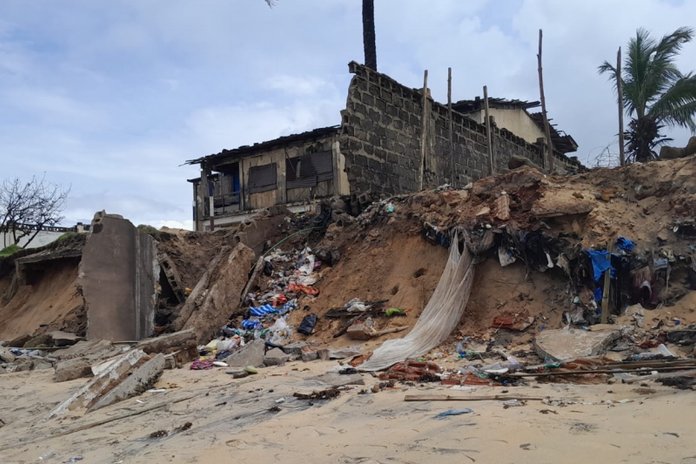
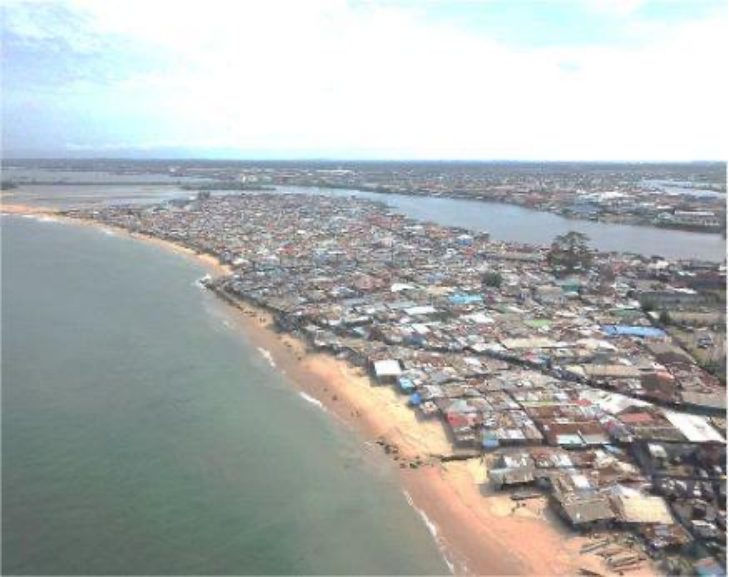
The crowded fishing township sits on a narrow spit of sand where the Mesurado River meets the Atlantic Ocean, on the edge of Liberia’s capital. For years its residents have watched the shoreline move inland, taking homes, walkways and the beaches where fishermen pull up their canoes. Each rainy season brings the same worry: which houses will still be standing when the season ends.
By Rodney D. Sieh
In 2021 an international climate fund made the township a promise. A sloping wall of heavy rock would be built along its exposed shore to break the waves before they reached the houses, with landing points so the fishing fleet could still get to sea.
Five years and four months later, that wall exists in drawings, approvals and contract talks, but not yet on the beach.
A promise made in 2021
The Monrovia Metropolitan Climate Resilience Project (MMCRP) was approved in March 2021 and took effect that July. It is a Government of Liberia initiative funded mainly by the Green Climate Fund (GCF), the world’s largest dedicated climate fund. The GCF pools money mostly from wealthy nations to help poorer countries adapt to a warming planet. The United Nations Development Programme (UNDP) manages the grant money. Liberia’s Environmental Protection Agency (EPA) runs the project day to day, working with the Ministries of Finance, Mines and Energy, and Public Works.
The ambitions are large. The project aims to reach about 250,000 people directly, and about one million more through better management of Liberia’s coastline.
It has three parts. The centrepiece is the West Point sea defence, known as a rock revetment. The second is a national plan for managing the coast, which includes mapping the areas most at risk and training government staff to use that information.
The third supports communities: protecting mangrove forests, helping people earn a living through clean-cookstove manufacturing and cold storage for fish processors, and building an Education and Innovation Center in West Point.
In total, US$25.6 million has been committed. Of that, US$21.4 million is cash and US$4.27 million is the estimated value of rock the government has pledged from the Mount Coffee quarry.
Five years of preparation
In its public update, dated November 8, 2026, the EPA says much of the groundwork has been done.
Engineers studied West Point’s currents, coastline and the ground beneath the planned wall in 2023. The GCF approved the detailed design in 2024, and stakeholders validated the construction plan in 2025. The Environmental and Social Impact Assessment, which sets out how the works may affect fishing, trading and access, won GCF approval in the last quarter of 2025.
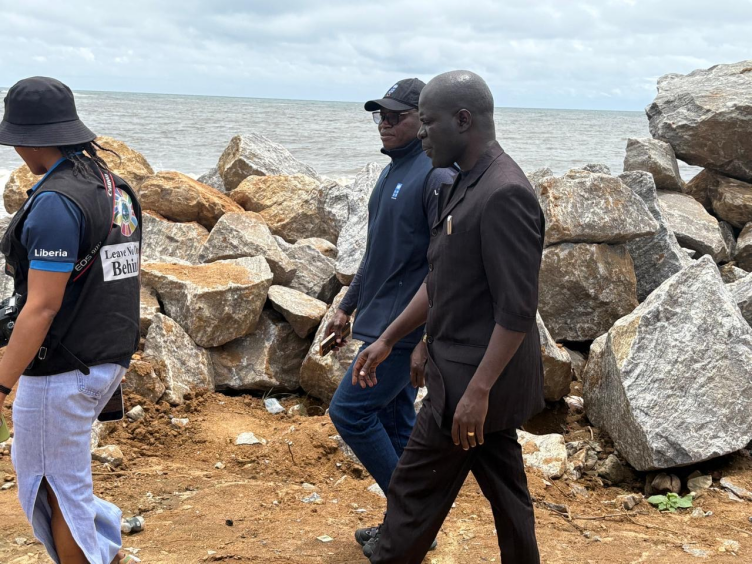
An agreement covering the rock has been signed by the EPA, the Ministry of Mines and Energy and the Liberia Electricity Corporation, which operates Mount Coffee. Mangrove mapping is finished. Ten community stewards have been hired, six of them women. Twelve billboards on coastal risk now stand in four communities, and livelihood surveys have begun in Topoe Village, Jacob Town, Fiamah and Plunkor. Renovation of the West Point Education and Innovation Center is under way, supervised by the Ministry of Public Works, and is expected to be finished around the start of 2027.
The agency puts it plainly: “The main protection works had not yet begun.”
Following the money
The financial figures show how slowly the project has moved.
By the end of October 2026, US$5.35 million of the US$21.4 million in committed cash had been released to the project.
That is about one dollar in four. Of the money released, US$2.07 million had been spent, or 9.68 per cent of all cash committed.
The GCF grant, the largest single source of money, shows the gap most clearly. The fund has committed US$17.26 million but has sent only US$2.78 million so far, in two transfers: US$523,932 in November 2021 and US$2.26 million in August 2025. Just over US$1 million of that has been spent, which is 6 per cent of the full grant. UNDP is holding the remaining US$1.74 million to start the West Point construction.
The EPA stresses that an approved grant is not money sitting in a bank account. The GCF pays in stages, and only after agreed conditions and milestones are met. Most of the money, the agency notes, is budgeted for the sea wall itself, so spending will stay low until construction starts.
Liberia’s own contribution
One of those conditions involves Liberia’s own money, and here the statement points to a long gap.
The government promised
US$2.54 million in cash. The EPA says that by the time the Boakai-Koung administration took office in early 2024, only US$50,000 had arrived, in a single payment in 2022. The new government paid US$500,000 in December 2024 and another US$800,000 in 2026, bringing the total to US$1.35 million, or 53 per cent of what was promised.
The agency links the delay directly to the project’s slow pace. Larger GCF payments depend on government co-financing and on completing early engineering milestones. “Limited co-financing before 2024 had constrained the pace of work,” the statement says.
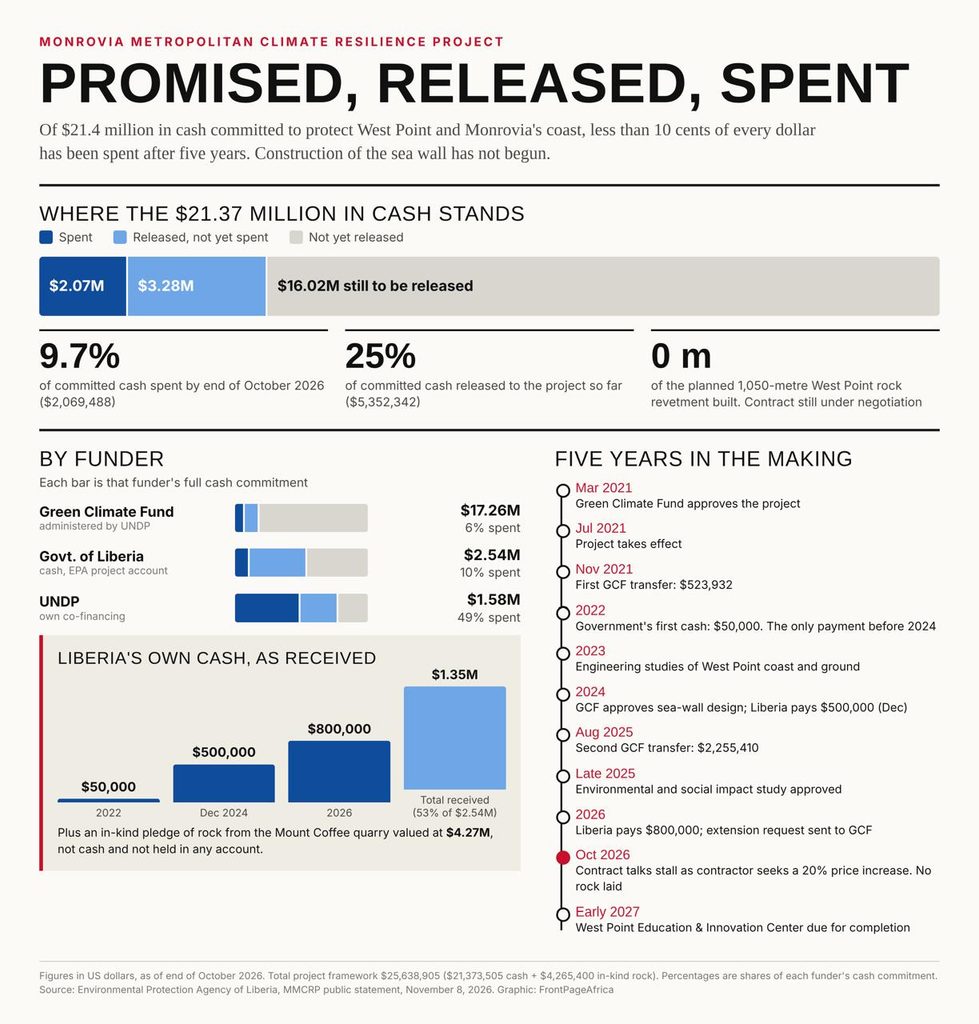
Even so, most of the government’s money has not yet been used. Of the US$1.35 million received, about US$253,500 had been spent by the end of October, leaving almost US$1.1 million in the EPA’s project account. A further US$1.19 million of the government’s cash pledge is still to be paid.
The 20 per cent problem
The newest obstacle is the price of the wall itself.
The EPA says the prospective contractor for the West Point revetment has asked for a one-time 20 per cent increase in its price before signing. It cites inflation and higher fuel and material costs since it submitted its financial proposal in December 2025.
The statement does not name the contractor or give the contract value, so it is not yet possible to say how much the increase would cost in dollars. It does say that no adjustment has been approved. The EPA and UNDP are reviewing the contractor’s calculations and talking to the Ministry of Finance and Development Planning about how any extra cost might be covered, along with the government’s outstanding co-financing.
The agency warns that the request “could further delay contract finalization and mobilization,” and that any price change must be “adequately justified, funded and processed” under procurement rules.
Why it has taken so long
The EPA lists a familiar set of reasons: slow early hiring and work planning, COVID-19 restrictions, later staffing gaps, complicated procurement, long technical reviews, rising construction costs and late government co-financing, especially between 2021 and 2024.
Other steps are also still waiting. A Livelihood Restoration Plan, meant to protect traders and fishing families whose income could be disrupted during construction even if they do not have to move, has been prepared but had not yet been submitted to or cleared by the GCF. Bids for the national coastal management plan and risk mapping closed only in October 2026. A request to extend the project and a catch-up plan are awaiting the GCF’s decision.
“Implementation has taken longer than anticipated,” the agency acknowledges. It adds that it “recognizes the urgency for residents and the importance of reporting physical progress alongside expenditure.”
A wider pattern
West Point’s experience reflects a common pattern in climate finance. Pledges are announced in large round numbers. The money then moves in small, conditional amounts through layers of accredited agencies, safeguards and procurement rules. Those rules exist to protect communities and public funds, but each step takes time, and the coastline keeps eroding throughout.
The EPA says the immediate tasks are to finalise the construction contract, complete the outstanding safeguards, begin the coastal planning work and turn livelihood surveys into real support for families.
For West Point, the measure of success will be visible on the beach. The design is approved, the rock is pledged and much of the money has been promised. The township is still waiting for the first truckload of stone.
Support Independent Journalism
Your support helps FrontPage Africa continue delivering independent, credible, and impactful journalism. Every contribution strengthens our ability to investigate, inform, and hold power accountable while keeping quality journalism accessible to our readers.
Support our journalism or subscribe to receive the latest FrontPage Africa stories and updates.