MONROVIA — Benejane Shaw remembers exactly what the word did to her. “When they told me breast cancer, I broke down, I shed tears,” she said, “because as far as I’m concerned, when they say you have cancer, it’s a death sentence.”
By Rodney D. Sieh
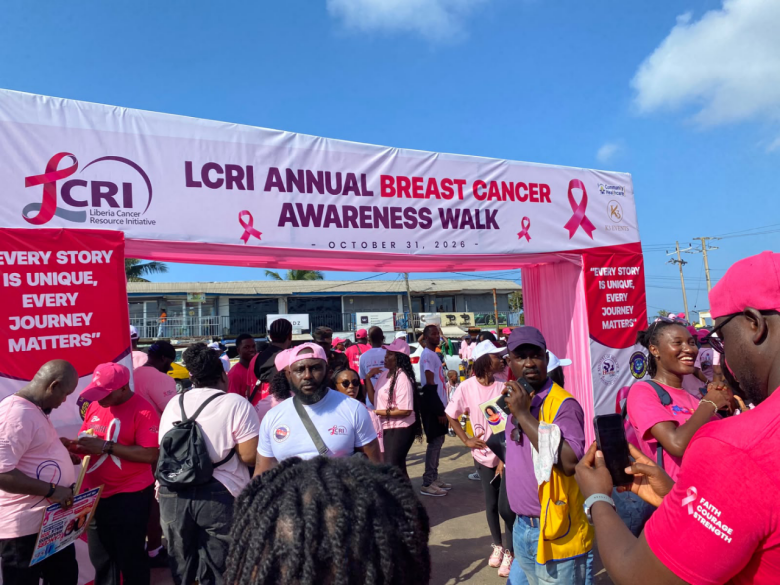
On Saturday, Shaw took part in a breast cancer awareness walk to show that it need not be. She had surgery on March 3, 2025, followed by ten cycles of chemotherapy. “God first, JFK second, and Dr. Deddeh Supuwood,” she said, naming the capital’s John F. Kennedy Medical Center and the oncologist she credits with her recovery. “I’m a living testimony that early detection saves lives.”
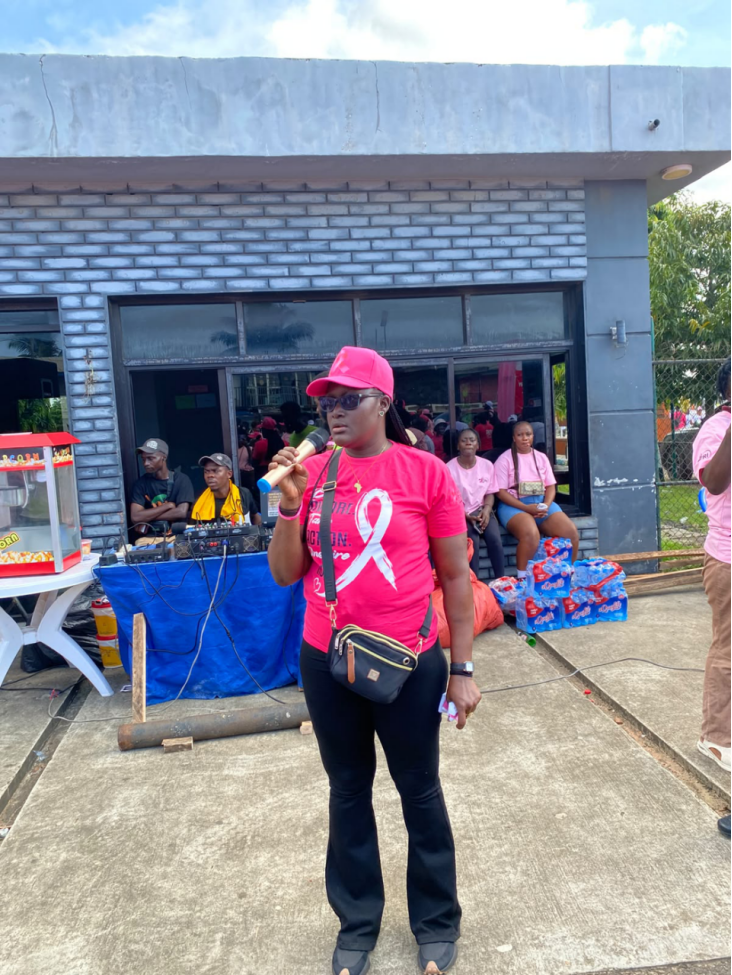
She was among the survivors who spoke at the walk, the annual awareness campaign of the Liberia Cancer Resource Initiative (LCRI), a Liberian group focused on breast and cervical cancer. October is Breast Cancer Awareness Month worldwide, and Saturday was its final day.
A Walk for the Living
Among those who spoke was Cllr. Tiawan Saye Gongloe, a lawyer and former presidential candidate, who tied the disease to the country’s governance problems. “Corruption starts with C. Cancer starts with C,” he said. “We have to sweep the two Cs from Liberia. When we sweep corruption, we sweep cancer successfully.”
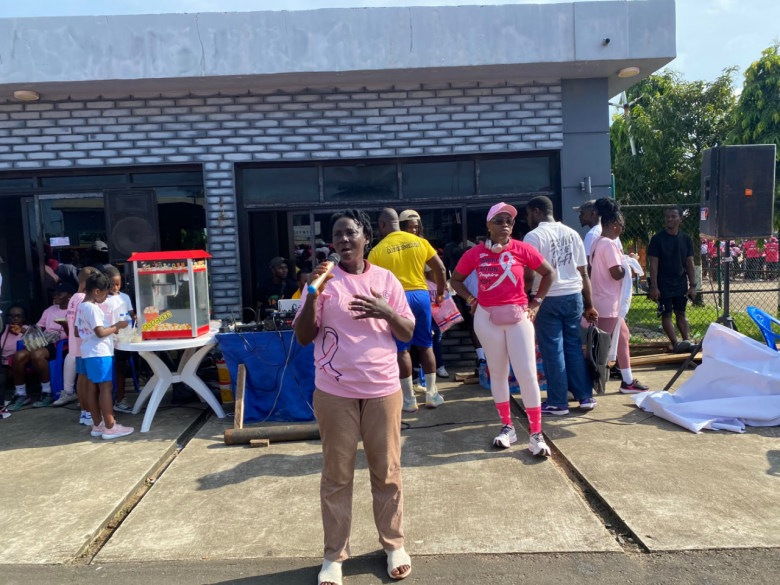
The day’s most vivid testimony came from another survivor, Florence B. Tugbeh, who described the toll of treatment and her recovery. “Anyone who says cancer cannot be healed is lying,” she said. “When you looked at my palm, it used to be black like fire coals. But see me now. I got body, I got hair. I never had hair, but now I can shake my head.” She thanked supporters in Liberia and abroad, including the President and his wife, and asked for help for Dr. Supuwood to continue her studies.
For LCRI Executive Director Christine E. Brooks-Jarrett, the walk was “a demonstration of solidarity and collective action.” The campaign exists to educate the public, “break the stigma surrounding cancer and encourage women to prioritize their health and get screened,” she said. But a month is not enough: “Cancer awareness must be a year-round effort.”
Planning time was short this year, she said, yet turnout was encouraging. Participants praised the organization and the souvenirs and welcomed the extra activities after the walk. “The games and dry rice added spice to the fun,” she said, referring to a Liberian rice dish served at the event.
“Saving a Whole Family”
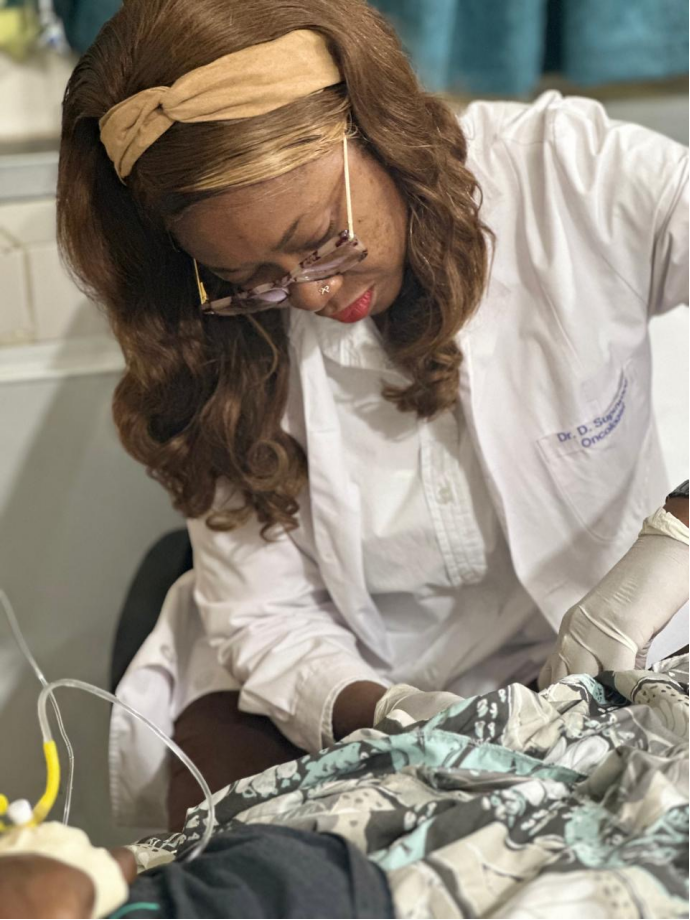
For Dr. Deddeh Supuwood, the fight is personal. A medical oncologist at the John F. Kennedy Medical Center, she is also president of the Liberia Medical and Dental Association and a statutory council member of the Liberia Medical and Dental Council. She lost her own mother to breast cancer.”Since I returned from school, I have dreamed of helping as many women as I can,” she said. “I couldn’t do it for my mother, so seeing survivors now and hearing their stories brings me joy. When you save one woman’s life, you are probably saving a whole family.” Watching patients “go from hopeless to hopeful,” she said, has been humbling. “My ultimate dream is that no Liberian woman should easily die from breast cancer.”
The dream has a hard number attached to it. Breast cancer is the most common cancer in Liberia, with an estimated 885 new cases and 421 deaths in 2024, according to the International Agency for Research on Cancer, the World Health Organization’s cancer research arm. That is roughly 48 deaths for every 100 women diagnosed. Because Liberia has no population-based cancer registry, these are modeled estimates rather than a head count, and the true toll is likely to be uncertain in both directions.
Cancer in Liberia, by the Numbers
An estimated 4,217 Liberians were diagnosed with cancer in 2024 and 2,745 died of it, according to the International Agency for Research on Cancer (IARC), in a country of about 5.6 million people. Women carry the heavier burden: 2,628 new cases and 1,605 deaths, against 1,589 cases and 1,140 deaths among men.
The burden is growing. The WHO’s 2020 Country profile, built on 2018 data, counted 2,808 cases and 2,223 deaths. Measured against that, estimated cases are up about 50 percent and deaths about 23 percent, while the population grew roughly 14 percent over the same period (4.9 million in 2019). Population growth explains part of the rise, but the two sets of estimates come from different editions and methods, so they show a direction rather than a precise trend.
Five cancers account for more than half of the toll, and most of them can be caught earlier or prevented:
The death-to-case ratios tell their own story. Liver cancer is the deadliest by that measure: 283 deaths against 315 new cases, nearly nine in ten. Cervical cancer, which is largely preventable through HPV vaccination and screening, still kills an estimated 345 women a year.
Hope Meets a Thin Health SystemThe survivors on Saturday were the fortunate ones. The WHO’s 2020 profile found Liberia had no radiotherapy machines, no radiation oncologists, no mammography equipment and no national breast or cervical cancer screening program. The country has also never had a population-based cancer registry, which is why its numbers remain estimates. Hospital leaders say a cobalt radiotherapy machine at the John F. Kennedy Medical Center was destroyed during the civil war, the two conflicts that convulsed Liberia between 1989 and 2003.
Things are changing, slowly. In July 2025, Liberia broke ground on its first national radiotherapy center at the Kennedy hospital, with support from the International Atomic Energy Agency, and received its first mammography unit. The government has since brought two more mammography machines, digital X-ray and ultrasound equipment and an MRI machine, worth $100,000 in all. Most of it sits at the Kennedy hospital, and experts warn that only a fraction of women will be able to reach it.
That hospital is the country’s only public facility offering specialized cancer treatment, and its patients arrive from all 15 counties. Many come late, when treatment is costlier and less likely to work. In June 2026, officials handed over a consignment of chemotherapy drugs after shortages left patients on waiting lists, with partial treatment, or sent to buy drugs from private pharmacies. “Cancer treatment has been a challenge as many patients are unable to pay,” the hospital’s chief medical officer, Dr. J. Emmanuel Tamba, said. A 42-year-old breast cancer patient who had to pause chemotherapy put it more plainly: “My children and I were deciding what to sell next.” One survivor told the Observer she paid $500 a week for a year, mostly through donations from family, church and friends.
Brooks-Jarrett said LCRI knows the walk is only a start. “We recognize that there is more to be done,” she said, and the group remains committed to “advocating for better access to screening and treatment.” Then she made the point that Shaw, Tugbeh and Supuwood had made in their own ways: “Every Liberian has a role to play, because the fight against cancer requires collective and sustained action.”
Support Independent Journalism
Your support helps FrontPage Africa continue delivering independent, credible, and impactful journalism. Every contribution strengthens our ability to investigate, inform, and hold power accountable while keeping quality journalism accessible to our readers.
Support our journalism or subscribe to receive the latest FrontPage Africa stories and updates.