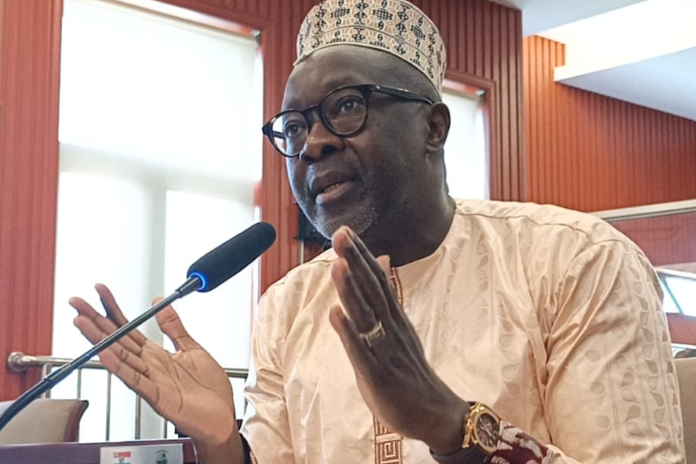
YEREVAN, Armenia – The Environmental Protection Agency (EPA) Executive Director, Dr. Emmanuel K. Urey Yarkpawolo, is expected to address world leaders, environmental policymakers and international conservation experts on Wednesday, October 28, 2026, as the 17th Conference of the Parties to the United Nations Convention on Biological Diversity (COP17) continues in Yerevan, Armenia.
By Selma Lomax, [email protected]
Dr. Yarkpawolo is expected to use the international platform to highlight a wide range of environmental challenges confronting Liberia and the rest of the world, including climate change, biodiversity loss, deforestation, environmental degradation, unsustainable exploitation of natural resources and the growing need for international cooperation in protecting the planet’s ecosystems.
His anticipated presentation comes as representatives of governments, international environmental institutions, scientists, conservation organizations and civil society groups gather in the Armenian capital to assess global efforts aimed at reversing biodiversity loss and strengthening environmental protection.
The conference, which runs from October 19 to 30, 2026, under the theme “Taking Action for Nature,” is expected to attract more than 15,000 participants, making it one of the largest international environmental gatherings of the year.
The Convention on Biological Diversity has 196 Parties, comprising 195 countries and the European Union, although that figure does not necessarily represent the number of countries physically participating in the Yerevan conference.
Dr. Yarkpawolo’s expected appearance on Wednesday falls within the conference’s high-level ministerial segment, scheduled for October 27 and 28, during which senior government officials and environmental leaders are expected to discuss national commitments, international partnerships and strategies for addressing the world’s worsening biodiversity crisis.
For Liberia, the conference presents an important opportunity to draw international attention to the environmental challenges facing a country that possesses some of West Africa’s most significant remaining tropical rainforests.
Liberia forms part of the Upper Guinean Forest ecosystem, a globally important biodiversity region that supports numerous plant and animal species, including several threatened by habitat destruction, illegal hunting and the continued expansion of human activities into forested areas.
Despite the country’s rich natural resources, environmental protection remains a major challenge, particularly as commercial logging, mining, agricultural expansion and infrastructure development continue to place pressure on fragile ecosystems.
Dr. Yarkpawolo is expected to discuss these challenges alongside broader global environmental concerns, including the effects of climate change on vulnerable communities, the destruction of wildlife habitats, pollution, sustainable land management and the importance of strengthening environmental governance.
His presentation is also expected to emphasize the need for developed countries and international financial institutions to provide greater technical and financial assistance to developing nations seeking to protect their biodiversity while pursuing economic development.
Across Liberia, environmental concerns have become increasingly prominent as communities continue to experience the consequences of deforestation, changing rainfall patterns, flooding, land degradation and pollution associated with certain industrial and extractive activities.
Environmental advocates have repeatedly stressed that the protection of Liberia’s forests and other natural resources must remain a national priority, particularly because many rural communities depend directly on these ecosystems for farming, food, water, traditional livelihoods and economic survival.
The ongoing conference is especially significant because it provides an opportunity for countries to assess progress toward implementing the Kunming-Montreal Global Biodiversity Framework, adopted in December 2022.
The agreement establishes 23 global targets to be achieved by 2030, including the conservation of at least 30 percent of the world’s terrestrial, inland water, coastal and marine areas, restoration of degraded ecosystems, reduction of harmful human activities affecting biodiversity and increased financing for nature conservation.
The framework also calls for stronger participation by Indigenous peoples and local communities in biodiversity protection, recognizing their contributions to preserving forests, wildlife and other natural resources.
For Liberia, implementing these commitments could require stronger environmental regulations, improved monitoring of extractive industries, expanded conservation initiatives and greater investment in institutions responsible for protecting the country’s natural resources.
As head of the EPA, Dr. Yarkpawolo occupies a central position in Liberia’s environmental governance structure, with responsibility for overseeing the country’s principal environmental regulatory institution.
His participation in COP17 comes at a time when developing countries are increasingly demanding greater access to international environmental financing to help them meet conservation commitments without undermining their development priorities.
One of the major issues dominating global biodiversity discussions is the financial gap between the resources developing countries require to protect their ecosystems and the funding currently available through international conservation mechanisms.
Countries with extensive tropical forests, including Liberia, face the difficult task of balancing economic development with environmental sustainability, particularly where mining, agriculture, forestry and infrastructure projects remain important sources of investment and employment.
The international gathering is therefore expected to provide opportunities for discussions on financial assistance, technology transfer, capacity building and partnerships that could strengthen conservation programs in biodiversity-rich developing countries.
Beyond financing, delegates are examining the need for stronger accountability mechanisms to ensure that commitments made during international environmental conferences translate into measurable improvements in environmental protection.
The discussions are also expected to address the relationship between biodiversity loss and climate change, two interconnected global challenges that increasingly threaten food security, water availability, public health and economic stability.
Scientists have consistently warned that the destruction of forests, wetlands and other ecosystems weakens nature’s ability to absorb carbon emissions and increases the vulnerability of communities to extreme weather events.
In Liberia, where agriculture and natural-resource-dependent livelihoods remain important to the national economy, these environmental threats carry serious implications for long-term development and community resilience.
The Yerevan conference also offers Liberia an opportunity to strengthen diplomatic engagement with other countries facing similar environmental challenges and explore partnerships aimed at improving forest management, biodiversity research and sustainable development.
For Dr. Yarkpawolo, Wednesday’s anticipated address could provide a platform to communicate Liberia’s environmental priorities while emphasizing the country’s role in protecting one of West Africa’s most important remaining forest ecosystems.
The conference’s ministerial segment is expected to bring together approximately 150 high-level delegations, including ministers, deputy ministers and other senior government representatives responsible for environmental and biodiversity policies.
As deliberations continue in Armenia, attention is increasingly shifting toward how participating governments intend to transform international biodiversity commitments into concrete actions capable of slowing environmental destruction.
With the conference scheduled to conclude on October 30, participating countries are expected to continue negotiations and policy discussions surrounding biodiversity financing, conservation targets, implementation challenges and international cooperation.
Support Independent Journalism
Your support helps FrontPage Africa continue delivering independent, credible, and impactful journalism. Every contribution strengthens our ability to investigate, inform, and hold power accountable while keeping quality journalism accessible to our readers.
Support our journalism or subscribe to receive the latest FrontPage Africa stories and updates.