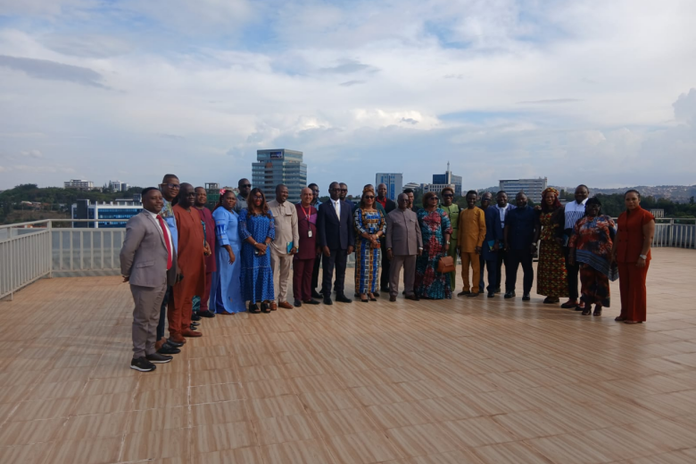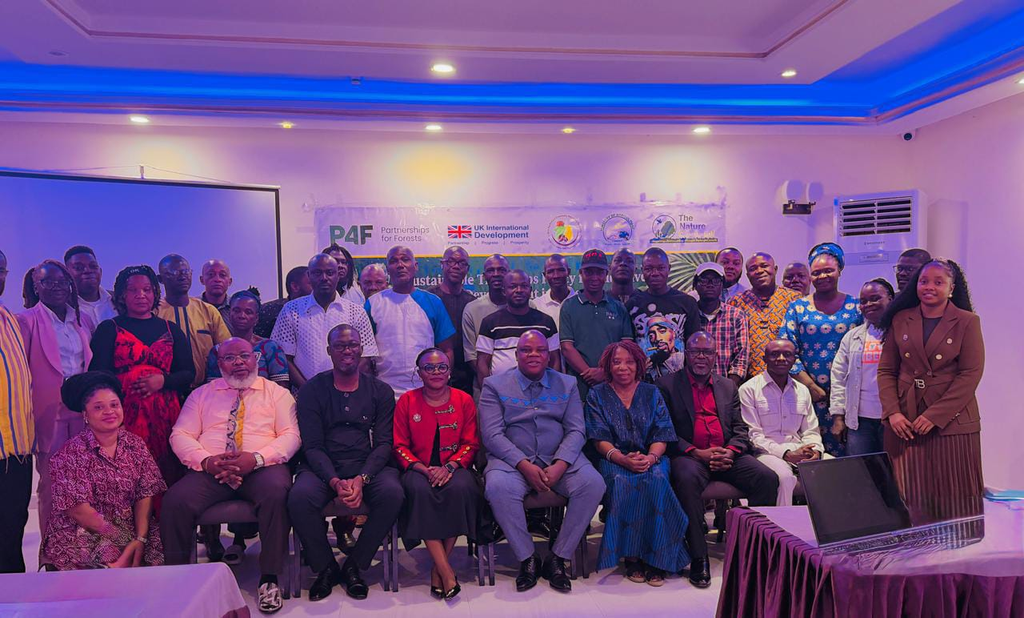
Congo Town-The Nature Compact (TNC), in partnership with the Liberia Agriculture Commodity Regulatory Authority (LACRA), has launched the Sustainable Tree Crops Policy for Inclusive Development in Liberia (STRIDE Liberia) project, a 24-month initiative aimed at strengthening tree crop policies, improving sector governance and promoting investment in deforestation-free commodity value chains across Liberia.
By Jaheim T. Tumu- [email protected]
The one-day inception workshop attended by government officials, development partners, private sector representatives, farmers’ groups and civil society organizations. Funded by the United Kingdom through the Partnerships for Forests (P4F) program, the initiative will focus on strengthening Liberia’s cocoa, coffee and oil palm sectors through better policies, stronger institutions and sustainable investment.
Speaking on behalf of Victoria Wiafe-Duah, Regional Director of P4F West Africa, Henrietta Asiedu, Communications and Stakeholder Engagement Senior Associate for P4F West Africa, said the project represents an important step toward building a stronger and more sustainable agricultural sector in Liberia.
She explained that the initiative goes beyond meeting international requirements and aims to position Liberian producers and businesses to compete in profitable global markets.
“It is about ensuring that Liberian producers, cooperatives, exporters, and businesses are well-positioned to access high-value markets.”
She added, “It is about creating the right policy environment to attract responsible private investment. And it is about demonstrating that protecting forests and growing the economy are not competing objectives, but complementary goals that can and must be achieved together,” she said.
Asiedu said the project builds on commitments made by P4F and its partners over the past year to support sustainable economic growth in Liberia while protecting forest resources.
She noted that stakeholders had previously agreed on the need to create an environment where responsible businesses can invest and thrive, adding that STRIDE Liberia is intended to turn those commitments into practical action on the ground.
“This event is a powerful reminder of what can be achieved when partners come together around a shared vision of sustainable growth, resilient communities, and thriving forest landscapes,” Asiedu said.
She described the launch as more than the beginning of another development project, saying it represents a transition from planning to implementation.
According to her, the initiative demonstrates the value of collaboration among government agencies, private businesses, farmers’ organizations, civil society groups and development partners working toward common objectives.
“This marks the transition from ambition to action and demonstrates what strong partnerships between government, business, civil society, and development partners can achieve,” she said.
Liberia’s tree crop sector remains one of the country’s key sources of income and employment. Thousands of farmers depend on the production of cocoa, coffee and oil palm for their livelihoods.
However, the sector faces growing pressure from international buyers to improve traceability, strengthen governance and comply with environmental requirements.
According to project organizers, STRIDE Liberia was designed to help the country address these challenges while creating opportunities for growth.
The project will support the development of climate-smart, deforestation-free and investment-friendly policies, improve institutional coordination and strengthen Liberia’s readiness to comply with international regulations such as the European Union Deforestation Regulation (EUDR).
In his welcome remarks, TNC Chief Executive Officer Borwen Levi Sayon said the project will support government efforts to strengthen policies and build the systems needed for compliance with international market standards.
“This project is meant to support the government of Liberia when it comes to strengthening the policy and creating enabling conditions to facilitate EUDR implementation in Liberia as well as expanding opportunities for agriculture commodity coordination,” Sayon said.
He stressed that broad stakeholder participation will be essential to the project’s success and encouraged participants to actively share ideas and experiences throughout the implementation process.
“Each of us here present today has a lot to contribute,” he said. “Please feel free, please engage, please network. If there’s anything you don’t understand, please ask.”
Addressing participants, LACRA Director-General Christopher D. Sankolo said Liberia’s efforts to improve its commodity sector require cooperation among government agencies, development partners, farmers and private businesses.
He explained that while cocoa, coffee and oil palm each face different challenges, they all need stronger policies, better coordination and more transparent value chains.
Sankolo said one of the country’s immediate concerns is adapting to the European Union’s new deforestation regulations, which could affect market access for Liberian cocoa exports if proper systems are not established.
To prepare for those requirements, he said LACRA has helped establish a national EUDR stakeholder committee and developed LACRA Trace, a digital platform designed to collect farm-level information and improve commodity traceability.
“We have also developed LACRA Trace, our digital platform designed to support farm mapping, farmer profiling and supply-chain traceability,” Sankolo said.
He revealed that LACRA is preparing to begin pilot mapping of 7,000 cocoa farms in Bong and Nimba counties as part of efforts to strengthen compliance systems and improve national preparedness.
Despite those efforts, Sankolo said Liberia’s goal should extend beyond regulatory compliance and focus on creating a stronger commodity sector capable of supporting long-term economic growth.
“We must continue strengthening the policies, institutions and market systems that will serve our producers over the long term. This is where STRIDE can make a valuable contribution,” he said.
The project is also expected to focus on strengthening institutional capacity, promoting sustainable investment and increasing the participation of women, youth and smallholder farmers in commodity value chains.
Representing the Ministry of Agriculture, Deputy Minister for Extension Moses Robert Gbanyan urged policymakers to ensure farmers play a central role in developing and implementing sector reforms.
Speaking from his own experience as a farmer, Gbanyan emphasized that policies should address real challenges faced by rural producers, including access to markets and economic opportunities.
“I hope I, as the farmer, the rural farmer, will be part of these policies making. Let’s reach out to these farmers. Let’s hear from them,” he said.
Gbanyan also called for stronger collaboration between LACRA and the ministry’s digital farmer registration system to help improve agricultural planning and ensure support reaches genuine farmers.
He stressed the importance of expanding awareness of the EUDR among rural communities, noting that many farmers still lack sufficient information about the new market requirements.
Environmental concerns also featured prominently during the launch. Director of Projects at the Environmental Protection Agency (EPA), Klubosumo Johnson Borh, said growth in Liberia’s cocoa, coffee and oil palm sectors must be accompanied by strong environmental safeguards.
He said policies developed under STRIDE Liberia project should promote responsible land use, protect sensitive ecosystems, encourage sustainable farming practices and support community participation. “Environmental safeguards must be integrated from the onset,” he said.
Borh added that the EPA stands ready to provide technical support and work alongside LACRA and other institutions to ensure environmental standards are incorporated into future commodity policies.
Also addressing Forestry Technical Advisor at the Forestry Development Authority (FDA), Augustine B.M. Johnson, said agricultural development and forest conservation should not be viewed as competing interests.
He noted that Liberia’s tropical forests provide important environmental and economic benefits and must remain a central consideration in national development planning. “Agricultural expansion and forest conservation should not be treated as competing national priorities,” Johnson said.
He emphasized that with proper land-use planning, stronger policies and improved coordination among institutions, Liberia can increase agricultural production without placing additional pressure on its forests.
Under the project, TNC and LACRA plan to develop sustainable tree crop policies for cocoa, coffee and oil palm, establish a multi-commodity coordination platform, improve capacity for traceability and sustainability requirements, and design an investment and market competitiveness strategy, including support for the development of Liberia’s Coffea liberica value chain.
Accordingly, the end of the project, organizers expect Liberia to have nationally endorsed policies for major tree crops, stronger institutional coordination mechanisms and improved capacity to attract responsible investment into the sector.
Officials and stakeholders at the launch expressed optimism that the initiative could help create a more competitive and sustainable agricultural industry while protecting forests and improving livelihoods for thousands of Liberian farmers.
Support Independent Journalism
Your support helps FrontPage Africa continue delivering independent, credible, and impactful journalism. Every contribution strengthens our ability to investigate, inform, and hold power accountable while keeping quality journalism accessible to our readers.
Support our journalism or subscribe to receive the latest FrontPage Africa stories and updates.