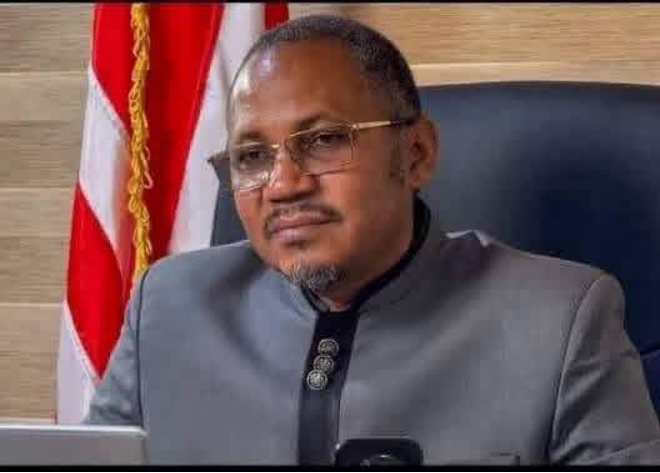
Zwedru City, Grand Gedeh County — In a stirring commencement address during Grand Gedeh University’s historic convocation over the weekend, Mo Ali, Managing Director of the Liberia Water and Sewer Corporation (LWSC), challenged both public officials and the graduates to measure leadership by outcomes rather than titles or ceremony.
By Franklin Doloquee From Zwedru City, Grand Gedeh
Speaking before a crowd of graduates, faculty, local officials, educators, government officials and community residents, Ali said appointments and honorifics are only the beginning.
He said real achievement is demonstrated by the tangible improvements leaders produce for ordinary citizens.
Colorful banners bearing the university seal fluttered in a warm breeze while applause rose and fell as his remarks underscored the convocation’s theme: “Accountability Is the Test of Leadership.”
‘Power must produce results’
Ali told the assembly, urging officials at every level to hold themselves to higher standards.
He described the too-common celebration of appointments — public congratulations, photographs and social media fanfare — as premature if they are not followed by measurable gains in service delivery.
“When someone is appointed to lead an institution, the appointment is not the achievement. The achievement is what that person accomplishes with the responsibility entrusted to them,” the LWSC boss stated.
He illustrated his point with concrete examples. For families who wait each day for clean water, an impressive title means little if taps remain dry.
For communities suffering from poor sanitation, a decorated office or an official vehicle offers no relief.
“A minister should be assessed not simply by meetings attended, but by policies implemented and improvements achieved,” he said, adding that legislators should be evaluated on the quality of representation, lawmaking and oversight, and public managers by how well their institutions perform.
He acknowledged that public institutions often operate under severe resource constraints, from tight budgets to aging infrastructure.
Yet he insisted those obstacles should spur creativity and discipline rather than provide perpetual excuses for inaction.
“Leadership is not the absence of difficulties. It is the responsibility to confront them and demonstrate progress,” Ali intimated, his voice steady as he paced a short stage set against the silhouette of the university’s main building.
Addressing the graduates directly, Ali urged them to be problem-solvers, innovators, entrepreneurs and professionals committed to serving their communities.
He reminded them that change does not require national fame. Small, local improvements a successful shop that provides jobs, a better-stocked clinic, a repaired school roof, or a community-led sanitation drive transform lives even if they do not make headlines.
“You do not have to wait until you become nationally prominent before contributing to Grand Gedeh,” he asserted.
Ali also counseled the new graduates on the nature of public life and the temporary privileges of office.
In a section he titled: “The Day Nobody Calls You ‘Honorable,’” he reminded them that official recognition and attention ebb over time.
“The official vehicle may be returned. The telephone may stop ringing.
The invitations may become fewer,” he said.
Rather than mourn this normal change, Ali suggested officials and citizens alike should focus on the substance of their work and the legacy of service they leave behind.
The convocation included several other speakers who echoed calls for accountability and community engagement, and the ceremony featured traditional music, student presentations, and the presentation of diplomas to hundreds of graduates who celebrated with relatives and friends.
In conversations after the ceremony, many attendees expressed optimism that the university’s new alumni, equipped with fresh skills and energy, will play active roles in improving local health care, education, water access, and small business growth across Grand Gedeh County.
Ali closed his remarks by challenging both officials and citizens to keep asking pragmatic questions about leadership: Will services become more reliable? Will public resources be managed responsibly? Will projects be completed on time and to standard? He said those questions should guide public assessment of leaders and serve as the yardstick for progress.

As graduates dispersed into the late afternoon heat, the convocation left a clear message: authority is not valuable for its own sake; it’s worth is proven by the concrete benefits it brings to people’s daily lives.
Thousands Turn Out to Celebrate Graduates at Historic Commencement Ceremony
Thousands of graduates, family members and well-wishers including many Liberians packed the grounds to celebrate the University of Grand Gedeh’s historic commencement ceremony.
The atmosphere was jubilant and colorful as crowds gathered to honor the students who received the university’s final batch of associate degrees before the institution transitions to full university status.
The eighth and final associate-degree commencement drew huge numbers from across the region.
Graduates marched in rows, their gowns and caps fluttering in the breeze, while proud parents, siblings and friends cheered from shaded stands and along the walkways.
Vendors moved through the crowds selling cold drinks, snacks and flowers and the air filled with congratulatory shouts, camera clicks and the low hum of excited conversation.
For many of the graduates, the ceremony was more than a formal rite of passage it represented hope and a tangible step toward improved opportunities.
Several graduates described the degree as a “big boost” for their futures, saying it will strengthen their chances for employment, further study, and community leadership.
One graduate embraced relatives and wiped away tears of joy, while others posed for photographs, their faces beaming with relief and pride.
Speakers at the event emphasized the milestone significance of this graduating class.
University officials lauded the students’ perseverance and dedication, noting the institution’s achievement in becoming a full degree-granting university. Government and community leaders who attended the program highlighted the positive impact the university’s upgrade will have on local education, job creation, and regional development.
The ceremony blended formal protocol with vibrant local culture. Traditional music and dances punctuated the program, and speakers often paused for rounds of applause and cheers. Guests waved national and university flags as the graduates processed; colorful fabrics and patterned attire added to the festive scene.
Organizers took care to ensure the event ran smoothly. Ushers guided guests, security personnel maintained order, and medical staff were on hand for any emergencies. Despite the large turnout, volunteers and staff coordinated seating, the diploma distribution, and the procession with practiced efficiency.
As the ceremony closed, many graduates lingered on the grounds, exchanging congratulations and making plans for the future. For the university and its community, the day marked both an ending and a beginning: a celebration of achievement and a hopeful look ahead now that the institution has attained full university status.
Support Independent Journalism
Your support helps FrontPage Africa continue delivering independent, credible, and impactful journalism. Every contribution strengthens our ability to investigate, inform, and hold power accountable while keeping quality journalism accessible to our readers.
Support our journalism or subscribe to receive the latest FrontPage Africa stories and updates.