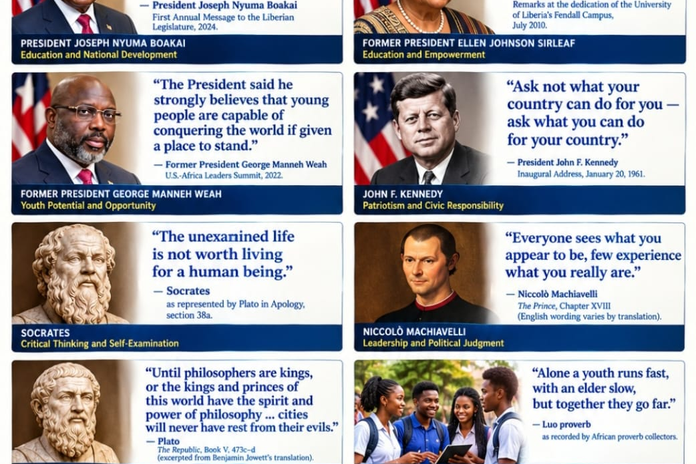
Prof. Wilson K. Tarpeh: “The past is a lighthouse, not a port. It exists to warm and guide you, not to trap you. Learn from it; growth requires going forward, not anchoring in what is over.”
In law, “not guilty” does not mean “innocent.”
“Elect people of moral rectitude, not Ma-cussers.”- Austin S Fallah.
President Joseph Nyuma Boakai: “Peace is not simply kept; it must be nurtured.”
Source: Executive Mansion of Liberia, remarks at the Ninth Tokyo International Conference on African Development, August 22, 2025. Relevance: Democracy requires continuous investment in peace, inclusion, justice, and responsible leadership.
Former President George Manneh Weah: “Blood should never be the price tag for democracy.”Source: Excerpts from President Weah’s inaugural address, January 22, 2018, published by the United Nations Peacekeeping website.Relevance: Political competition must be resolved through constitutional institutions and peaceful transfers of power, not violence.
Former President Ellen Johnson Sirleaf: “We will never again shed the mantle of democracy, of freedom, of national unity, of patriotism.” Source: Her second inaugural address, January 16, 2012, published by the Embassy of Liberia in the United States.Relevance: Liberia’s painful history makes preserving democratic principles an ongoing national responsibility.
Dr. Amos C. Sawyer(late), former Interim President: “Democracy and development have seldom flourished without evolving through processes of contestation [and cooperation] among a people themselves.” Source: A discussion of Sawyer’s work and ideas reproduced in a policy publication on African development. Relevance: Democracy requires constructive disagreement, cooperation, and meaningful public participation.
Collective commitment in the 2003 Comprehensive Peace Agreement:“Determined to foster mutual trust and confidence amongst ourselves and establish mechanisms which will facilitate genuine healing and reconciliation amongst Liberians.”Source: Comprehensive Peace Agreement among the Government of Liberia, LURD, MODEL, and political parties, August 18, 2003. This is language from the agreement’s collective preamble, not a personal quotation from any single signatory. Relevance: Transitional leadership must do more than transfer authority. It must create conditions for reconciliation, public trust, peaceful political competition, and lasting constitutional government.
“Has Liberian politics been reduced to a field of nonentities and ma-cuss?” Hon. Alexander Torbor Kun.
“Two heads are better than one: those heads must be examined. One good brain is better than the majority of brains.”- Hon. Edward Wesee.
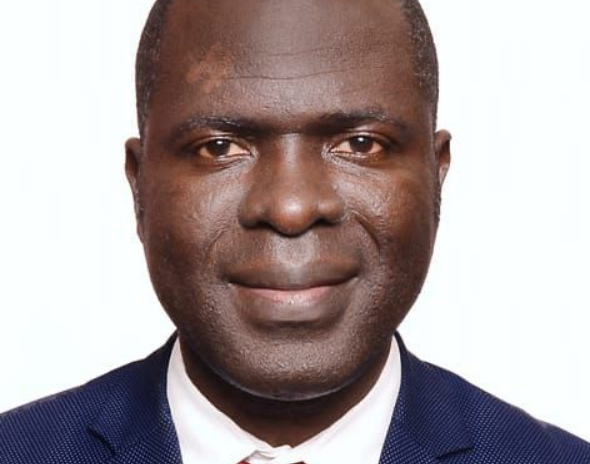
By: Austin S Fallah – A True Son of the Planet Earth Soil: [email protected]
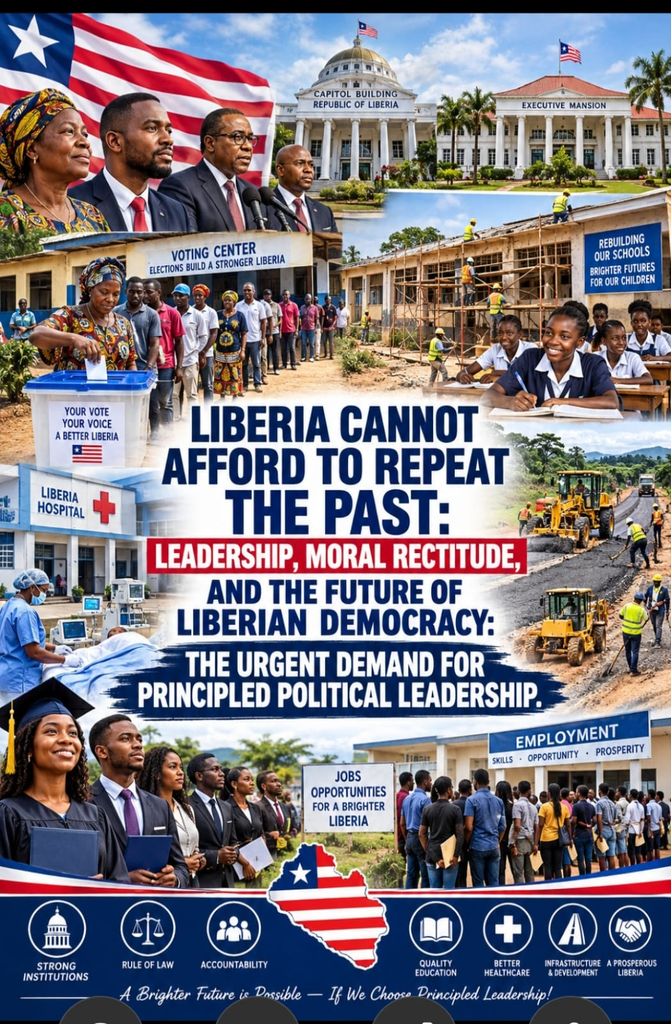
Liberia’s question today is not merely who will occupy the Presidency, the Legislature, County Leadership, or other public offices.
The deeper question is whether public political leadership has become a refuge for people who lack moral rectitude, political courage, intellectual preparation, and a genuine commitment to national service.
Too often, politics seems attractive to people whose main qualifications are loud propaganda, personal popularity, social-media noise, ethnic manipulation, and promises designed to win applause rather than solve real problems.
Such behavior insults the intelligence of the Liberian people and weakens the country’s standing before the international community.
Liberia has suffered too much to treat leadership as a casual experiment.
The nation’s history includes political exclusion, corruption, civil conflict, economic hardship, institutional weakness, and a long struggle to rebuild public trust.
These experiences should have taught Liberians that the quality of political leadership matters profoundly.
A country cannot move forward when it repeatedly entrusts its future to individuals who see public office as a private business opportunity, a pathway to personal wealth, or a platform for self-promotion.
Liberia cannot afford leaders who are good at slogans but poor at substance; who are active on social media but absent from their communities; who constantly speak about patriotism but make no sacrifice for the nation; or who seek office without the character, competence, and courage required to govern.
Public political leadership must not become a place where “good-for-nothings or good-for-nothingners(self-crafted word)” can deceive citizens into believing that visibility equals capacity.
The people of Liberia deserve more than political noisemakers.
They deserve leaders who understand the seriousness of governing a nation still striving for stable economic growth, better education, dependable health care, improved infrastructure, youth employment, justice, peace, and social cohesion.
They deserve lawmakers who introduce legislation, read legislation, debate national policy intelligently, consult their constituents, and hold the executive branch accountable.
They deserve presidents and public officials who can represent Liberia with dignity before foreign governments, international financial institutions, donors, investors, and diplomatic partners.
Above all, they deserve leaders whose loyalty is to Liberia and its people, not to personal enrichment, patronage networks, or partisan survival.
The argument that Liberia’s political culture must change is not an attack on democracy.
It is a defense of democracy.
Democracy is not simply the right to vote; it is also the responsibility to choose wisely.
Elections are meaningful only when citizens demand competence, integrity, and accountability from those who seek power.
If elections become contests of money, tribal sentiment, misinformation, celebrity, or empty campaign promises, then individuals without the values necessary to lead can capture democratic institutions.
In that situation, the ballot box remains in place, but the people’s hopes are betrayed.
Liberians must therefore reject the dangerous assumption that anybody can become a legislator, minister, senator, representative, or president simply because they can speak loudly, distribute money during campaign season, or gather supporters online.
A public office is not a reward for personal ambition.
It is a solemn trust.
The person elected to office receives authority over laws, public resources, national security, education, health policies, development priorities, and the future of generations yet unborn.
Such authority should not be handed to men and women of questionable character without scrutiny.
Political leadership requires more than charisma.
Charisma can inspire, but it can not replace competence.
A leader may know how to attract crowds, speak emotionally, or dominate social-media discussions, yet still lack the discipline to manage public institutions.
Liberia has no shortage of people who can make speeches.
What the country needs are people who can design policies, understand budgets, negotiate responsibly, protect public funds, and build institutions that work even after they leave office.
The country needs leaders who do not confuse political performance with public service.
This distinction is especially important in the age of social media.
Social media has given citizens a platform to participate in national discussions, expose wrongdoing, and hold public officials accountable.
Used responsibly, it can strengthen democracy.
However, it can also become a weapon of deception.
Some political actors use Facebook, WhatsApp, TikTok, and other platforms to spread propaganda, insults, disrespect for elders, leaders, women, fellow air-breathing human beings, false promises, and divisive messages.
They may use paid supporters, coordinated online campaigns, and exaggerated claims to create an image of popularity or competence.
Yet a viral post does not build roads, equip clinics, educate children, create jobs, or reduce corruption.
A leader’s value can not be measured by the number of followers, likes, shares, or online defenders.
It must be measured by demonstrated service, moral character, sound judgment, and the ability to improve the lives of ordinary people.
Liberians should be especially cautious about candidates who turn politics into a theater of insults.
Someone who can not debate ideas without attacking others may lack the maturity needed for national leadership.
Political disagreement is normal in every democracy.
However, disagreement should be based on policy, evidence, and competing visions for national development.
When political figures rely only on insults, rumors, threats, and character assassination, they reveal a lack of ideas.
Just remember that when you are in a discussion or an intellectual debate with someone and that person starts to insult, calls you “a foolish man,” You do not know anything,” “Your ma or pa this or that”, know that such a person has become an empty barrel with nothing left in the brain to spew out but insults.
Such conduct deepens division and distracts the public from the country’s real issues.
Liberia’s most urgent issues are not difficult to identify.
In the 21st century, young people need jobs and skills. Schools need qualified teachers, learning materials, safe facilities, and modern curricula.
Hospitals and clinics need equipment, medicines, trained health workers, and reliable systems.
Roads, electricity, sanitation, agriculture, and digital connectivity require sustained investment.
The justice system needs greater independence, professionalism, and accessibility.
Public institutions need to become more transparent and efficient.
Women, children, people with disabilities, rural communities, and other vulnerable groups need greater protection and opportunity.
These issues can not be solved through campaign songs or social media arguments.
They require leaders who are serious, informed, disciplined, and morally grounded.
Moral rectitude is central to this discussion because corruption remains one of the greatest threats to national development.
When public officials steal, misuse, or waste public funds, the consequences are not abstract.
Corruption means schools without textbooks, clinics without medicine, communities without clean water, unfinished roads, and unemployed young people.
It means that citizens pay taxes and fees but receive little in return.
It means that investors lose confidence, donors become cautious, and the country’s international reputation suffers.
Liberia needs leaders who understand that public money is not private money.
A public servant must see the national budget as the people’s collective resource.
Every dollar wasted or stolen betrays the citizen who struggles to feed a family, pay school fees, farm a small plot of land, run a business, or seek medical care.
Leaders who enter politics mainly to become rich have already failed the ethical test of leadership.
Their ambition is not service; it is extraction.
The country also needs political courage. Political courage means doing what is right even when it is unpopular.
It means refusing bribes, resisting pressure from powerful interests, and speaking truth when silence would be easier.
It means making decisions based on the nation’s long-term welfare rather than short-term political gain.
A courageous lawmaker may oppose a flawed bill even when party leaders demand support.
A courageous minister may expose wrongdoing within government rather than protect corrupt colleagues.
A courageous president may appoint qualified professionals rather than reward only loyal friends and political allies.
Without courage, public office becomes an exercise in survival.
Leaders begin to protect their positions rather than serve the people.
They avoid difficult reforms because reforms may upset influential groups.
They distribute jobs and contracts to supporters instead of selecting qualified citizens.
They make promises they know they cannot keep. They remain silent about corruption because they fear losing political alliances.
This is how nations become trapped in cycles of underdevelopment: not because citizens lack talent, but because too many leaders lack the courage to place national interest above personal interest.
Liberia’s international image is also tied to the quality of its leadership.
The nation does not exist in isolation. It depends on relationships with neighboring states, international organizations, investors, development partners, humanitarian agencies, and the global diplomatic community.
These partners pay attention to the credibility, professionalism, and conduct of Liberian public officials.
A country that presents principled, knowledgeable, and capable leaders is more likely to earn confidence and respect.
A country represented by unprepared, corrupt, or reckless officials risks being viewed as unstable or unserious.
This does not mean Liberia should govern itself to please donors or foreign governments.
National sovereignty must remain important. Liberia’s leaders must make decisions that serve Liberian interests first.
However, sovereignty is strengthened, not weakened, when a country is led by competent people who can negotiate effectively, manage resources responsibly, and defend national priorities with intelligence and dignity.
Donors and diplomats are more likely to respect Liberia when they see that its leaders understand policy, honor agreements, uphold the rule of law, and refuse to treat public office as a marketplace for personal gain.
The demand for better leadership should not be interpreted as saying that only wealthy, foreign-educated, or elite citizens can lead.
Liberia has many capable people in villages, towns, cities, universities, professional institutions, businesses, religious communities, civil society organizations, and the diaspora.
A person does not need a foreign degree to possess wisdom, integrity, and leadership ability.
At the same time, public officials should be willing to learn, consult experts, understand complex issues, and improve themselves.
21st-century leadership requires intellectual humility as well as confidence.
A leader must know enough to make decisions, but also be humble enough to seek advice from economists, educators, health professionals, farmers, engineers, lawyers, environmental experts, and community leaders.
Citizens must also take responsibility for raising the standard of political participation.
It is easy to complain about leaders after elections, but democratic citizenship requires vigilance before, during, and after elections.
Liberians should investigate candidates’ backgrounds, public records, work experience, sources of wealth, policy positions, and treatment of others.
Journalists and communities should organize candidate forums and demand clear answers.
Voters should ask practical questions: What has this candidate done for the community?
What laws does this legislative candidate intend to support?
How will this candidate address unemployment, education, health, agriculture, and infrastructure?
Does the candidate have a record of honesty?
Does the candidate respect women, young people, elders, and those with different opinions?
Can the candidate explain a realistic plan rather than simply criticize opponents?
Political parties also have a major duty.
They should not nominate candidates solely because they have money, popularity, or the ability to finance campaigns.
Parties must develop internal standards that prioritize integrity, competence, public service, and respect for democratic values.
They should train potential leaders in public policy, ethics, constitutional governance, conflict resolution, and economic management.
A party that nominates weak or questionable candidates contributes directly to weak governance.
Political parties must recognize that their first obligation is not to win at any cost, but to offer the country capable servants.
The media, civil society, religious institutions, universities, and professional organizations also have important roles.
Journalists must fact-check claims and expose misinformation without becoming partisan instruments.
Constructive civil society organizations should educate citizens about their rights and monitor government performance.
Religious leaders should encourage moral responsibility and condemn the misuse of public resources.
Universities should help prepare a new generation of leaders who understand Liberia’s history, constitution, economy, and place in the world. Professional groups should contribute expertise to public debates rather than remain silent while unqualified people dominate national decision-making.
Liberia can not afford to repeat the mistakes of the past.
The cost of poor leadership is too high.
It is paid by children who inherit broken schools, by patients who suffer in under-equipped health facilities, by farmers who cannot bring goods to market, by graduates who can not find jobs, and by communities that remain disconnected from national development.
It is paid by citizens who lose faith in democracy because promises are repeatedly broken.
It is paid by a nation whose immense potential remains unrealized.
The future of Liberia depends on a political culture that rewards service rather than selfishness, competence rather than noise, courage rather than cowardice, and integrity rather than corruption.
The Liberian people are not foolish.
They have seen enough to recognize the difference between genuine leadership and political deception.
They know that the country needs more than men and women who appear only during elections, shout slogans online, and disappear after winning office.
They know that national progress requires leaders with clean hands, clear minds, strong hearts, and an unwavering commitment to the common good.
Therefore, Liberians must insist that public office be treated as a sacred national responsibility.
The presidency, the Legislature, and all positions of authority should be occupied by people who possess the moral and professional capacity to serve.
The nation must reject money-eating opportunists, propaganda merchants, and political vampires who view the people only as votes to be manipulated.
Liberia deserves leaders who can meet the demands of the 21st-century leaders with intellectual ability, diplomatic skill, public service experience, moral discipline, and implacable loyalty to the nation.
The time has come for Liberians to demand nothing less.
Support Independent Journalism
Your support helps FrontPage Africa continue delivering independent, credible, and impactful journalism. Every contribution strengthens our ability to investigate, inform, and hold power accountable while keeping quality journalism accessible to our readers.
Support our journalism or subscribe to receive the latest FrontPage Africa stories and updates.