Almost ten years ago, I heard words no one wants to hear:
“You have breast cancer.”
Despite that shock and the assessment that I had a locally advanced form of cancer, I was fortunate to have had regular self and clinical breast exams. In fact, I discovered my own tumor. And after that diagnosis, I had access to a healthcare system equipped to respond effectively, rapidly and decisively to my cancer. A comprehensive treatment plan was put in place immediately. And my doctors expected not only that I would survive, but that I would go on to live the full and healthy life that I have.
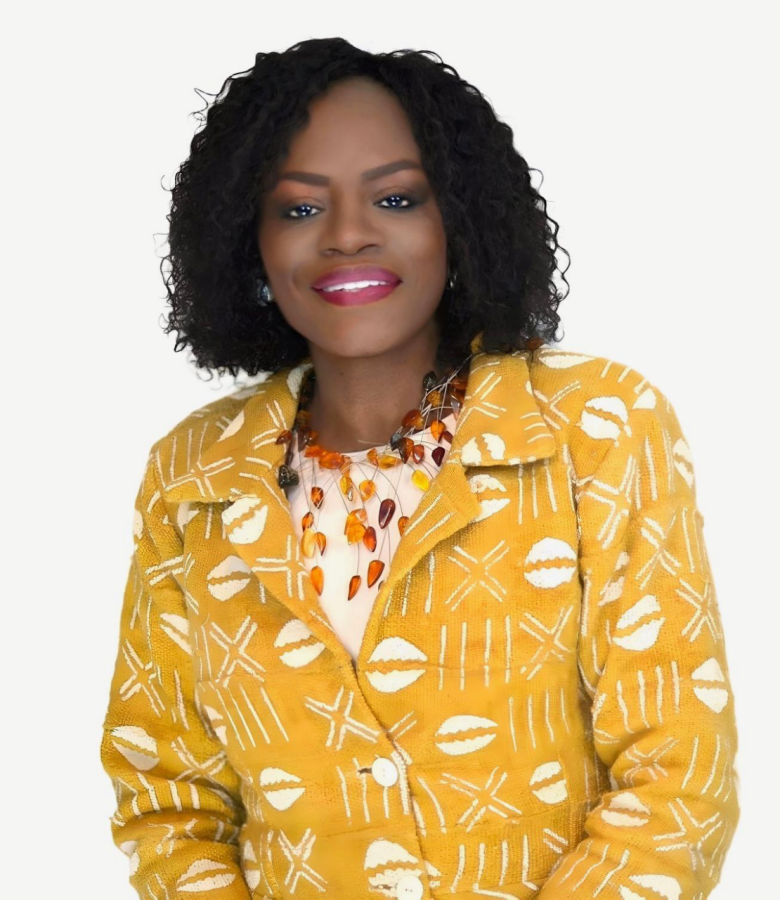
By Rhoda Weeks-Brown, contributing writer
I often think about how different my story would have been had I been diagnosed in Liberia, my country of birth, rather than in the United States.
Breast cancer does not care about borders or passports. It does not care whether a woman lives in Boston or Buchanan, New York or Nimba. The disease behaves much the same way everywhere.
What changes everything, however, is the system a woman finds herself in when those cancer cells begin to multiply.
Today, the tragedy is no longer that breast cancer cannot be treated effectively. In the vast majority of cases, it can. The tragedy is that access to life-saving detection and treatment remains profoundly unequal. The science has advanced but access has not. So, the same cancer in Monrovia has a very different likelihood of success than in Minneapolis.
Of course, breast cancer is not the only disease for which geography shapes outcomes. Where people live influences many aspects of health and longevity. However, breast cancer presents a compelling opportunity for action because the simple tools needed to save lives in most cases already exist. Greater awareness, early detection, timely diagnosis, and effective therapies and surgical procedures can all dramatically improve outcomes.
Like many other low-resource environments, however, Liberia faces persistent gaps in breast cancer awareness, screening, diagnostic services, and treatment. Too often, cancers are discovered only at advanced stages, when the chance of success is lower and options fewer. And even where treatment could make a difference, families often face financial and other barriers that make timely care difficult if not impossible.
The access gap is reflected in the numbers. Breast cancer now claims the lives of more women in Liberia than any other cancer. It is also the most prevalent cancer in the country, accounting for 21 percent of all cancers and almost 34 percent of cancers affecting women.
The regional picture is similarly grim, with an average five-year breast cancer survival rate of only 34 percent in West Africa, the lowest rate in Africa. The contrast with outcomes in higher-resource countries is stark: for example, U.S. five-year survival rates are almost 92 percent.
Those numbers represent far more than mortality statistics. They represent mothers raising children, entrepreneurs building businesses, professionals contributing their expertise, caregivers supporting families, and community leaders strengthening society. Every life lost prematurely leaves a void that ripples far beyond one individual.
Yet there is reason for hope. Because unlike some of the world’s most difficult health challenges, we already know what is needed in most cases to save the lives of those with breast cancer. Awareness and early detection work. Effective treatment and surgery work. Health systems equipped to respond work.
The question is whether we are willing to act where progress is possible. And, for me, that question is deeply personal.
My cancer was no more deserving of world-class care than that of my sisters in Liberia. My young sons were no more deserving of a mother who survives. My cancer did not know it was being treated inside a well-resourced healthcare system.
I simply benefited from the privilege of geography.
Once I fully understood that reality, survival became not just a gift, but a responsibility. I cannot repay that gift, but I can help extend it to others.
That conviction led me to establish The Aurelia & Edith Breast Cancer Foundation (AEBCF).
Our mission is simple but ambitious:
To help transform what a breast cancer diagnosis means for women in Liberia, and eventually other under-resourced countries, by advancing awareness and increasing access to life-saving screening, diagnosis, treatment, and supportive care.
We envision a future where breast cancer in Liberia is diagnosed earlier, where women understand the signs and symptoms of the disease, where screening and imaging are more widely accessible, where effective treatment is available, and where a diagnosis is met not with resignation but with confidence and hope.
We know that meaningful change is not a solo undertaking. That is why we are partnering with other non-governmental organizations, healthcare organizations and advocates, medical professionals, policymakers, community leaders, and supporters in Liberia and abroad. Together, we are laying the foundation for meaningful and sustainable change.
And we invite you to join us. Because change IS possible. Your support can help a woman detect cancer before it becomes too advanced to treat meaningfully. It can help a patient complete treatment instead of stopping when family resources are exhausted. It can ensure that more mothers return home to their children and more women have the chance not only to survive, but to thrive.
And, together, we can help create a future in which geography matters less, opportunity reaches further, and more women survive.
Because where a woman lives should not determine whether she lives.
Global Cancer Observatory: Cancer Today (Globocan), Liberia 2024 estimates, version 1.0. Lyon, France: International Agency for Research on Cancer, World Health Organization (Globocan 2024). Available from: https://gco.iarc.who.int/today, accessed 4 September 2026.
Five-Year Survival Outcomes for Breast Cancer Patients Across Continental Africa: A Contemporary Review of Literature with Meta Analysis. medRxiv preprint doi: https://doi.org/10.1101/2025.01.03.25319952; version posted January 7, 2025.
American Cancer Society. Breast Cancer Facts & Figures 2024–2025. Atlanta: American Cancer Society, Inc. 2024. Available at: cancer.org/content/dam/cancer-org/research/cancer-facts-and-statistics/breast-cancer-facts-and-figures/2024/breast-cancer-facts-and-figures-2024.pdf
Support Independent Journalism
Your support helps FrontPage Africa continue delivering independent, credible, and impactful journalism. Every contribution strengthens our ability to investigate, inform, and hold power accountable while keeping quality journalism accessible to our readers.
Support our journalism or subscribe to receive the latest FrontPage Africa stories and updates.