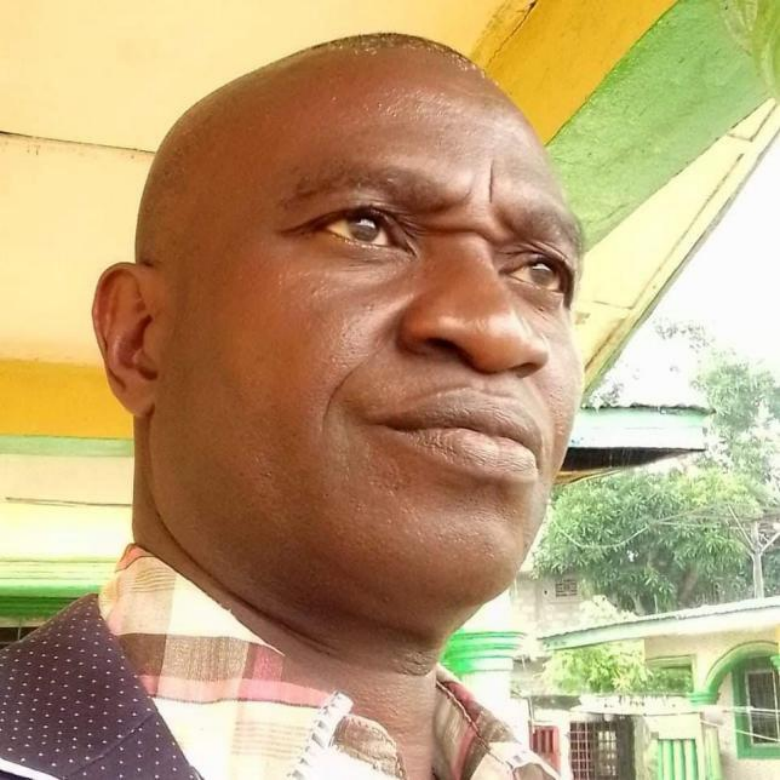

President Joseph Nyuma Boakai — competent and principled public service
“I believe serving at the highest level is an obligation; it means that through you, others would be blessed.” — President Joseph Nyuma Boakai. Ministry of National Defense.
This quotation fits the argument that Liberia’s democratic future requires leadership understood as public service rather than personal privilege. It connects competence with responsibility, integrity, and the obligation to improve the lives of citizens.
By: Austin S Fallah – A True Son of the Planet Earth Soil: [email protected]
Former President George Manneh Weah:
“Blood should never be the price tag for democracy.” — Former George Manneh Weah, inaugural address, January 22, 2018. United Nations Peace Keeping. Former President Weah’s statement is particularly relevant to Liberia’s history. In the same address, he emphasized that Liberia’s peaceful transfer of power was achieved through the democratic will of the people and the rule of law.
Former President Ellen Johnson Sirleaf — Accountable leadership:
“It is my hope that when history passes judgment on me, it will not just remark that I was the first democratically elected woman president in Africa …” — Ellen Johnson Sirleaf, Nelson Mandela Annual Lecture, 2008, Nelson Mandela Foundation.
Former President Sirleaf went on to manage accountable governance, institutions serving the public interest, democracy, basic services, and women’s voice.
This is directly relevant to the proposition that democratic leadership must be measured by institutional performance and public service.
Nelson Mandela — leadership requires character and sacrifice
“Real leaders must be ready to sacrifice all for the freedom of their people.” — Nelson Mandela, 1998. Nelson Mandela Foundation.
Former South African statesman Nelson Mandela’s remarks at the Chief Albert Luthuli Centenary Celebration in KwaZulu-Natal on April 25, 1998.
The quotation reinforces the principle that leadership in a democracy requires character, sacrifice, and commitment to the public good.
Former Secretary-General Kofi Annan — Democracy requires more than elections: “There is much more to democracy than simply which candidate, or which party, has majority support.” — Kofi Annan, “Africa’s Thirst for Democracy,” 2000. United Nations.
SG Annan continued by emphasizing the importance of democratic institutions and culture, making this especially useful for a discussion of Liberia’s future. Democracy therefore involves more than winning elections; it requires institutions, participation, accountability, respect for rights, and leaders capable of governing responsibly.
Liberia’s future cannot be entrusted to political entertainers, opportunists, or leaders who confuse public office with personal enrichment, celebrity, or tribal competition.
The country has paid too high a price for political irresponsibility, weak institutions, empty promises, and leadership that lacks intellect and peacekeeping.
After decades marked by conflict, economic hardship, corruption, public, andrust, and itutional fragility, Liberians must become more demanding of those who seek to lead them.
People must not repeat mistakes simply because they are swayed by political noise, emotional sloganeering, and performative displays.
A functioning democracy requires more than elections.
It requires an informed citizenry capable of distinguishing between serious leadership and political deception.
It requires public officials who understand national problems, communicate clearly, respect constitutional institutions, and possess the diplomatic maturity to represent Liberia to foreign supporters, investors, international organizations, and regional partners.
Liberia must stop rewarding political jokers who offer laughter when citizens need solutions, insults when the country needs unity, and propaganda when the people need honest answers.
The nation needs leaders with vision, competence, discipline, integrity, and a practical understanding of how government works.
Political leadership is not a comedy stage. It is not a marketplace for reckless promises, personal attacks, or democratic leadership.
A leader’s words have consequences because they influence public confidence, national unity, foreign relations, and economic opportunity.
When public officials make irresponsible statements, spread misinformation, or demonstrate ignorance about policy issues, they weaken the country’s image and create uncertainty.
Investors hesitate to commit resources to a country whose political environment appears unstable.
International partners become cautious when they doubt whether leaders understand agreements, obligations, or diplomatic language.
Most importantly, citizens suffer when leaders lack the ability to convert campaign rhetoric into effective public policy.
Liberians should be especially cautious about politicians who exploit poverty and frustration for personal gain.
In every democracy, there are individuals who seek office not because they care about the public, but because they see politics as the easiest path to wealth, influence, and protection from accountability.
Such figures may move from party to party without principle. They may praise one leader today and condemn or distrust a leader or institution if a better opportunity appears.
They may pretend to speak for ordinary citizens while secretly negotiating for government positions, contracts, or financial rewards.
This form of political opportunism is damaging because it turns national service into a private business arrangement.
Citizens must learn to ask difficult questions. What has a candidate accomplished before seeking office?
Does the person understand the national budget, public health, education, infrastructure, agriculture, and job creation?
Can the candidate explain how a proposed policy will be funded?
Does the person have a record of respecting the law, paying taxes, serving communities, or promoting peace?
Does the candidate speak with responsibility, or does he or she survive politically by spreading rumors and attacking opponents?
These questions are more important than party slogans, ethnic affiliations, personal friendships, or material gifts distributed during election season.
A leadership vacuum emerges when those with competence, character, and ideas remain silent while the loudest and least prepared individuals dominate public debate.
Liberia can not afford to leave its political future in the hands of people who can not articulate a coherent national agenda.
The country needs leaders who can identify problems accurately, analyze evidence, consult experts, and implement solutions.
A person who can not explain basic policies should not be trusted with managing public institutions.
A person who has no understanding of international engagement should not be expected to negotiate on behalf of a country whose recovery depends heavily on regional cooperation, trade, development assistance, private investment, and diplomatic credibility; diplomacy is particularly important for Liberia.
No modern nation develops in isolation. Liberia’s economic and political success is connected to its relations with the Economic Community of West African States, the African Union, the United Nations, the Mano River Union, international financial institutions, global investors, and the Liberian diaspora.
A president, legislator, minister, or ambassador must understand that diplomatic engagement requires preparation, respect, and strategic thinking.
International relations are not based on emotion alone; they involve negotiations, treaties, trade arrangements, security partnerships, climate commitments, debt management, and development priorities.
Leaders who lack diplomatic awareness can embarrass the country or undermine national interests.
Careless statements can damage relationships with allies.
Failure to understand international agreements can expose Liberia to unfair arrangements.
Poor negotiation can cause the country to lose opportunities for investment, infrastructure, education, and health support.
Diplomacy requires leaders who know when to speak, when to listen, when to compromise, and when to defend Liberia’s interests firmly.
It also requires leaders who can communicate with confidence and clarity in formal settings.
However, Liberians should not reduce leadership solely to a person’s accent, educational background, or the loudest political slogans.
Liberia is a multilingual country with citizens who communicate in English, Liberian English, and numerous local languages.
Democratic participation must not become a privilege reserved only for people with elite educational credentials.
Many citizens without advanced degrees possess wisdom, honesty, courage, and practical knowledge of their communities.
Yet there is still an important distinction between elitism and competence.
Public leadership demands the ability to communicate clearly enough to be understood, manage and interpret official documents, participate meaningfully in debate, and make decisions based on evidence rather than confusion.
Basic communication matters because language is a tool of governance.
When leaders can not express themselves clearly, they may struggle to explain laws, policies, budgets, and national priorities.
When they can not understand the meaning of agreements or official documents, they become dependent on advisers who may manipulate them.
Even simple rules of communication, including correct grammar and subject-verb agreement in formal settings, can reflect care, preparation, and respect for an audience.
Grammar alone does not make someone wise or patriotic, but habitual carelessness in communication may reveal a broader lack of discipline.
A serious leader should be willing to improve, learn, consult experts, and prepare thoroughly before speaking for the nation.
The greater problem is not that some politicians make grammatical mistakes.
The greater problem is that too many political figures make intellectual mistakes: they offer claims without facts, make promises without plans, criticize without alternatives, and seek power without understanding responsibility.
They may speak loudly, but they do not think deeply.
They may attract crowds, but they cannot build institutions. They may win applause, but they can not create jobs, improve schools, repair roads, strengthen hospitals, or protect public funds.
Liberia should not confuse popularity with capacity.
The country’s history offers a painful lesson about the danger of irresponsible political choices.
Liberia has experienced periods in which mistrust, exclusion, corruption, and political violence weakened national unity.
The consequences were devastating, and lives were lost, families were displaced, infrastructure was destroyed, and national development was delayed for generations.
The memory of conflict should compel Liberians to reject politicians who use hostile language, encourage division, or treat opponents as enemies rather than fellow citizens.
Democracy requires peaceful competition. Political disagreement should produce debate, not violence; reform, not revenge.
To prevent the repetition of past mistakes, Liberia must strengthen civic education.
Citizens need to understand their constitutional rights, the responsibilities of public officials, and the importance of holding leaders accountable between elections.
Voting should not be based on who provides money, rice, transportation, T-shirts, or temporary favors.
Such gifts are often small investments made by politiciansians who expect much larger returns once they gain access to public resources.
A citizen who sells a vote may later pay the price through poor schools, inadequate hospitals, unemployment, rising prices, and corrupt public services.
The media also have a major responsibility. Journalists, radio hosts, social-media influencers, and community commentators should not amplify reckless political statements simply because controversy attracts attention.
They must challenge unsupported claims, investigate corruption, explain policies, and provide citizens with accurate information.
In a society where rumors can spread quickly, responsible media are essential to democratic stability.
Public debate must move beyond insults and personality contests toward serious discussion about the issues that affect daily life.
Young Liberians have an especially important role to play.
They represent the country’s future, but they are often targeted by politicians who use money, false promises, and partisan loyalty to mobilize them.
Young people should refuse to become instruments of political violence or propaganda.
Instead, they should demand inclusion in policy discussions, pursue education and skills training, participate in community development, and evaluate leaders according to performance.
The youth of Liberia must understand that their political choices will shape the quality of their lives for decades.
At the same time, established leaders, elders, professionals, religious institutions, educators, and civil society organizations must encourage a higher standard of political culture.
They should promote truthfulness, nonviolence, transparency, and national unity.
They should condemn corruption regardless of which party commits it.
They should not excuse incompetence simply because the incompetent person belongs to their ethnic group, county, church, family, or political alliance.
Patriotism means defending Liberia’s interests above personal loyalties.
Liberia does not need perfect leaders, because no human being is perfect.
It needs leaders who are prepared, accountable, humble enough to learn, and committed to public service.
It needs leaders who surround themselves with qualified advisers rather than praise-singers.
It needs leaders who understand that holding office is a responsibility, not a reward.
It needs leaders who can speak respectfully to ordinary citizens and confidently to international partners.
Above all, it needs leaders who place the country’s future above their own ambitions.
Liberians must therefore reject the culture of political joking, empty rhetoric, opportunism, and intellectual laziness.
Citizens should demand policies instead of slogans, evidence instead of rumors, competence instead of celebrity, and service instead of self-interest.
The nation can not move forward by repeating the destructive patterns that have already caused suffering.
The lessons of the past are clear: when citizens fail to hold leaders to high standards, the entire country pays the price.
Liberia’s future depends on a new political expectation.
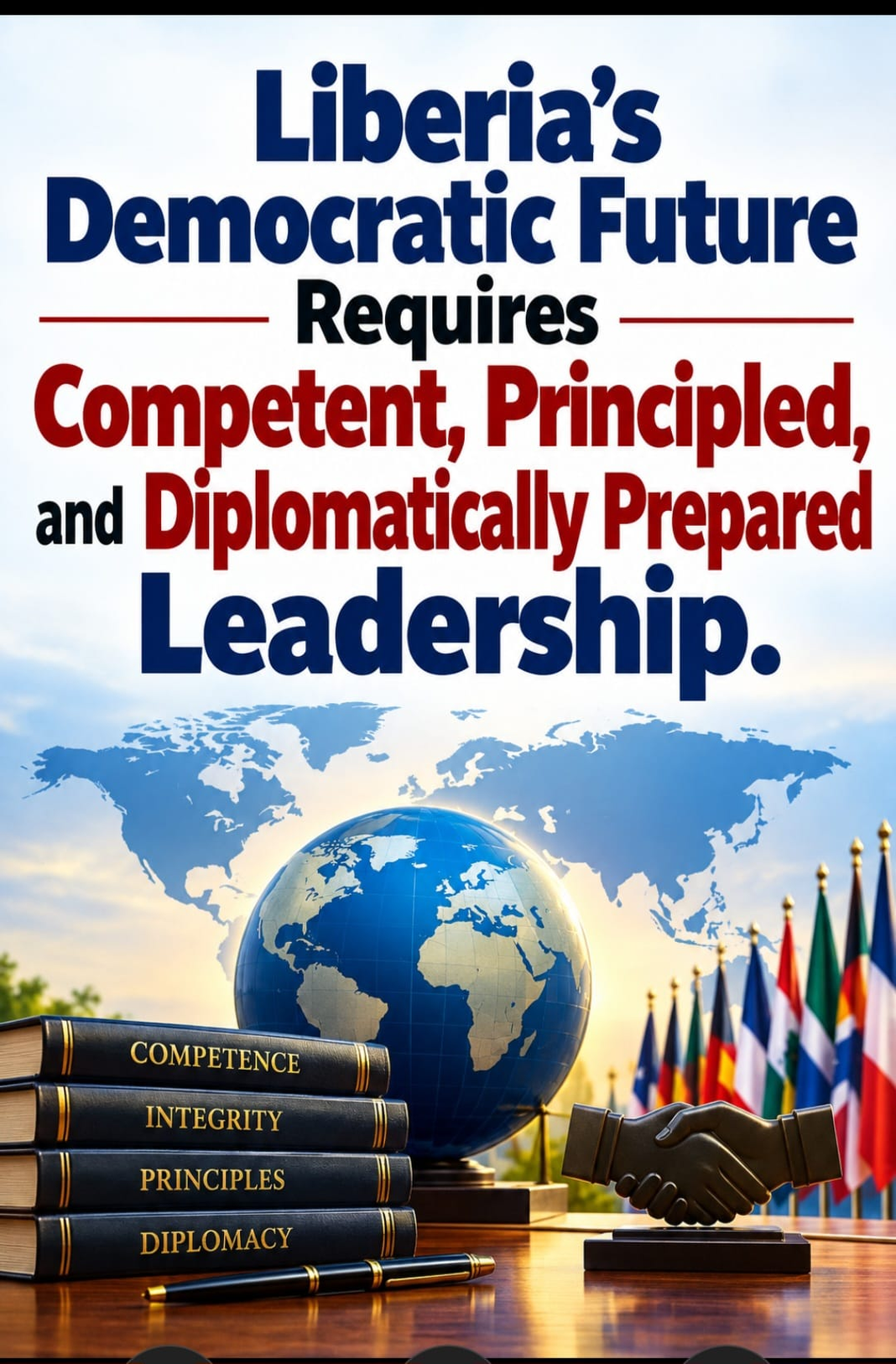
Every candidate for office should be required, by public scrutiny and democratic pressure, to demonstrate integrity, knowledge, communication skills, diplomatic awareness, and a realistic plan for national development.
The country must choose leaders not because they are loud, entertaining, or politically connected, but because they are capable of governing wisely.
Only through such seriousness can Liberia build stronger institutions, create opportunity for its people, protect its sovereignty, and ensure that the failures of yesterday are never repeated tomorrow.
Support Independent Journalism
Your support helps FrontPage Africa continue delivering independent, credible, and impactful journalism. Every contribution strengthens our ability to investigate, inform, and hold power accountable while keeping quality journalism accessible to our readers.
Support our journalism or subscribe to receive the latest FrontPage Africa stories and updates.