MONROVIA — For years, Liberian women have carried the wounds of war into their homes and communities while simultaneously becoming some of the country’s strongest voices for peace, reconciliation and survival.
By Patience M. Jones
Now, as Liberia moves toward transitional justice and the establishment of a War and Economic Crimes Court, the United Nations is warning that the country’s journey toward healing cannot be complete if women remain on the sidelines of decisions about justice, accountability and peace.
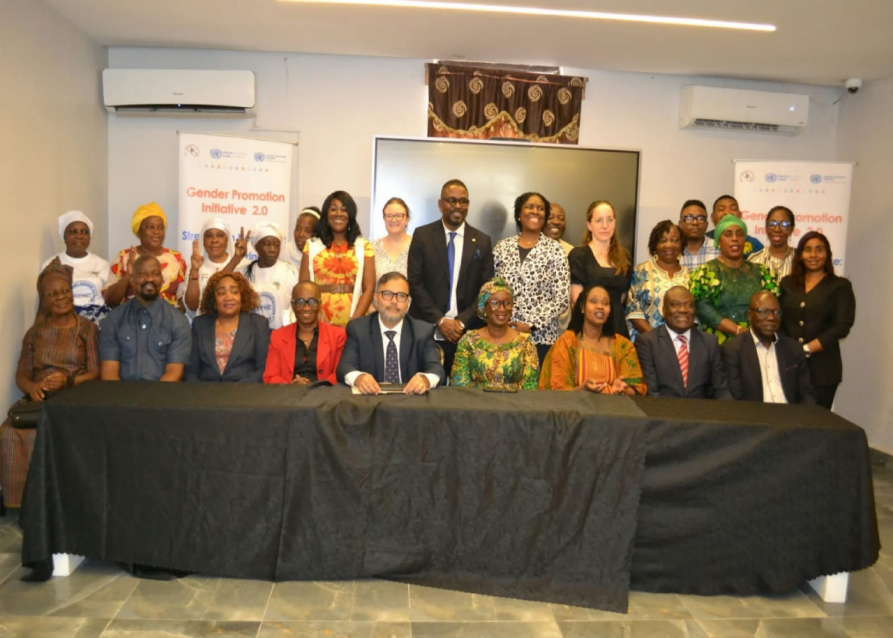
That message took center stage Tuesday, September 15 as UN Women, in partnership with the Office of the United Nations High Commissioner for Human Rights (OHCHR) Liberia, the Ministry of Gender, Children and Social Protection and Kvinna till Kvinna, officially rolled out the Gender Promotion Initiative 2.0 (GPI 2.0).
Funded by the United Nations Peacebuilding Fund, the three-year initiative represents a US$3 million investment aimed at strengthening women’s leadership, access to justice, transitional justice participation and inclusive peacebuilding across Liberia.
The programme will run from April 2026 to April 2029, with activities implemented nationally and in five priority counties — Montserrado, Lofa, Nimba, Grand Gedeh and Grand Cape Mount.
But beyond the figures and programme activities lies a deeper question: How does a country heal from the scars of war if the women who helped end the conflict are not given an equal voice in deciding what justice and healing should look like?
For UN officials, the answer is clear.
“We must not take women only as victims but also women as actors,” UN Resident Coordinator in Liberia Christine N. Umutoni said, stressing that women must contribute to every aspect of Liberia’s transitional justice process.
Umutoni said Liberia’s peace should not be taken for granted, noting that the country’s relative stability was achieved through sustained efforts and must continue to be protected.
She said women’s participation is particularly important as Liberia advances the establishment of the War and Economic Crimes Court and other accountability mechanisms.
The GPI 2.0, she explained, therefore comes at a critical moment – one in which women must be recognized not merely as survivors of conflict, but as decision-makers, peacebuilders and partners in shaping Liberia’s future.
From Surviving War to Shaping Justice
For many Liberians, the legacy of the civil war is not confined to history books.
Its consequences remain visible in broken families, lost opportunities, unresolved trauma and communities still struggling to reconcile with the past.
Yet women were among those who stood at the forefront of Liberia’s peace movement.
OHCHR Liberia Country Representative and Chief of Office Christian Mukosa reminded participants that Liberia’s women already had a voice long before the GPI 2.0.
He challenged the programme’s theme, “Strengthen Her Voice,” suggesting that the country should perhaps be talking about strengthening and sustaining a voice that women have already demonstrated through decades of peacebuilding.
“Liberian women helped bring an end to the conflict,” Mukosa said, pointing to their continued contributions through advocacy, mediation, reconciliation, peace huts and community leadership.
For him, the task now is not to create that voice, but to ensure that it remains strong enough to influence the institutions and processes responsible for justice and peace.
He described peace as something that cannot be imported or outsourced.
“Peace cannot be outsourced,” Mukosa emphasized, arguing that sustainable peace can only be achieved when the people themselves lead, own and sustain it.
His message was particularly strong on transitional justice.
As Liberia prepares to confront allegations of past human rights violations and pursue accountability, he warned that a justice process that ignores gender could leave serious violations inadequately addressed and weaken public confidence in justice institutions.
“Everything must have a gender lens,” he stressed, saying gender responsiveness must be reflected in policy, institutional arrangements, investigations, prosecutions, reparations, outreach and data collection.
For Mukosa, justice is not simply about punishment.
It is also about healing, restoring trust and preventing the recurrence of violence.
A Programme Built Around Women at the Grassroots
UN Women Country Representative Abul Monjurul Kabir said GPI 2.0 is designed to strengthen social cohesion and sustainable peacebuilding by expanding women’s access to justice and their participation in decision-making.
The programme has three major pathways.
First, it will strengthen Women’s Rights Organizations (WROs), including peace huts and women’s networks that have long worked at the community level.
Second, it will support institutions to become more gender-responsive through stronger planning, budgeting, accountability, monitoring, data collection and evidence-based decision-making.
Third, it will strengthen connections among government, civil society and communities through dialogue, partnerships and community engagement.
A significant portion of the programme’s resources will go directly to women’s organizations.
More than 40 percent of programme resources will be channelled to WROs through sub-grants, supporting their institutional capacity, advocacy, mediation, conflict prevention, reconciliation, negotiation, project management and resource mobilization.
Kabir said this approach recognizes that sustainable peace is built from the grassroots.
Women’s organizations, he noted, already possess the trust, knowledge and community networks needed to help prevent conflict, mediate disputes and rebuild relationships.
The programme will also support community dialogues on gender equality and transitional justice, nationwide awareness campaigns, survivor networks, early-warning mechanisms, exchange visits and the revitalization of gender coordination platforms.
Healing Must Reach Beyond Monrovia
The decision to prioritize five counties is also significant.
For years, many national conversations about justice, governance and development have been concentrated in Monrovia, even though the effects of conflict were experienced across Liberia.
GPI 2.0 seeks to take the conversation beyond the capital.
Kabir said justice and peacebuilding processes must be accessible to women and communities outside Monrovia and must reflect the different realities they face.
That means a woman in Lofa, Nimba, Grand Gedeh or Grand Cape Mount should not simply hear about transitional justice through national media.
She should understand what justice means, what her rights are, where she can seek assistance and how she can participate in shaping the process.
The Ministry of Justice, represented at the ceremony, similarly emphasized that transitional justice must be victim-centered, gender-responsive, inclusive and accessible.
Speaking on behalf of Acting Justice Minister and Attorney General Cllr. Betsey M. Blamo, the Ministry’s representative said women must move beyond being beneficiaries of justice and become active participants, advocates, leaders and decision-makers.
The Ministry also called for greater legal awareness so women and girls can understand their rights and the justice mechanisms available to them, including the War and Economic Crimes Court.
A Chance to Turn Pain Into Healing
The GPI 2.0 arrives as Liberia prepares to implement its National Action Plan III on Women, Peace and Security, creating an opportunity to move from policy commitments to practical action.
Its broader ambition is not simply to increase the number of women attending meetings.
The goal is to ensure women have enough influence to shape the decisions made in those rooms.
Kabir described the programme’s desired transformation as a shift from women’s participation to women’s meaningful leadership.
Women, he said, should not merely participate “in numbers,” but should be part of the decision-making that determines Liberia’s peacebuilding future.
That distinction is particularly important for a country where women have historically been at the center of peace efforts but have often struggled to secure equal representation in formal political and justice structures.
For Mukosa, Liberia’s history provides evidence that women’s leadership works.
He recalled seeing Liberian women mobilize during elections through situation rooms and community discussions to discourage violence and protect peace.
He also pointed to the experience of his own country, saying the sustained involvement and capacity of women can help societies recover from deep crises.
Liberia, he argued, is itself another example.
Three Million Dollars, Three Years — But What Will Change?
With US$3 million committed over three years, the initiative is relatively modest compared with the scale of Liberia’s peacebuilding and justice needs.
Mukosa acknowledged this, but argued that the investment can make a significant difference if resources are used responsibly.
He urged transparency, strong monitoring, gender-sensitive engagement and regular feedback from women and communities.
For him, the true measure of success should not be the number of workshops conducted or meetings held.
It should be whether women’s organizations become stronger, institutions become more responsive, women gain meaningful influence in decision-making, and citizens develop greater trust in justice and peacebuilding processes.
That is where the healing component of GPI 2.0 becomes most important.
Because healing is not simply forgetting the past.
It is creating a system where survivors can seek justice with dignity, communities can confront painful histories, women can tell their stories without being silenced, and institutions can respond in ways that prevent yesterday’s violence from becoming tomorrow’s reality.
The Ministry of Justice called for a Liberia where survivors can seek justice with dignity, rights are protected and accountability contributes to lasting peace and national healing.
Umutoni similarly urged partners to treat the rollout as the beginning of a shared accountability process.
She called on stakeholders to listen to women in all their diversity, protect the space for their leadership and ensure their priorities shape the institutions and processes that will define Liberia’s future.
The Voice That Must Not Be Silenced
The message from the launch was ultimately simple: Liberia has already witnessed what women can do for peace.
The challenge now is to ensure their contribution does not end with peace agreements, elections or community mediation.
As Liberia confronts its past and prepares for transitional justice, women must have a seat where the difficult decisions about accountability, reparations, reconciliation and national healing are made.
Because the women who carried families through war, mediated community disputes, advocated for peace and helped rebuild communities are not merely witnesses to Liberia’s history.
They are part of the country’s healing story – and increasingly, they are being called upon to help write its next chapter.
Support Independent Journalism
Your support helps FrontPage Africa continue delivering independent, credible, and impactful journalism. Every contribution strengthens our ability to investigate, inform, and hold power accountable while keeping quality journalism accessible to our readers.
Support our journalism or subscribe to receive the latest FrontPage Africa stories and updates.