Liberia’s long-promised pursuit of war and economic crimes could face a major obstacle if witnesses, whistleblowers, and victims remain afraid to speak, the Office for the Establishment of the War and Economic Crimes Court for Liberia (OWECC-L) has warned.
By Patience M. Jones, [email protected]
The office is now putting pressure on the National Legislature to move beyond years of deliberation and urgently pass amendments to the Witness Protection and Whistleblower laws, together with legislation establishing the proposed War and Economic Crimes Court (WECC) and National Anti-Corruption Commission/Court (NACC).
At the center of OWECC-L’s concern is a question that could determine whether future prosecutions succeed: Who will protect the people expected to testify against powerful individuals accused of grave crimes?
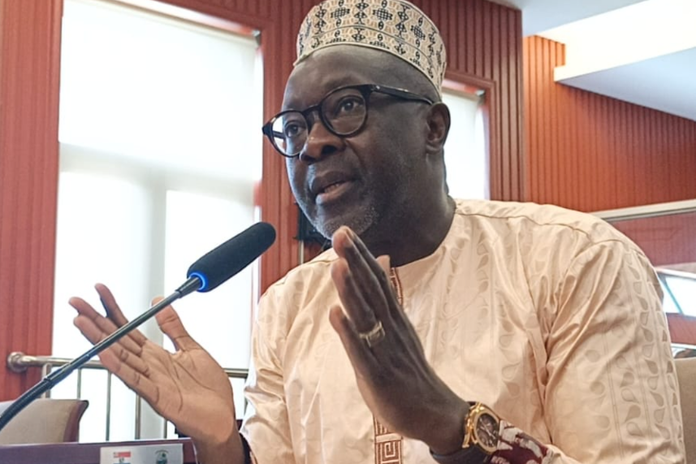
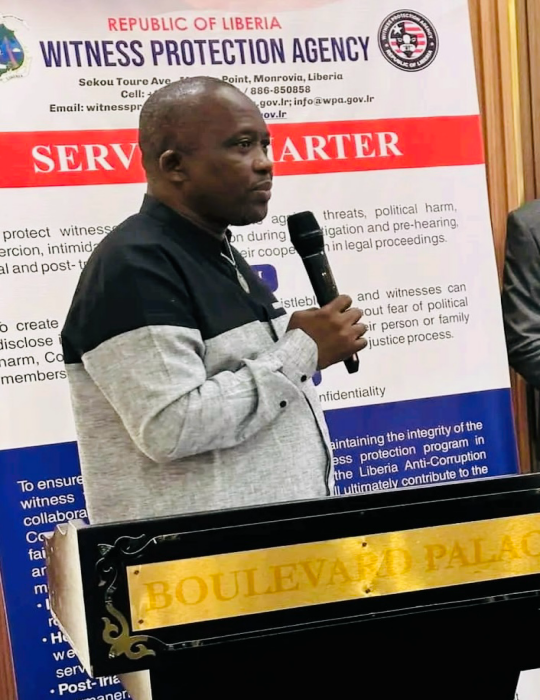
Speaking at a high-level national dialogue held under the theme:, “Strengthening Protection Mechanisms for Witnesses, Whistleblowers, and Victims: Advancing Liberia’s Anti-Corruption and Transitional Justice Commitments,” WECC-L Executive Director Dr. Cllr. Jallah A. Barbu said Liberia cannot credibly pursue justice while those with critical evidence remain exposed to retaliation.
Dr. Barbu argued that the Witness Protection and Whistleblower amendments are not standalone reforms. Instead, he described them as essential pillars of the proposed WECC and NACC legal framework.
“One cannot do without the other.”
“These amendments, and in fact the entire Witness Protection Act and the Whistleblower Act, are supportive of and interrelated instruments with the WECC and NACC Bills; they complement each other, as one cannot do without the other,” Dr. Barbu said.
His warning comes as Liberia continues to grapple with the unfinished business of accountability for atrocities committed during its civil conflicts and allegations of major economic crimes.
Fear Could Undermine Prosecutions
OWECC-L says the country’s justice system faces a fundamental challenge: people who possess information about wrongdoing may remain silent because they do not believe the state can protect them.
“Fear is preventing witnesses, whistleblowers, and victims from coming forward,” the office stated.
That fear, according to OWECC-L, could have consequences far beyond individual cases. Without witnesses willing to cooperate, investigators and prosecutors may struggle to build the evidence needed to establish responsibility and secure convictions.
Dr. Barbu stressed that establishing a court alone will not guarantee justice.
He said Liberia must also create an environment in which victims can tell their stories, whistleblowers can expose wrongdoing, and witnesses can testify without fearing intimidation, retaliation, or harm.
The concern becomes particularly significant in cases involving alleged war crimes and economic crimes, where testimony and other sensitive evidence could implicate individuals with influence, resources, or political connections.
Pressure on President Boakai, Legislature
Dr. Barbu also renewed his appeal to President Joseph Nyuma Boakai, Sr. to encourage lawmakers to return to and finalize the WECC and NACC legislation, along with the proposed amendments to the Witness Protection and Whistleblower laws.
He argued that decisive legislative action would send a message domestically and internationally that Liberia is serious about accountability.
According to Dr. Barbu, passing the measures could also give the government important deliverables ahead of the upcoming United Nations General Assembly.
But OWECC-L’s message to lawmakers was not limited to encouragement.
The office warned that continued inaction could deepen public frustration and undermine confidence in the Legislature, particularly among citizens who expect elected officials to address longstanding governance and justice concerns.
“These decisive actions will affirm the implementation of the constitutional duty you swore to perform and the authority ‘We, the People’ conferred upon you to enact laws that are necessary and proper,” Dr. Barbu told lawmakers.
Witness Protection Agency Challenged
OWECC-L also turned its attention to the Witness Protection Agency, challenging the institution to decentralize its operations.
Dr. Barbu described decentralization as urgent if witness protection is to move beyond Monrovia and become accessible to people across the country.
For victims and witnesses outside the capital, the effectiveness of a protection system may depend not simply on whether a law exists, but whether protection can actually reach them when threats emerge.
Dr. Barbu insisted that people who cooperate with the justice system should not be left to face retaliation alone.
The office also called on lawmakers to complete the long-awaited Women, Peace, and Security instrument, describing it as another outstanding national commitment to Liberia’s international partners.
The Accountability Test
The latest call from OWECC-L puts the Legislature before a broader accountability test.
Liberia has repeatedly expressed its commitment to fighting corruption, strengthening the rule of law, and addressing the legacy of its civil wars. But those commitments now face a practical test: whether the country can build institutions strong enough to protect the people needed to make those promises enforceable.
For OWECC-L, the issue is therefore bigger than passing another set of laws.
It is about whether Liberia can create a justice system in which victims are willing to speak, witnesses are willing to testify, whistleblowers are willing to expose wrongdoing, and perpetrators can be held accountable without those who help establish the truth being left vulnerable.
Dr. Barbu put the matter bluntly: “Those who provide evidence in the pursuit of justice must not be abandoned or exposed to retaliation.”
With the proposed WECC and NACC legislation still awaiting final action, the question facing lawmakers is no longer simply whether Liberia needs stronger justice institutions.
It is whether the country is prepared to give those institutions the legal tools – and the protected witnesses – they will need to deliver justice.
Support Independent Journalism
Your support helps FrontPage Africa continue delivering independent, credible, and impactful journalism. Every contribution strengthens our ability to investigate, inform, and hold power accountable while keeping quality journalism accessible to our readers.
Support our journalism or subscribe to receive the latest FrontPage Africa stories and updates.