Summary:
- Liberia marks 23 years of peace with a week of remembrance and reflection, as survivors say justice, reconciliation and support for victims remain pressing concerns.
- Victims and advocates call for prosecutions, reparations and the preservation of massacre sites to honor the dead and educate younger generations.
- Pressure grows on lawmakers to approve legislation establishing a war and economic crimes court, more than two decades after the fighting ended.
By Anthony Stephens, senior justice correspondent with New Narratives
SOUL CLINIC, Montserrado County — Twenty-three years after Liberia’s warring factions signed an agreement ending more than a decade of civil wars, survivors and peace advocates gathered at the site of a wartime massacre to celebrate the country’s sustained peace — and warn that reconciliation remains incomplete without justice.
The Soul Clinic gathering, organized by partners including Kvinna till Kvinna, the Women’s NGOs Secretariat of Liberia, the Office for the Establishment of the War and Economic Crimes Court and the Liberia Massacre Survivors Association, one of the country’s largest victims’ and survivors’ groups, was part of more than a week of events reflecting on Liberia’s 23 years of peace.
“But let us be honest. Reconciliation in Liberia is unfinished,” said Sheikh S. Kamara, executive director of Liberia’s Peacebuilding Office, who served keynote speaker at the Soul Clinic event. “Some TRC [Liberia’s Truth and Reconciliation Commission] recommendations remain unimplemented. Some communities still do not feel heard.”
Twenty-three years after the fighting ended, Liberia has maintained its peace, but much of its postwar reckoning remains incomplete. No one has been prosecuted in Liberia for wartime atrocities, although 16 trials and investigations have taken place in Europe and the United States. Victims are still waiting for reparations, and many massacre sites remain unmarked. Advocates say accountability, remembrance and teaching younger generations about the cost of the wars are essential to sustaining Liberia’s peace.
Similar commemorative events by the same partners were held elsewhere, including at Maher in Bomi County, where government forces were accused of massacring civilians suspected of supporting rebelss from the Liberians United for Reconciliation and Democracy, or LURD, during the second civil war in 2002. Liberia’s truth commission said hundreds were killed, while Amnesty International separately documented 175 alleged deaths. Services were also held at a mosque and a church in Monrovia, along with a dialogue as part of the broader commemorative activities.
Together, the events honored those killed in the wars while reflecting on how far Liberia has come — and how much remains to be done in the country’s pursuit of justice and reconciliation.
At Soul Clinic, that history was beneath the participants’ feet.
The grounds of Soul Clinic Baptist Church were once part of a rubber plantation, according to residents and church officials. They said human remains, including skulls, were uncovered when the ground was dug during construction of the church.
The area became infamously known during the wars as “God Bless You Gate,” residents said, because people who managed to pass through without being harmed or killed were considered blessed.
The Liberia Massacre Survivors Association says more than 130 people were killed there and counts the location among 90 massacre sites it has documented across Liberia.
In its final report in 2009, Liberia’s truth commission also identified the gate as one of the places where people were killed.
For Peterson Sonyah, executive director of the massacre survivors association, preserving such sites honors the dead and teaches younger Liberians, many of whom did not experience the wars, about the country’s past.
Sonyah recently visited genocide memorial sites in Rwanda on a study trip sponsored by Liberia’s Office for the Establishment of the War and Economic Crimes Court.
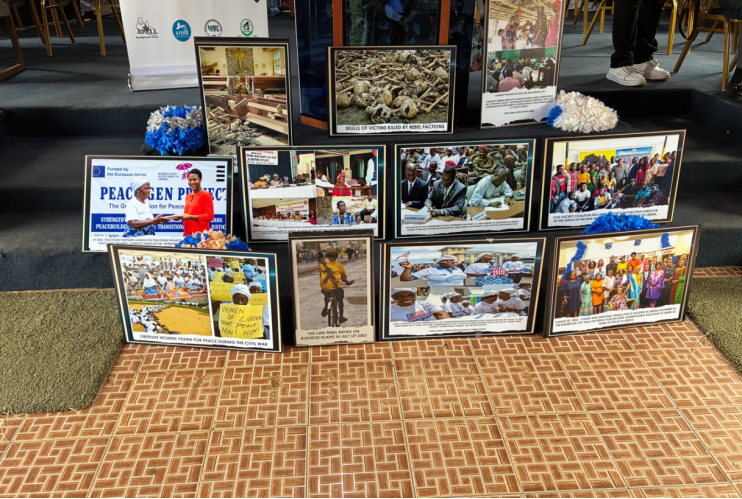
“We need to memorialize the dead,” Sonyah said. “If you go to Rwanda, people don’t use places like this anymore. It remains a memorial site that people go there and see what happened.”
He argued that preserved massacre sites could also attract visitors, generating income that could help support victims and survivors.
“The peace we have today, let us put justice behind it,” he said.
Kamara made a similar connection between remembrance and reconciliation.
“Memory without reconciliation becomes bitterness,” Kamara said. “Reconciliation without memory becomes denial. We need both.”
Exactly 23 years earlier, Liberia’s government and its two main rebel movements — Liberians United for Reconciliation and Democracy, or LURD, and the Movement for Democracy in Liberia, or MODEL — signed the Comprehensive Peace Agreement in Accra, Ghana, ending the country’s second civil war. The agreement came seven days after then President Charles Taylor was forced into exile in Nigeria under mounting military and international pressure. His vice president, Moses Blah, succeeded him and was leading the Liberian government when it signed the peace agreement with the two rebel groups.
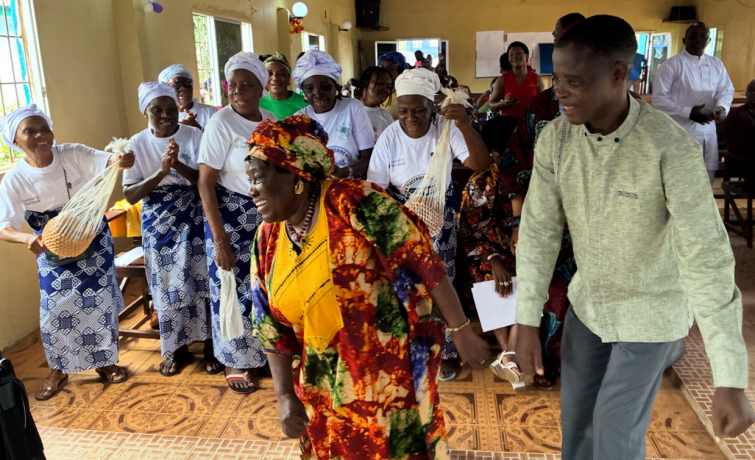
Women, particularly those from the Women in Peacebuilding Network, played a pivotal role in pushing the warring factions toward that agreement, organizing none violent demonstrations demanding an end to the fighting and pressuring negotiators in Ghana to reach a settlement.
Some of those women were back at Tuesday’s event — this time asking political leaders to complete another part of Liberia’s postwar process.
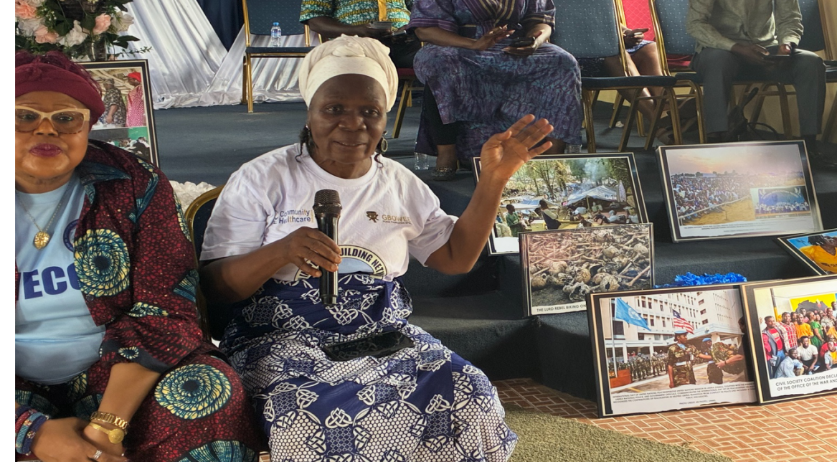
Ma Korpo Dennis, president of the Network, appealed directly to lawmakers to act on legislation establishing a war and economic crimes court.
“We begging the lawmakers, time wait for no man,” Dennis said in Liberian English. “Your join us so the Legislature will sign this paper [bill] where the President sent to them.”
She linked that appeal to the sacrifices women made to help end the wars.
“We tire with the suffering and we want our children them to get bright future,” she said. “Da why we sacrifice ourself.”
In May, President Joseph Boakai renewed efforts to establish a war and economic crimes court, directing the government’s court office to work with the Legislature to secure passage of legislation within 90 days. The office submitted bills for that court and a separate National Anti-Corruption Court. The deadline has passed, with both measures still before lawmakers.
The Legislature, which has constitutional authority to establish courts, is considering six proposals, including bills from the Liberian National Bar Association and a civil society coalition led by the Independent National Commission on Human Rights; separate proposals from Senate President Pro Tempore Nyonblee Karnga-Lawrence and Senator Joseph Jallah; and two bills from the government’s court office.
Jallah Barbu, executive director of the Office, said constitutional concerns should inform lawmakers’ scrutiny of the bills, not become a reason for further delay.
“The people of Liberia deserve a law that is constitutionally sound, internationally compliant, institutionally workable and capable of delivering credible justice,” he said. At one point, he turned to Representative Michael Thomas, the only lawmaker attending the gathering, and urged him to rally his colleagues behind the legislation.
Thomas said he supported establishing the court.
“Justice for the victims,” Thomas said. “This blood is crying day in, day out.”
“Justice for those who lost their lives, who were not part of the conflict,” he continued. “Justice for our mothers who were in the war looking for food. Justice for our fathers.”
Thomas did not grant an interview after the event to say whether he had consulted his constituents about the proposed court. Some lawmakers have cited the need for constituent consultations as they consider the legislation.
The role of younger Liberians was another focus. A generation has grown up with little or no memory of the wars. Kamara said it was important “that we will teach the next generation what war cost us” and called for peace education in schools.
Esther S. Davis Yango, executive director of the Women’s NGOs Secretariat of Liberia, said the gathering sought to connect those who experienced the wars with younger Liberians who have known mainly peace.
“As we commemorate this important day, we must remember that peace is more than the absence of war,” Yango said. “Sustainable peace requires truth, justice, accountability, healing, reconciliation and the meaningful participation of citizens.”
This story was a collaboration with New Narratives as part of the Investigating Liberia project. Funding was provided by the Swedish International Cooperation Development Agency. The funder had no say in the story’s content.
Support Independent Journalism
Your support helps FrontPage Africa continue delivering independent, credible, and impactful journalism. Every contribution strengthens our ability to investigate, inform, and hold power accountable while keeping quality journalism accessible to our readers.
Support our journalism or subscribe to receive the latest FrontPage Africa stories and updates.