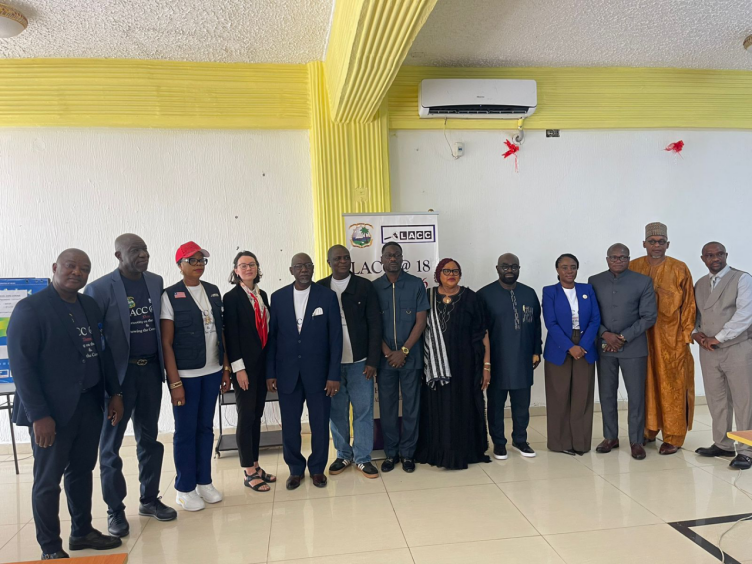
Monrovia — The Liberia Anti-Corruption Commission has celebrated its 18th anniversary with renewed calls for stronger prevention of corruption, institutional collaboration, prosecution, and recovery of public resources lost through corruption.
By Francis G. Boayue
The anniversary celebration held over the weekend in Monrovia brought together current and former LACC officials, government representatives, civil society actors, media practitioners, and other stakeholders involved in Liberia’s anti-corruption efforts.
The LACC was established on August 28, 2008, following post-war governance reforms and recommendations for the creation of an independent institution to lead Liberia’s fight against corruption.
Speaking during the ceremony, LACC Executive Chairperson Cllr. Alexandra K. Zoe, who delivered a presentation titled “18 Years of the LACC — A Journey in Numbers,” said the Commission’s progress over the past 18 years has been marked by institutional growth, legal reforms, and increased public awareness.
She stressed, however, that the fight against corruption cannot be won by the Commission alone.
“This is not an easy fight, and it’s not something that LACC can do alone,” Zoe said, urging citizens to report corruption and help create awareness in communities beyond the Commission’s reach.
“Your role is to report. Your role is to create additional awareness in areas that we cannot reach,” she added.
Zoe said the Commission’s 2022 amended and restated Act represents a major milestone, as it granted the LACC direct prosecutorial powers.
Previously, the Commission was required to forward investigative reports to the Ministry of Justice for prosecution, with the Ministry given 90 days to act on cases. According to Zoe, the arrangement contributed to delays and sometimes weakened the prospects of successful prosecution.
She said the Commission is now exercising its prosecutorial authority but needs a specialized court to efficiently adjudicate corruption cases.
Zoe welcomed ongoing efforts toward the establishment of a specialized anti-corruption court, saying it would facilitate speedy trials and ultimately strengthen efforts to recover stolen public assets.
“When this court is established, what it does is that it will create a speedy trial, and then it should ultimately lead to recovery,” she said.
She said the Commission’s focus must increasingly shift toward recovering public resources in existing cases while strengthening prevention to stop new cases of corruption.
Zoe also called for increased budgetary support, stressing that the Commission remains understaffed and under-resourced relative to the scale of Liberia’s corruption challenges.
She said the LACC has grown from a small institution with a skeleton staff to its current structure but still lacks sufficient personnel, particularly prosecutors, to effectively execute its mandate.
The Executive Chairperson said increased funding is critical to implementing the Commission’s 2026–2030 Strategic Plan, which focuses on prevention, enforcement, partnerships, and institutional strengthening.
She also called for greater institutional independence and sustained support from government and development partners.
Delivering the keynote address, Minister of State for Presidential Affairs Hon. Samuel A. Stevquoah said Liberia’s next phase of the anti-corruption fight must prioritize prevention, institutional cooperation, and consequences.
“We cannot investigate our way out of corruption,” Stevquoah said, warning that investigations often come after public resources have already been lost.
He called for stronger procurement systems, internal controls, audits, asset declaration and verification, digital financial systems, and other mechanisms designed to make corruption more difficult to commit.
The Minister also urged closer collaboration among integrity institutions, including the General Auditing Commission, Internal Audit Agency, Ministry of Justice, Financial Intelligence Agency, Public Procurement and Concessions Commission, and Liberia Revenue Authority.
“Too often in government we see institutions that operate in silos,” he said, calling for improved information sharing and more efficient movement of cases from audit and investigation through prosecution and adjudication.
Stevquoah said accountability must be both firm and fair, with due process respected.
“At 18, the LACC is no longer a young institution,” he said. “You’ve matured.”
He urged the Commission to be “fearless” while remaining fair, independent, collaborative, and aggressive in protecting public resources while respecting due process.
For his part, former LACC Executive Chairperson Cllr. James N. Verdier reflected on the Commission’s early struggles, urging current officials to remain resilient in the face of political pressure, criticism, and public skepticism.
Verdier, who served as Executive Chairperson from 2013 to 2019, clarified that Cllr. Frances Johnson-Morris was the Commission’s first chairperson.
He recalled that during his tenure, the LACC faced significant limitations under the law, particularly regarding prosecution and enforcement.
He said the Commission pushed the boundaries of its existing legal authority, including making arrests in corruption investigations, while advocating for stronger legislation.
Verdier also emphasized the importance of professional training for investigators and greater investment in forensic investigative capabilities.
He further stressed that asset declaration must be accompanied by verification.
“The crux of the asset declaration is the verification,” Verdier said, calling for adequate resources to determine whether assets declared by public officials are accurate.
In remarks, the National Civil Society Council of Liberia President Lawrence Yealue said the fight against corruption must begin in homes and communities by teaching children honesty, integrity, and accountability.
“The fight against corruption starts here in our homes,” Yealue said.
He argued that prevention should receive greater attention than prosecution, while urging the media to highlight honest public servants instead of giving excessive attention to individuals accused of corruption.
“There are more good people in this country than bad people,” Yealue said, calling for greater recognition of public servants who demonstrate integrity.
As the LACC enters its 19th year, its leadership says the institution’s next chapter will focus on strengthening prevention, enforcement, prosecution, and recovery while rebuilding public confidence.
“We don’t need to be making excuses anymore. The public has our attention. Now is the time to build their trust,” Zoe said.
Support Independent Journalism
Your support helps FrontPage Africa continue delivering independent, credible, and impactful journalism. Every contribution strengthens our ability to investigate, inform, and hold power accountable while keeping quality journalism accessible to our readers.
Support our journalism or subscribe to receive the latest FrontPage Africa stories and updates.