Summary:
- Advocates said Davidetta Browne Lansanah, who stepped down after 12 successful years leading the National Elections Commission in March, showed the positive impact of women’s leadership in Liberia.
- Lansanah joins other examples of women leading with results, from former president Ellen Johnson Sirleaf to women peacebuilders and those now serving in government.
- The question now, said advocates, is whether Liberians will turn those examples into a political opportunity for more women. Advocates said a bill before the Legislature that would require parties to put women up for 30 percent of seats is the test.
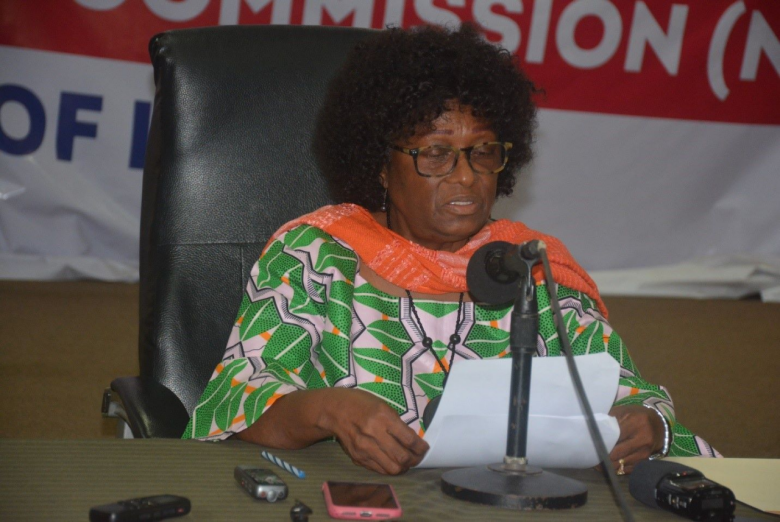
When Davidetta Browne Lansanah stood down from her role at the helm of the National Elections Commission in March, after 12 years on the job, she carried with her a record that women’s rights advocates said should settle once and for all an old argument in Liberia: women can lead.
By Joyclyn Wea, gender correspondent with New Narratives
At the Commission, Lansanah worked through 2 presidential elections, disputed results, political pressure, and one of the closest presidential races in Liberia’s recent history when President Joseph Boakai defeated former President George Weah by fewer than 21,000 votes. Advocates said the fact that the country accepted the result and moved on peacefully was a testament to the people’s trust in Lansanah’s leadership.
In an interview with FrontPage Africa/New Narratives, Lansanah said that she should never have been in doubt.
“Females have quality,” Lansanah said. “Females can run any institution. I am a living demonstration of that.”
Lansanah submitted her resignation to President Boakai, choosing to leave one year early to rest because she had worked for 12 years without leave. She was replaced by Jonathan K. Weedor, who served over 16 years as a commissioner and acting co-chairman.
Lansanah was appointed to the Commission during the administration of former President Sirleaf and stayed on under former President Weah and President Boakai. She helped guide the Commission through difficult elections and public pressure. She said she did the work with discipline and commitment.
Advocates said Lansanah’s 12 years at the Commission left a strong legacy. They point to the 2023 election as a serious test not just for the Commission but of Lansanah’s leadership. Political tensions were high. But the process ended without the kind of crisis many Liberians feared.
“She has a record that will live on,” said Malcolm Joseph, chairman of the Elections Coordinating Committee, Liberia’s largest domestic election observer group. “In other countries, that kind of close election could have been resisted and led to something else.”
Lansanah said she is proud of the role she played. But she said her biggest achievement was not only the elections she helped manage. It was also the people she helped build inside the Commission.
She said the technical staff at the Commission is capable, hardworking, and ready to do more with the support they need.
“If you ignore them, you will fail,” she said.
On women’s leadership, Lansanah said the issue is simple: Liberia cannot continue to say women are capable while leaving the political system almost entirely in the hands of men. Her own career, she said, should help answer the question of whether women can handle serious public responsibility.
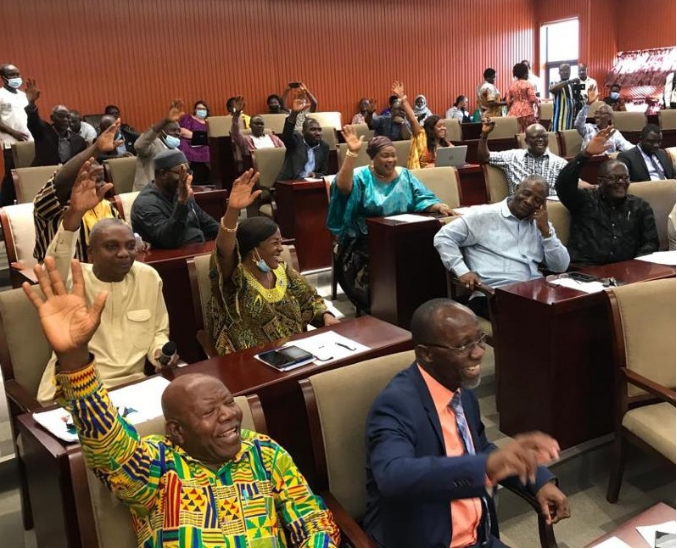
Her departure comes at a time when Liberia is again debating how much space should be reserved for women in politics. The most recent elections delivered a Legislature where less than 11 percent were women. Electors had few women to vote for because they were nominated for few of the seats.
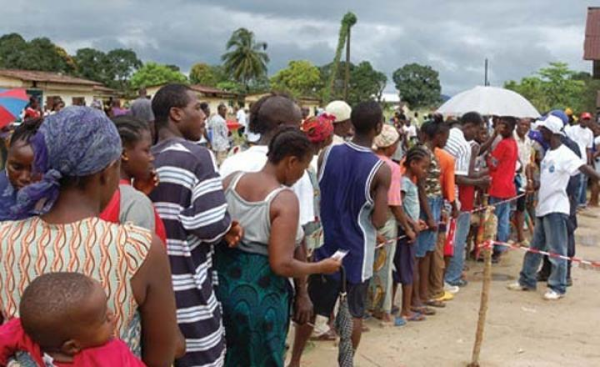
The House of Representatives has passed an electoral reform bill with one provision that would require political parties to include at least 30 percent women on their candidate lists for legislative elections. It’s modeled on laws in other countries in Africa that have seen significantly higher representation by women. Most countries with fast-growing economies have high representation of women in the legislatures.
But the bill is not yet law. It has been in the Senate since May. It was not passed before the Legislative break as legislators continue to debate elements of the bill.
For many women’s rights advocates, the debate is not only about fairness. It is also about results.
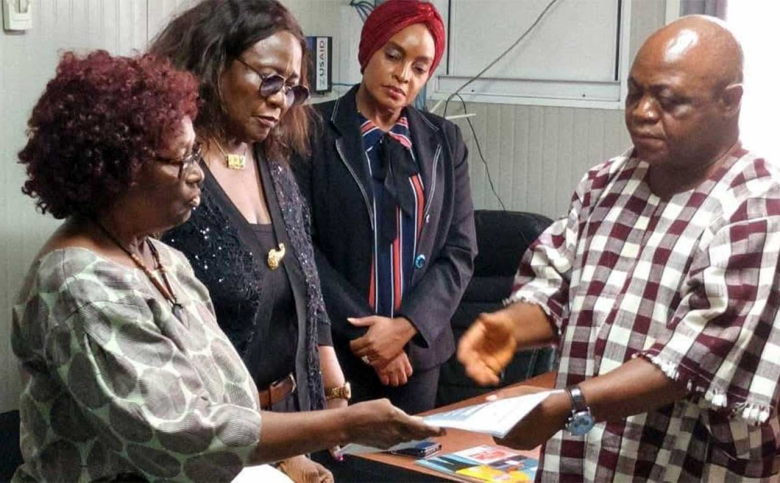
Liberia has already seen women lead at the highest level. Former President Ellen Johnson Sirleaf became the first woman elected president in Africa. Women also played a major role in pushing for peace during Liberia’s civil war. To date, President Boakai has appointed 8 women to his 20-member cabinet. At a women’s town hall meeting in July 2024, he praised women’s leadership, saying the women he had appointed were “capable and they are performing.” He added, “This is why we need more and more women.”
Experts said Sirleaf’s presidency also gave an example of what women’s leadership could deliver after war. Though critics cite her reluctance to prosecute corrupt officials and failure to implement Truth and Reconciliation Commission recommendations, her administration secured major debt relief, rebuilt relations with international partners, restored some basic services, and kept the country on a path of peace after years of conflict. In 2011, the international community celebrated her achievements when she shared the Nobel Peace Prize with Liberian peace activist Leymah Gbowee and Yemen’s Tawakkol Karman for their work for women’s rights and women’s role in peacebuilding.
But advocates said appointments are not enough.
Cabinet ministers serve at the will of the president. Lawmakers, on the other hand, are elected by the people. They write laws, approve budgets, and represent communities. That is where women remain badly underrepresented.
In the 73-member House of Representatives, only eight lawmakers are women. In the Senate, women hold only three of the 30 seats. That means men still control most of the decisions by the Legislature.
The numbers from the last election show how hard it is for women to even get on the ballot.
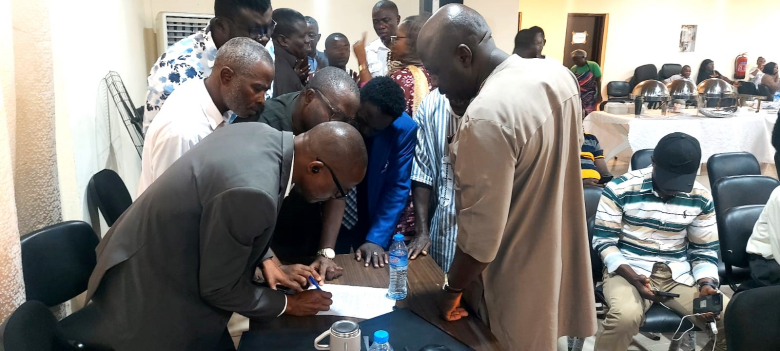
In 2023, only 152 of 1,030 candidates for the House of Representatives were women, according to the Electoral Institute for Sustainable Democracy in Africa. Only seven women ran for the Senate out of 100 candidates. Only two political parties met the 30 percent target for women candidates.
That is why Lansanah said she spent years calling for a stronger law.
Liberia’s election law already tells political parties to “endeavor to ensure” that at least 30 percent of their candidates are women. But there is no punishment for parties that fail to do so. Women’s groups said that language has allowed parties to promise support for women while still leaving them off their tickets.
The new bill passed by the House is meant to change that. It said political parties should submit candidate lists with at least 30 percent women. Supporters said it could help increase the number of women in the Legislature and give voters more choices.
But the bill has also caused concern.
Women’s groups said the current version still leaves an escape route for political parties. Under the bill, the Electoral Commission may accept a party’s list if the party shows “good cause” that, despite its “best efforts,” it could not meet the 30 percent requirement.
To many advocates, that sounds too much like the old law. They want the Senate to remove the “good cause” and “best efforts” language and require parties that fall short to correct their lists or face consequences.
“That’s not enforceable,” said Representative Ellen Attoh-Wreh, chair of the Women’s Legislative Caucus of Liberia. “If parties can simply convince the Commission they tried, then the quota becomes optional.”
Lansanah said she plans to rest, finish law school, and find another way to serve Liberia. But she said she is not leaving the fight for women’s leadership.
Her message to the country is the same one she carried out of the Commission: Liberia has already seen what women can do when they are trusted with power.
Now, she said, it is time to make room for more of them.
This story was produced in collaboration with New Narratives as part of the Investigating Liberia project. Funding was provided by a private donor and the Swedish International Development Cooperation Agency. The donors had no say in the story’s content.
Support Independent Journalism
Your support helps FrontPage Africa continue delivering independent, credible, and impactful journalism. Every contribution strengthens our ability to investigate, inform, and hold power accountable while keeping quality journalism accessible to our readers.
Support our journalism or subscribe to receive the latest FrontPage Africa stories and updates.