Monrovia — Liberia’s investigation into the more than US$337 million cocaine seizures has triggered an increasingly bitter war of words between elected officials and presidential appointees, exposing tensions over political loyalty, institutional accountability and the government’s handling of one of the country’s biggest narcotics cases.
By Obediah Johnson
The exchanges have centered on competing demands for transparency and accountability, with some officials calling for stronger oversight of the investigation while others accuse lawmakers of politicizing an active national security matter.
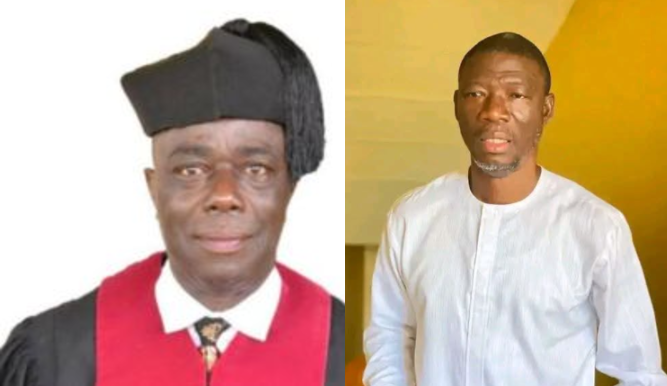
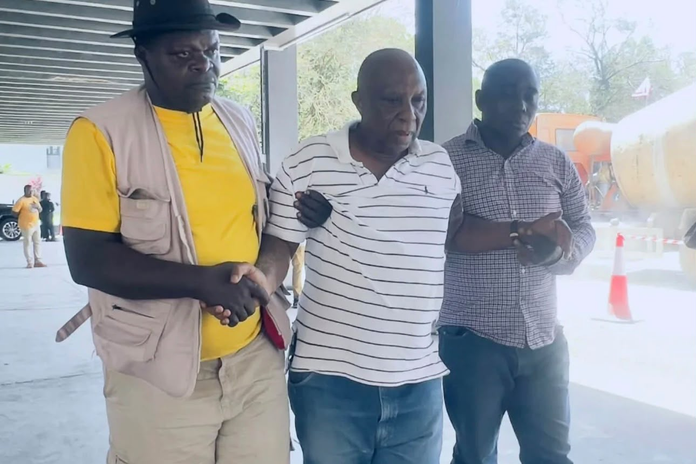
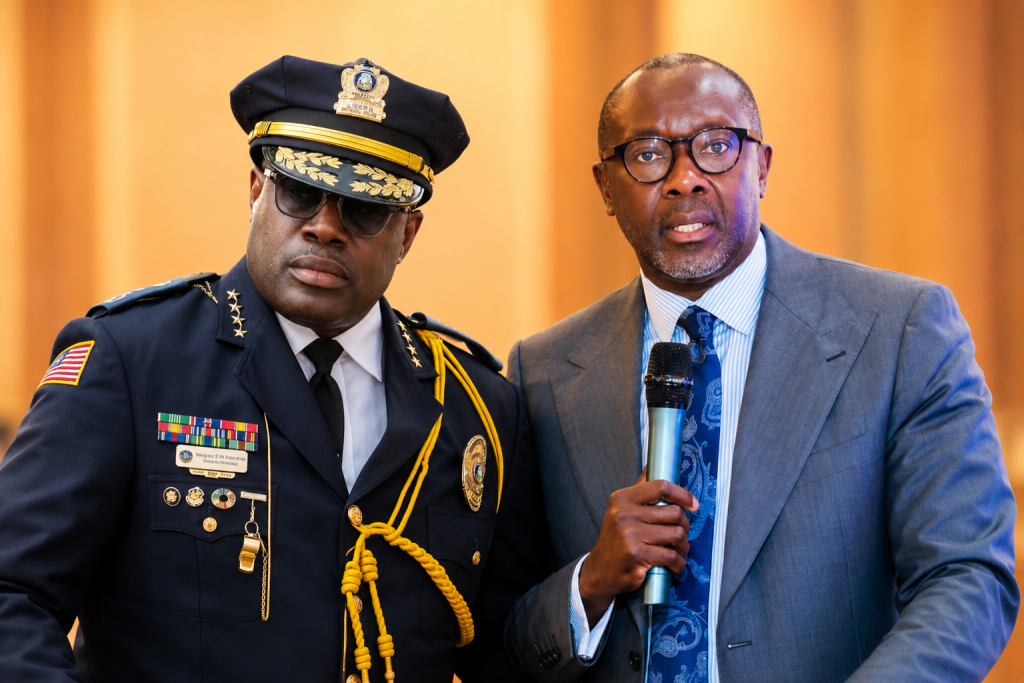
The latest public dispute involves Liberia National Police Inspector General Gregory Coleman, Gbarpolu County Senator Amara Konneh, Liberia Water and Sewer Corporation Managing Director Mohammed Ali, and River Gee County Senator Francis Dopoh.
At the heart of the disagreement are allegations that senior security officials may have escaped accountability, concerns about the independence of the investigation, and questions over whether public commentary by lawmakers could undermine ongoing criminal proceedings.
Coleman Demands Evidence
In a recent communication to Senator Konneh, Inspector General Coleman, who heads the Joint National Security Investigative Team, challenged the senator to provide evidence supporting allegations he has made about the cocaine investigation.
Coleman acknowledged Konneh’s constitutional oversight responsibilities but cautioned that public statements concerning an active national security investigation must be supported by accurate and verifiable information.
Konneh has alleged that senior officials are being protected while junior officers are being scapegoated and that security institutions may have been compromised by a drug cartel.
Coleman requested that the senator provide evidence supporting those claims, including the names of officials allegedly being protected, the identities of the alleged “true architects” of the operation, documents, recordings, financial records, communications and information from confidential sources.
He said such materials could be submitted confidentially to prosecutors or through a properly constituted Senate committee.
The police chief also urged Konneh to preserve relevant evidence and cautioned against further public disclosures, warning that premature revelations could alert suspects, compromise witnesses, expose informants, prejudice the investigation and damage the reputations of individuals who have not been charged.
Konneh Pushes Back
Responding in a statement posted on his official Facebook page Tuesday, August 18, Senator Konneh confirmed receiving Coleman’s letter.
“I can confirm that I received a letter from the IG of LNP requesting evidence of my public statements about the cocaine case. The Senate Committee on Security has reviewed it, and I’ve asked my lawyers to acknowledge receipt to the IG,” Konneh said.
He argued that Coleman’s communication, along with a separate response from another security official, failed to address what he described as the central issues raised in his recent commentary, “Danger of Silence in the Cocaine Investigation.”
Konneh said his concerns were not political gossip but matters affecting Liberia’s national security and survival.
He identified what he described as two converging threats: the penetration of multi-million-dollar drug cartels into Liberia and the erosion of territorial integrity along the country’s northern border.
According to Konneh, the threats endanger Liberia’s youth, sovereignty and national stability.
‘The Cowardice Pattern’
Konneh accused Liberia’s security system of following what he called a troubling pattern whenever major narcotics operations are uncovered.
He alleged that junior officers are swiftly punished or made scapegoats while senior officials remain shielded from meaningful scrutiny.
He further claimed that some suspended or dismissed senior officials remain at home without appearing before a court.
“This imbalance undermines public confidence and raises legitimate questions about institutional integrity. No security institution can credibly investigate allegations involving its own leadership or inner circle. Such cases require independent, transparent oversight. This is not optional,” Konneh said.
The senator cited several allegations already circulating publicly, including claims that a senior security officer received money from individuals linked to the alleged cartel to “provide comfort” following an arrest.
He also referenced allegations that the Officer-in-Charge of the Liberia Drug Enforcement Agency received a vehicle from individuals allegedly connected to the drug trade and that the Chief of Highway Patrol used a police vehicle to escort a drug shipment.
Konneh said the allegations did not originate with politicians but emerged from within security circles and from information connected to the investigation.
He also raised questions about allegations that the cartel may have supplied Starlink equipment to the Liberia National Police, saying neither the police leadership nor the institution had publicly provided documentary evidence explaining how the equipment was acquired.
Konneh argued that the burden of addressing the allegations with facts and evidence rests with the police leadership, while his role is to perform constitutional oversight.
“Accountability begins at the top,” he said, arguing that continued silence over allegations involving officials could be interpreted as institutional protection.
He called on Coleman to step aside, saying the continued leadership of the investigation by an official whose associates are allegedly implicated could undermine public confidence in the process.
‘Oversight Is Not Obstruction’
Konneh maintained that his responsibility as a senator is not to conduct criminal investigations but to raise concerns when the public interest is threatened and demand accountability from institutions entrusted with national security.
He rejected suggestions that constitutional oversight could be characterized as obstruction of justice.
Konneh also disclosed that neither Coleman nor members of the joint security task force had formally briefed the Senate Committee on Defense, Security and Intelligence since their appearance before the Senate Plenary on July 1, 2026.
He said he did not support President Joseph Nyuma Boakai’s election campaign only to see state institutions become vulnerable to criminal networks.
“Silence is not an option for me,” Konneh said, insisting that his demand for accountability would continue.
LWSC Boss Accuses Konneh of ‘Unsubstantiated’ Claims
Konneh’s statements, however, drew a sharp response from Mohammed Ali, Managing Director of the Liberia Water and Sewer Corporation and an executive of the governing Unity Party.
Ali described Konneh’s accusations against the judiciary as “troubling,” particularly his suggestion that courts routinely rule in favor of drug cartels.
While acknowledging that citizens may disagree with court decisions, Ali argued that such claims amount to an allegation that the judiciary is compromised.
He challenged Konneh to produce what he described as “irrefutable evidence” supporting the claim.
Ali said the accusation was an unsubstantiated charge by a member of one branch of government against another institution.
He also disputed Konneh’s assertion that only junior security officers had been punished in connection with the cocaine investigations.
According to Ali, several senior officials—including the NSA Deputy for Administration, the head and deputy head of the LDEA, the Deputy for Operations at Roberts International Airport, and the Chief of the LNP Crime Investigation Division—have been suspended or dismissed and are under investigation.
Ali accused Konneh of placing too much emphasis on social media rather than using the formal oversight powers available to him as a senator.
“You are a member of the Senate Committee on Defense, Security, and Intelligence. If you believe the Police IG is failing, your constitutional course of action is to invoke the committee’s authority, summon the IG, and demand accountability,” Ali said.
He questioned whether Konneh had done so, arguing that the senator appeared more interested in forcing Coleman’s resignation than exercising his legislative oversight authority.
Ali nevertheless urged Konneh to take seriously President Boakai’s repeated assertion that there will be “no sacred cows” in the investigation.
Dopoh Warns Against ‘Hyperbolic Statements’
River Gee County Senator Francis Dopoh also entered the debate, cautioning lawmakers against making what he described as “hyperbolic statements” about the judiciary or discussing sensitive investigative details publicly.
Dopoh argued that public accusations against courts or security institutions could provide defense lawyers with grounds to claim political interference and potentially undermine prosecutions.
“When we make hyperbolic statements about the courts, or debate investigative details in public, we risk handing defense lawyers exactly the ammunition they need to claim political bias and get cases thrown out,” Dopoh said.
He called for a more measured approach to the cocaine investigation, including closing loopholes in Liberia’s drug laws, conducting formal committee briefings with security chiefs under oath and keeping public commentary focused on procedure and accountability.
Dopoh said lawmakers could protect their constitutional oversight role while allowing investigators to build what he called an “airtight, legally bulletproof” case.
He also cautioned against pressuring the Executive into making premature public declarations, noting that previous high-profile narcotics prosecutions had ended in acquittals.
“The Executive’s hesitation isn’t necessarily a sign of a cover-up,” Dopoh said, arguing that the government may be mindful of the consequences of moving too quickly.
He urged Konneh to allow the legal process to proceed, pointing to previous drug cases prosecuted in the United States as examples of cases that eventually resulted in convictions.
Gonquoi Defends Konneh
Amid the growing exchanges, Economic Freedom Fighters of Liberia political leader Emmanuel Gonquoi came to Konneh’s defense.
Gonquoi warned that continued attacks against the senator over his oversight activities could create political problems for the Boakai administration.
“You’re destroying President Boakai’s government gradually with attacks on people like Senator Konneh,” Gonquoi said, calling for greater political maturity within the governing alliance.
He urged Unity Party-aligned stakeholders to convene a meeting to address the growing tensions.
Accountability or Political Posturing?
The escalating exchanges have transformed Liberia’s cocaine investigation from a purely law-enforcement matter into a broader debate over institutional accountability, political loyalty and the limits of public scrutiny during an active criminal investigation.
For Konneh and his supporters, the central issue is whether senior officials are being held to the same standard as junior officers and whether the investigation is sufficiently independent.
For Coleman, Ali and Dopoh, public accusations without supporting evidence could undermine the investigation, weaken future prosecutions and deepen mistrust among state institutions.
The competing positions underscore a difficult balance facing Liberia: how to demand accountability and transparency while protecting an active narcotics investigation from political interference.
Ultimately, the credibility of the investigation will depend not only on the amount of cocaine seized or the number of officials suspended, but on whether those responsible—regardless of rank or political connection—are subjected to a transparent and legally credible process.
The outcome could have consequences far beyond the current political dispute, particularly for public confidence in Liberia’s security institutions and the country’s ability to protect future generations from the growing threat of organized drug trafficking.
Support Independent Journalism
Your support helps FrontPage Africa continue delivering independent, credible, and impactful journalism. Every contribution strengthens our ability to investigate, inform, and hold power accountable while keeping quality journalism accessible to our readers.
Support our journalism or subscribe to receive the latest FrontPage Africa stories and updates.