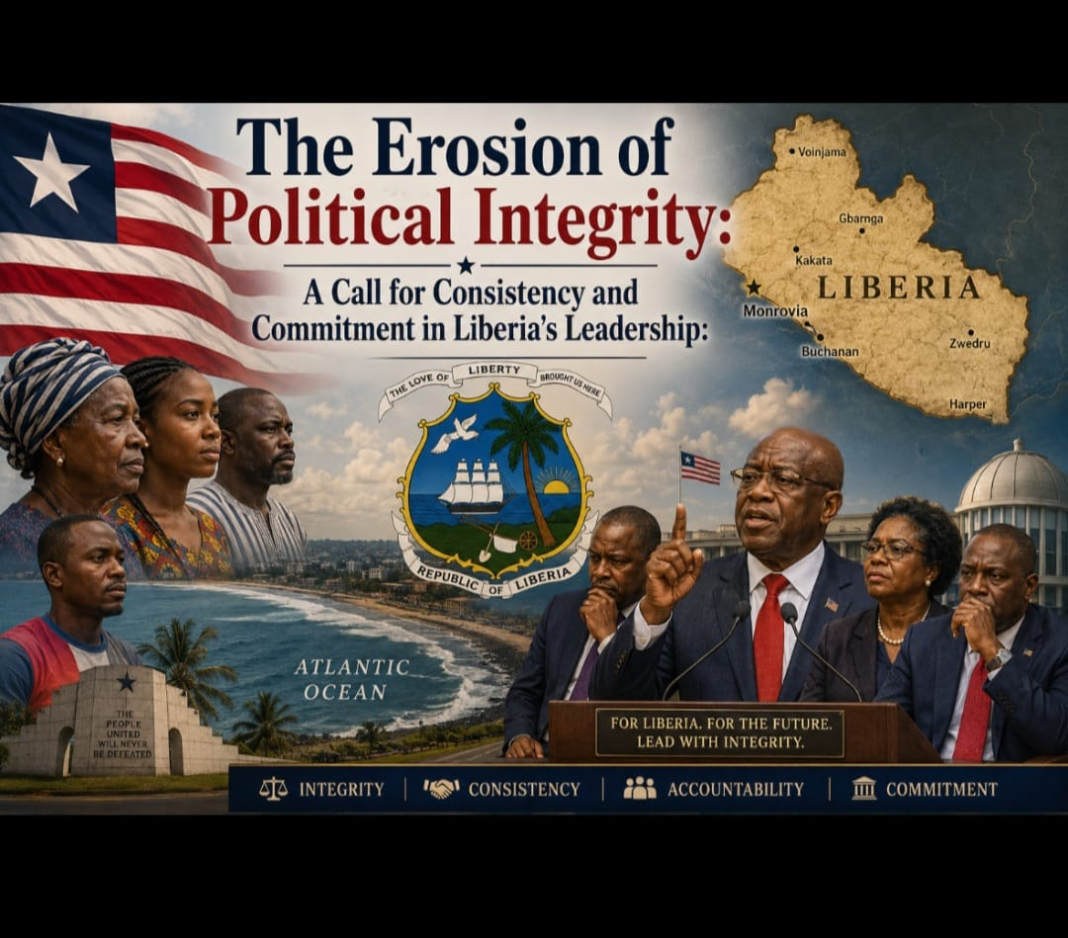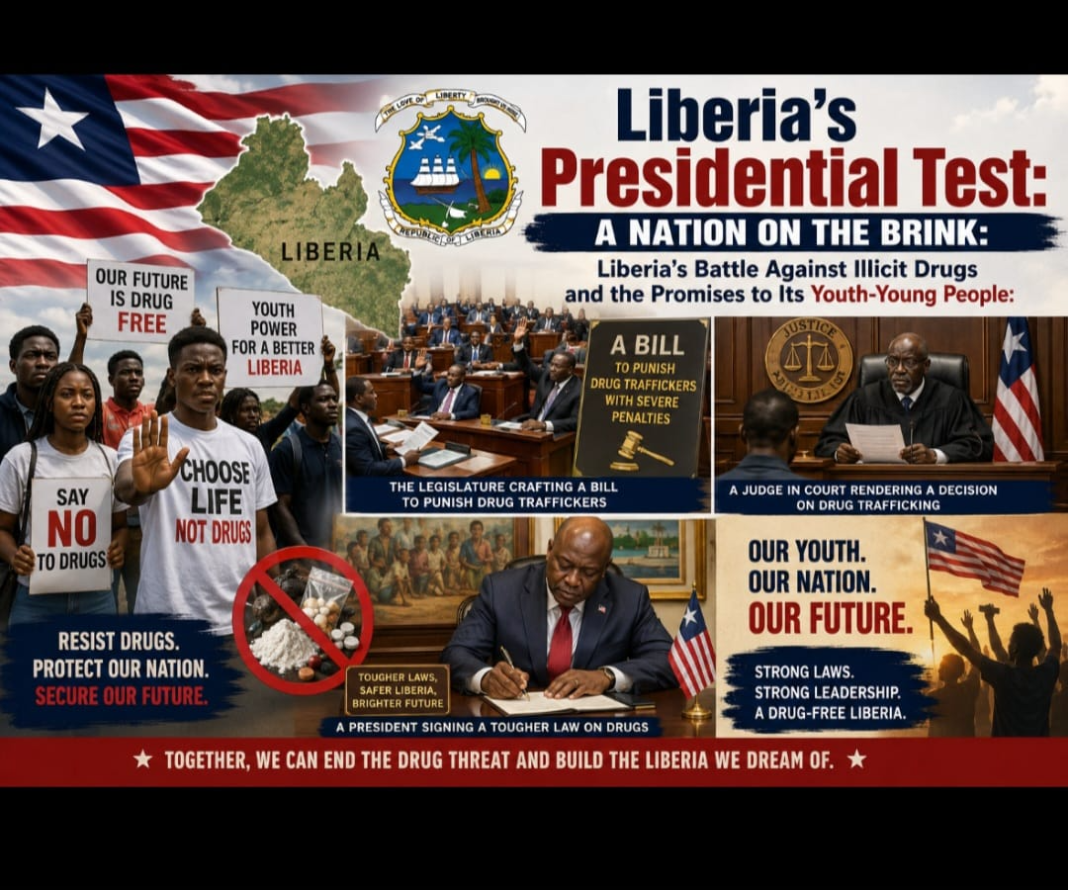

Liberia faces a structural crisis as it battles an epidemic of illicit substances like kush and cocaine, a challenge often described as a “presidential test” determining the survival of its youth.
National governance, structural policy failures, and the desperation of the “lost generation” are captured through these pivotal perspectives:
President Joseph Boakai vowed that his administration would not allow the country to lose another generation to the “ghettoization” caused by drugs.
Former President George Weah warned that drug addiction among the youth severely impacts national human capital and requires urgent action.
Former President Ellen Johnson Sirleaf emphasized that sustainable peace depends on providing opportunities for the young, underserved population.
Former President Samuel Doe: Frequently stressed that the nation’s development relies on the discipline of its youth, a sentiment that resonates amid current societal challenges.
Minister of Finance Development Planning Augustine Kpehe Ngafuan: Declared that traffickers “derailing the future of young people” will not be protected, regardless of status.
Minister Augustine Kpehe Ngafuan: Strongly condemns drug abuse and trafficking, labeling it a national emergency that directly threatens the future of the youth and derails the country’s development. He advocates for aggressive enforcement, rehabilitation, and full government support for the Liberia Drug Enforcement Agency (LDEA).
Minister Ngafuan: Strong Rebuke of Profiteers: At the June 2026 graduation of 193 joint personnel from the Liberia National Police (LNP) and the LDEA, Minister Ngafuan blasted individuals who profit from the drug trade, warning they are actively robbing young people of their potential to contribute to society.
Minister Ngafuan: National Security and Economic Threat: He views substance abuse as a major barrier to national progress, emphasizing that the government must disrupt drug networks without fear or favor to save the next generation.
Minister Ngafuan: Budget and Operational Support: Has publicly acknowledged the severe resource constraints facing anti-drug forces and has backed efforts—such as increasing the LDEA’s annual budget to $4.5 million—to secure better equipment, expand rehabilitation centers, and recruit more workforce.
Assistant Education Minister Sona Toure-Sesay expressed concerns over the potential stigmatization and lack of support systems for students if mandatory drug testing is implemented.
Former Youth and Sports Minister D. Zeogar Wilson: Argued that national emergencies must prioritize the rehabilitation of at-risk youth, not just enforcement.
LDEA Official Testimony: Highlighted the disparity in justice, where high-level traffickers face less severe consequences than the users themselves.
Independent Legal Advocates: Described Liberia’s emergence as a “narco-state” due to systemic impunity and its role as a narcotics transshipment hub.
UNFPA Report: Linked the rising population of at-risk youth to poverty, peer pressure, and intergenerational trauma.
Cultural & Public CommentaryLiterary/Cultural Viewpoints: Emphasized that the battle against addiction is won through compassion, policy, and national resolve, rather than just punishment.
Student Unification Party (SUP): Criticized the government’s failure to curb the “kush” epidemic, describing it as a growing crisis.
Local Perspectives: Calls for action on illicit drugs often highlight the desperation of a ” lost generation, as described in local commentary.
By: Austin S Fallah – A True Son of the Planet Earth Soil: [email protected].
Liberia, a nation rich in culture and resilience, stands at a crucial juncture in its history.
The struggles that began with decades of civil war (1989-2003) were not merely battles for territory; they symbolized the defeat of hope, future, and the very essence of liberty for the Liberian people.
As the dust settled and the scars of war began to heal, a new form of adversity loomed on the horizon.
Today, Liberia faces an unprecedented challenge: an increase in illicit drug trade, which poses a threat not just to the stability of the nation but, more importantly, to the future of its youth, young people.
Past governments, including those of former President George Weah and of current President Joseph Boakai, have struggled to address this critical issue adequately.
Liberians must reflect on the promises made to Liberia’s youth, young people, and the long-standing impact of drugs on their lives.
It is time to hold our leaders accountable and adopt a new mantra: “In the Cause of the Downtrodden, the Struggles must End.”
The promises made to young Liberians, those who endured the horrors of war and grappled with the societal decay left in its wake, were meant to usher in a new era, a Liberia free from the chains of violence, despair, and now, illicit drugs.
Civic leaders pledged to create a nurturing environment where creativity could flourish, innovation could thrive, and young people could dream of futures untainted by the vices that plagued their predecessors.
These pledges, however, seem hollow in the face of the growing drug problem.
As a society, the nation must confront the failure of its leaders to uphold these commitments, lest Liberians allow the nuances of political rhetoric to continue to overshadow the dire realities that their youth, young people, face.
In recent times, Liberia has witnessed a troubling rise in the use and trafficking of illicit drugs, particularly marijuana, cocaine, and other narcotics.
The United Nations Office on Drugs and Crime reported surging levels of drug abuse among urban youths, with cities like Monrovia becoming hotbeds for trafficking and consumption.
Many young people, facing stark economic realities, view the drug trade as a lucrative escape route.
They are engulfed by a cycle of poverty and hopelessness that drives them deeper into the world of illicit substances.
This crisis is not merely a matter of individual choices; it’s rooted in systemic failures that have left a generation vulnerable and marginalized.
Moreover, the consequences of unchecked drug use are dire. Increased violence, a breakdown of social order, and the erosion of family structures are just a few of the ramifications that ripple through the fabric of society.
Vulnerable youths, young people, find themselves caught in a web of addiction that snatches away their dignity and hampers their potential.
They become unable to contribute positively to the nation they once hoped to build, robbing Liberia of the talent and initiative needed to address its myriad challenges.
The social upheaval created by drug abuse exacerbates existing issues, such as unemployment and the inadequacy of healthcare, leading to a cycle of despair that is difficult to break.
As we scrutinize the actions of our current leadership, it becomes apparent that the haphazard response to the drug crisis is emblematic of a larger systemic malaise.
The Boakai administration, much like its predecessor, has been timid in confronting the growing drug issue.
Interventions have been weak, often focusing on punitive measures rather than comprehensive rehabilitation and prevention strategies that could offer young people viable alternatives to drug involvement.
This approach fails to engage directly with the communities affected and misses an opportunity to empower and educate the very youth we seek to protect.
In stark contrast, effective measures designed to combat drug use require transparent governance, dedicated resources for mental health and addiction treatment, and active engagement in community building.
Historical precedents show that holistic approaches, such as establishing drug education programs in schools, providing job training opportunities, and offering support for mental health issues, can yield more beneficial results.
In countries that have dealt with similar crises, proactive engagement has been pivotal in reducing both drug abuse and trafficking.
It’s time Liberia looks to these international examples rather than repeating past mistakes or neglecting the problem altogether.
The responsibility for tackling this crisis does not rest solely on the shoulders of our leaders; it falls on society as a whole, including the youth.
Young Liberians must be seen not just as victims of circumstance but as active participants in the conversation surrounding drug use and trafficking.
The push for reforms must come from within, demanding accountability from their leaders while also cultivating a sense of agency and responsibility among themselves.
That means organizing community outreach programs, advocating for necessary policy changes, and creating safe spaces for dialogue about the struggles they face.
This is where the call for a new slogan, “In the Cause of the Downtrodden, the Struggles must End”, finds its power.
It reminds every air-breathing human being that social progress is a shared endeavor, and the struggle for a drug-free Liberia must be united and relentless.
Additionally, efforts must be made to focus on education, which fundamentally equips youths to break free from socio-economic cycles that allow drugs to thrive.
Respectful grassroots movements that involve parents, educators, and community leaders are essential in building a robust environment for their young people.
Programs aimed at teaching resilience, critical thinking, and entrepreneurship can provide alternative pathways that empower young people to reclaim their narratives.
By investing in education and community support systems, Liberia can build a new generation of leaders who can resist the temptations of the drug trade, effectively altering the course of their future.
Equally important is the need for stringent law enforcement aligned with a broader social strategy that addresses drug demand, not just supply.
Efforts to curb drug trafficking must go hand in hand with provisions for treatment, job creation, and economic opportunity.
Liberia needs a comprehensive national drug policy that reflects the understanding that punitive measures are not the sole solution.
It recognizes the complex factors that lead young people to drugs in the first place.
Moreover, Liberia must foster international partnerships to combat the drug trade effectively.
Engaging with global organizations and adjacent nations can yield crucial intelligence, resources, and strategies necessary for dismantling drug trafficking networks.
Collaborative efforts bolstered by effective diplomacy can help Liberia regain its stature as a nation on the rise, capable of offering hope and opportunity to its future generations.
As individuals, and as a society, Liberians must have a duty, an obligation, to hold their leaders accountable and demand the timely and effective response required to address this grave crisis.
We must ask: What about the commitment to youth and young people’s empowerment?
What about the obligation to cultivate a society where young people do not have to turn to drugs as an escape?
The collective voices of the downtrodden must not only be heard but amplified.
There must be a concerted effort to engender hope and change, making the fight against the drug crisis a shared responsibility.
Liberia stands at a pivotal moment in its history.
The battle against illicit drugs, which poses an existential threat to the fabric of society, can not be ignored or minimized.
The promises made to youth, young people should not be confined to political jargon devoid of substance.
They require real, actionable plans rooted in accountability, community empowerment, and opportunity creation.
The time has come to adopt the rallying cry of “In the Cause of the Downtrodden, the Struggles must End.”
This is not just a slogan; it is a mandate for transformative change, a call to action that demands liberation from the shackles of drugs that threaten to claim another generation of Liberians.
It is a fight not just for the future of the youth, young people, but for the future of Liberia itself.
In unison, Liberians must rise, and together, they must reclaim their nation from the shadows of despair.
Support Independent Journalism
Your support helps FrontPage Africa continue delivering independent, credible, and impactful journalism. Every contribution strengthens our ability to investigate, inform, and hold power accountable while keeping quality journalism accessible to our readers.
Support our journalism or subscribe to receive the latest FrontPage Africa stories and updates.