MONROVIA –The Government of Liberia(GoL), through the Monrovia City Corporation (MCC) and the Paynesville City Corporation (PCC), has officially transferred waste collection responsibilities to private sector operators and community-based enterprises.
By Francis G. Boayue
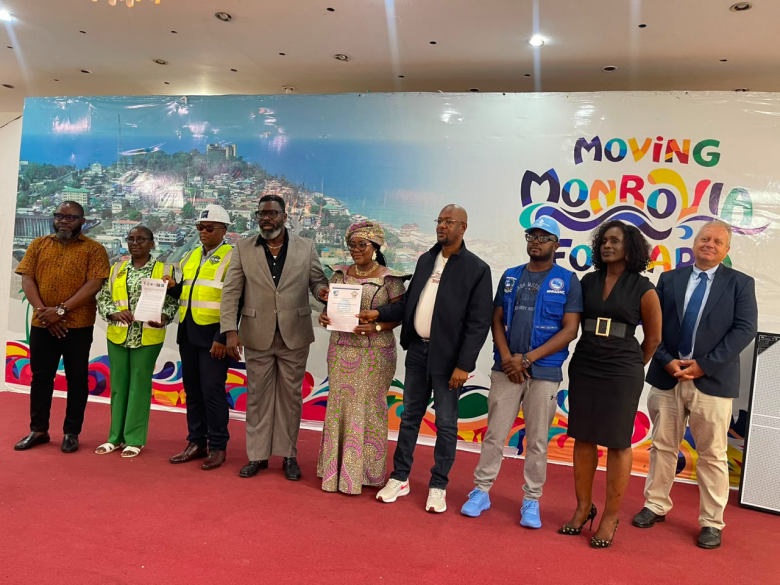
The transition follows the signing of a landmark partnership agreement between the MCC, PCC, the Liberia Solid Waste Association (LISWA), and the National Association of Community-Based Enterprises (NACOBE) designed to transform waste collection and management across Greater Monrovia.
The agreement was unveiled over the weekend during the launch of the Greater Monrovia Integrated Solid Waste Management Public-Private Partnership at the MCC Hall in Monrovia.
The event brought together government officials, development partners, private sector representatives and community stakeholders committed to improving sanitation services in the capital and surrounding communities.
Under the new framework, waste collection responsibilities will shift from direct municipal operations to licensed private companies and community-based enterprises.
Meanwhile, the MCC and PCC will focus on regulation, monitoring, coordination, and enforcement of sanitation standards.
As part of the arrangement, NACOBE will coordinate community-based waste collectors operating within neighborhoods, while LISWA will supervise private waste management companies, provide technical support and ensure adherence to professional service standards.
Officials said the initiative is intended to improve efficiency, strengthen accountability, and expand waste collection coverage throughout Monrovia and Paynesville.
Beyond improving sanitation, the partnership seeks to tackle several long-standing urban challenges, including flooding caused by blocked drainage systems, environmental degradation and public health risks associated with improper waste disposal.
The initiative is also expected to create more than 5,000 jobs for Liberians while stimulating the growth of local businesses operating within the sanitation sector.
Speaking at the launch, MCC Mayor John-Charuk Siafa described the partnership as a practical, homegrown response to one of Liberia’s most persistent urban problems.
“This initiative demonstrates that Liberians can develop and implement solutions to Liberia’s challenges,” Mayor Siafa said.
He emphasized the importance of local ownership, particularly at a time when international donor support is becoming increasingly constrained.
Mayor Siafa further called on residents to cooperate with waste collectors and partner institutions, stressing that the success of the initiative will depend on public participation, effective monitoring, and continuous evaluation.
For his part, PCC Mayor Robert Bestman welcomed the initiative, describing it as a significant step toward improving sanitation services across Greater Monrovia.
However, Mayor Bestman underscored the need for increased investment in waste disposal infrastructure, particularly facilities dedicated to final waste treatment and disposal.
Representatives from the Ministry of Finance and Development Planning, the Ministry of Local Government, the National Road Fund,and several other government institutions attended the ceremony and praised the initiative as a locally driven solution to Liberia’s mounting waste management challenges.
Stakeholders described the partnership as a transformative effort to modernize urban sanitation through collaboration among government agencies, private businesses, community organizations and development partners.
A key feature of the framework is the redefinition of the MCC’s role—from direct waste collection to serving as a regulator, coordinator, monitor, and enforcer—while empowering Liberian-owned enterprises to become the primary providers of waste management services throughout the city.
According to organizers, the initiative is expected to expand access to reliable and affordable waste collection services across Monrovia’s communities, improve environmental health, strengthen urban resilience and reduce flooding caused by indiscriminate waste disposal and clogged drainage systems.
Additional expected outcomes include the creation of sustainable employment opportunities for youth, women, and local entrepreneurs; support for the growth of Liberian sanitation and environmental service businesses; increased private sector investment and innovation in waste management; and advancement of the sanitation, environmental sustainability, and climate resilience objectives outlined in the Government of Liberia’s ARREST Agenda for Inclusive Development.
With the signing of the agreement, the MCC, PCC and their partners say Greater Monrovia is embarking on a new chapter in waste management—one grounded in accountability, community participation, private sector leadership, and sustainable environmental stewardship.
Support Independent Journalism
Your support helps FrontPage Africa continue delivering independent, credible, and impactful journalism. Every contribution strengthens our ability to investigate, inform, and hold power accountable while keeping quality journalism accessible to our readers.
Support our journalism or subscribe to receive the latest FrontPage Africa stories and updates.