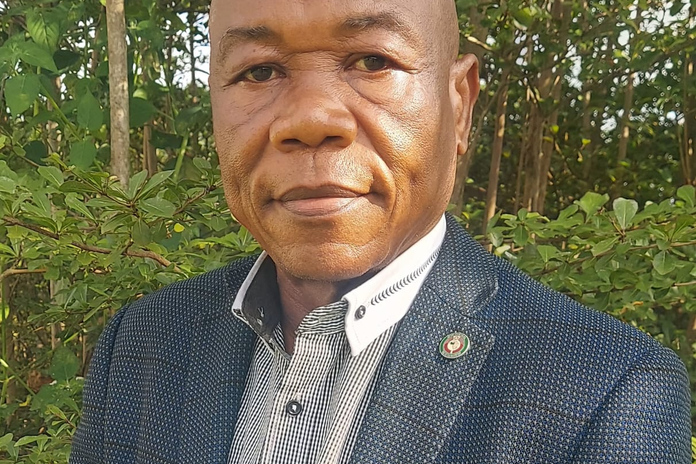
By Austin S Fallah, [email protected], contributing writer
Importance of a People-Centric Budget-“A budget should reflect the values and priorities of a nation and its people.” – Mary Landrieu.
“A budget is a moral document.” – Jim Wallis.
“The best companies invest in ways that enable their employees to become multipliers for the business.” – Radhika Samant, COO of Bonusly.
“It is critical to re-evaluate investments in people programs and ensure they are set up for success.” – Charles Hough, CEO of Bonusly.
“The budget is not just a collection of numbers, but an expression of our values and aspirations.” – Jack Lew.
“A people-centric budget focuses on people, viewing them as valuable assets crucial for business growth and success.” Unknown.
“Investing in people leads to exponential growth, better retention, increased customer satisfaction, and a competitive edge.” Unknown.
In the weighty words of the late Minister of Finance, Hon. Lassana Kromah, “Government does not only exist to pay salaries.”
This potent statement reverberates through the very fabric of our society today, especially as Liberia grapples with immense challenges amid its pursuit of social and economic development.
As the nation stands at a critical juncture, facing issues ranging from debilitating poverty to inadequate infrastructure, it becomes imperative that our governmental budget reflects the needs of the people rather than serving the interests of a select few.
The Liberia 2026 annual budget, as submitted to the national Legislature and about to be discussed for passage into law, must prioritize health, education, and infrastructure over personal gain, as the reality for many Liberians is one of despair and struggle in a land replete with potential and resources.
The Reality of Poverty and Suffering:
Every day, countless Liberians wake up to the stark realities of poverty.
Despite the nation’s abundance of natural resources and agricultural potential, many people find themselves living on the fringes of survival, lacking access to necessities such as food, clean water, shelter, healthcare, and education.
This persistent suffering is even more profound when juxtaposed against the backdrop of a country that has faced decades of socio-political strife, compounded by economic mismanagement and corruption.
When government representatives and policymakers speak of economic development, it often seems veiled in abstract rhetoric that is disconnected from the lives of ordinary citizens.
However, the challenges faced by the populace, including poor roads that hinder farmers from reaching the market, overcrowded classrooms that deprive children of quality education, and hospitals lacking necessary supplies and personnel, are tangible and real.
Therefore, it is crucial to craft a budget that directly addresses these pressing issues, ensuring that the realities faced by the Liberian people are at the forefront of all fiscal decisions.
Prioritizing Infrastructure: Building a Road to Prosperity:
One of the most critical areas that requires immediate attention in the 2026 budget is (should be) infrastructure development, particularly farm-to-market roads.
The backbone of Liberia’s economic future is its agricultural sector; however, without reliable roads, farmers are unable to transport their produce to markets and consumers efficiently.
This not only hampers their ability to earn a living but also hinders the nation’s overall economic growth.
Investing in infrastructure can transform the agricultural landscape by making it easier and cheaper for products to reach consumers.
Improved roads lead to increased agricultural productivity, reduced post-harvest losses, and better prices for farmers, ultimately helping them lift themselves out of poverty.
In this way, the budget becomes a tool for empowerment, enabling the rural population to realize their full potential and contribute to the country’s economic prosperity.
Healthcare: A Fundamental Right:
Another sector that demands urgent attention is the healthcare industry.
The health of a nation is intrinsically linked to its economic development; a sick populace is an unproductive one.
Yet, many Liberians face obstacles in accessing healthcare services.
Hospitals often lack basic supplies, trained personnel, and necessary medical equipment, while healthcare professionals are underpaid and overworked.
Allocating sufficient funds to the healthcare sector within the 2026 budget is non-negotiable.
Investment in healthcare infrastructure, training for healthcare workers, and the procurement of essential supplies must be prioritized.
Consequently, a healthier population will lead to increased productivity, reduced healthcare costs, and improved quality of life for all Liberians.
A comprehensive healthcare strategy not only addresses current needs but also invests in the nation’s future well-being.
Education: Cultivating the Future Generations:
The third crucial area that must be prioritized in the upcoming budget legislative deliberation should be education.
Education is the foundation upon which a prosperous future is built.
For Liberia, whose young people constitute a significant portion of the population, access to quality education is paramount.
Unfortunately, many schools are overcrowded and under-resourced; teachers often lack proper training and compensation, resulting in a subpar educational experience for students.
By investing in education, the government is not merely fulfilling its obligation to its citizens but is actively cultivating the leaders, innovators, and thinkers of tomorrow.
The Legislature must ensure that the 2026 budget allocates substantial resources to improve school infrastructure, increase teacher salaries, provide training and professional development, and ensure that schools are equipped with necessary resources and technology.
Such investments will yield long-term benefits, significantly enhancing Liberia’s human capital and fostering a generation that is capable of leading the country toward a prosperous future.
A Call for Transparency and Accountability:
For the 2026 budget to genuinely serve the interests of the Liberian people, it must be accompanied by a robust system of transparency and accountability.
Financial malfeasance and corruption have plagued previous administrations, leading to widespread public distrust of government institutions.
The government must commit to an open budgeting process that allows citizens to voice their concerns and priorities regarding the allocation of national resources.
Establishing participatory budgeting initiatives through town hall meetings, sponsored by the national Legislature, could empower districts, counties, boroughs, cities, towns, and communities, enabling them to have a say in determining which projects and initiatives receive funding before full concurrence by the legislature and signing into law by President Boakai.
This could be seen as a new initiative that allows citizens to have direct input into their national budget, promoting a participatory democracy.
Accountability measures must also be strengthened to ensure that funds are used effectively and that those who misappropriate public resources are held accountable for their actions.
Only then will the Liberian people regain faith in their government and feel empowered to actively participate in the nation-building process.
Redefining Success: From Wealth to Well-being:
Success should no longer be defined in terms of financial gain or the wealth of a select few; instead, it should revolve around the well-being of the general populace.
The government’s role must shift from being an enabler of inequality to a facilitator of equity and opportunity.
The Liberian draft budget should prioritize investment in people, not profit, by focusing on programs and projects that serve the broader population rather than enriching a select few.
The need for a transformative draft budget for 2026 is not merely an economic imperative; it is also a moral one.
The time has come to redeem the aspirations of the Liberian people through the leadership of President Joseph Nyumah Boakai and Vice President Jeremiah Kpan Koung, who have long endured suffering and deprivation.
In a country rich with resources and potential, the current disparities are unacceptable.
A Vision for a Sustainable Future:
As Liberians look toward the legislative deliberation of the 2026 national budget draft, they must remind themselves that the ultimate goal of government is to serve its people.
The budget must reflect national priorities; healthcare, education, and infrastructure are not just line items, they are essential investments in Liberia’s future.
The profound words of Hon. Lassana Kromah should guide the nation’s approach and serve as a clarion call to all stakeholders: they exist to uplift and empower all citizens, not merely to dispense salaries.
At this pivotal moment, Liberians have the opportunity to reshape Liberia’s narrative.
They can prioritize the needs of the people over the desires of a privileged few, focusing on meaningful change that translates into tangible improvements in the lives of everyday Liberians.
Let Liberians’ collective efforts in discussing the draft 2026 budget herald a new era of prosperity, inclusivity, and well-being for every citizen, illuminating a path towards a sustainable future, a future that all Liberians so rightfully deserve.
Support Independent Journalism
Your support helps FrontPage Africa continue delivering independent, credible, and impactful journalism. Every contribution strengthens our ability to investigate, inform, and hold power accountable while keeping quality journalism accessible to our readers.
Support our journalism or subscribe to receive the latest FrontPage Africa stories and updates.