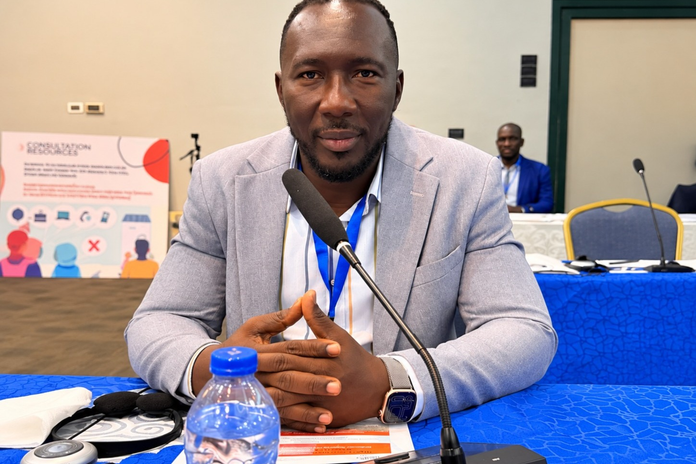
Paynesville—The Executive Director of the Youth Network for Positive Change (YOUNETPO), Leo Tiah, has sounded alarm on Liberia’s current health defense system, calling for an urgent, fundamental overhaul to ensure all citizens are included in planning for the next health crisis.
By Francis G. Boayue
Speaking in Paynesville, outside Monrovia on Wednesday, Tiah specifically challenged the Government of Liberia (GoL), through the Ministry of Health (MoH), to move past rhetoric and demonstrate “effective implementation” of its health security commitments, particularly the Risk Communication and Community Engagement (RCCE) interventions.
Tiah’s call centers on a new policy brief that highlights the severe consequences for any nation that fails to invest in an inclusive Pandemic Preparedness and Response (PPR) system.
He warned that exclusion leads directly to: “Loss of Human Life: The most tragic and irreversible consequence, household and Community Disruption: Destroying the social and economic fabric of local life, Widening Gender Inequality: Pandemics disproportionately affect women, and a non-inclusive system worsens these disparities.
“Ensuring an Inclusive Pandemic Preparedness and Response System in Liberia requires immediate attention,” Tiah asserted.
He explained that the policy brief is designed to inform lawmakers, policymakers, and civil society about the critical necessity of involving communities and civil society in the nation’s PPR processes.
According to him, the brief provides a comprehensive overview of Liberia’s current defense mechanisms, including the Joint External Evaluations (JEEs), the National Action Plan for Health Security (NAPHS), and the State Party Annual Reporting (SPARs).
However, Tiah stressed that without community voices, these technical frameworks are insufficient. To strengthen Liberia’s health security agenda and move towards true preparedness, Tiah offered three actionable recommendations that must be implemented immediately.
Tiah reiterated the need for the Ministry of Health to ensure RCCE interventions are executed effectively on the ground, going “beyond the commitment level” outlined in national documents.
“Integrate Civil Society into JEEs: The government must officially integrate community and civil society representatives into the Joint External Evaluation (JEE) process,” he asserted.
Tiah argued that this inclusion is vital to capture community perspectives and enable CSOs to play a key supportive role in implementing the NAPHS, thereby strengthening Liberia’s overall capacity to handle public health emergencies.
Tiah specifically recommended actively involving women’s rights organizations and other CSOs in every phase—planning, implementation, and evaluation—to ensure the response is fair and effective for everyone. “We need a system that genuinely protects all Liberians. The government must recognize that the involvement of civil society and communities is not optional; it is the foundation of a successful pandemic defense,” Tiah concluded.
Support Independent Journalism
Your support helps FrontPage Africa continue delivering independent, credible, and impactful journalism. Every contribution strengthens our ability to investigate, inform, and hold power accountable while keeping quality journalism accessible to our readers.
Support our journalism or subscribe to receive the latest FrontPage Africa stories and updates.