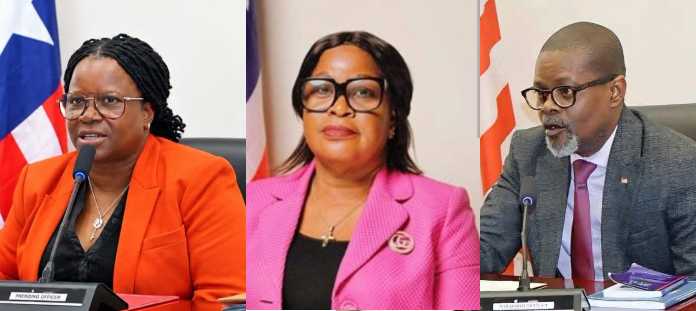
Monrovia – Registered political parties in the country have signed a resolution committing themselves to violence free elections in 2017.
The twenty-two (22) Registered Political Parties signed the petition in Ganta, Nimba County, on Friday, September 23 at the end of a meeting to discuss their cooperation and commitment to ensure violence-free elections in 2017;
The meeting was in furtherance of an informal dialogue held amongst some members of the Inter-Party Consultative Committee (IPCC) in consideration of a previous meeting held at the National Elections Commission (NEC) to discuss what could be done to mitigate the possibility of violence before, during and after the 2017 polls.
The political parties committed themselves to taking all necessary steps, including adhering to all elections-related Laws and Guidelines, to ensure violence-free election in 2017.
They also pledged to develop sensitization framework that consistently evokes partisans’ ownership for the maintenance of peace and democracy in the country while keeping their campaigns civil and issues-based.
The 22 registered political parties also committed themselves to frequent inter-party dialogue and communication under the IPCC framework to ensure a violence-free election.
At the same time, political parties have called on the United Nations, the African Union (AU), the Economic Community of West African States (ECOWAS), the United States of America (USA), the European Union (EU), among others, to assist join Liberians in ensuring a violence-free elections in 2017.
Among possible sources of conflict identified by the political parties for which remedial actions should be taken are the lack of a constitutional threshold for the 2017 Elections; delay in the conduct of voter registration for the 2017 Elections; Enforcement of the Codes of Conduct for political parties and candidates; Observance of the rule of law; Independence of the Judiciary and Impartiality of the security forces.
Other conflict sources identified by political parties are the prohibition placed on media outlets, including the social media, from announcing progressive results to the public; The virtual control exercised over the state-owned media, whereby political parties views are substantially lowered; Denial of access to political party’s agents to voting centers by elections workers and Unresolved issues regarding the proscribing of some political parties.
The prevailing trend of hate messages in some circles of the media; Orchestration by local officials to deny opposition parties access to public facilities; Delay in releasing list of approved voting precincts, and in some cases, abrupt change of precincts without adequate information to help political parties prepare for such change of venues; the sporadic release of election results from across the country, and in some cases, the suppression of some results from voting centers and the porous nature of Liberian borders which, in effect facilitates entrance of non-Liberians to participate in voters’ registration in Liberia are also potential triggers of conflict identified by the political parties.
The meeting was funded by the European Union through UNDP and USAID through IFES.
Support Independent Journalism
Your support helps FrontPage Africa continue delivering independent, credible, and impactful journalism. Every contribution strengthens our ability to investigate, inform, and hold power accountable while keeping quality journalism accessible to our readers.
Support our journalism or subscribe to receive the latest FrontPage Africa stories and updates.