Growing up as a young woman in refugee and internally displaced camps in Liberia and Sierra Leone during Liberia’s long shadow of conflict, I learned early that silence can be as powerful as a shout, especially when history goes untold.
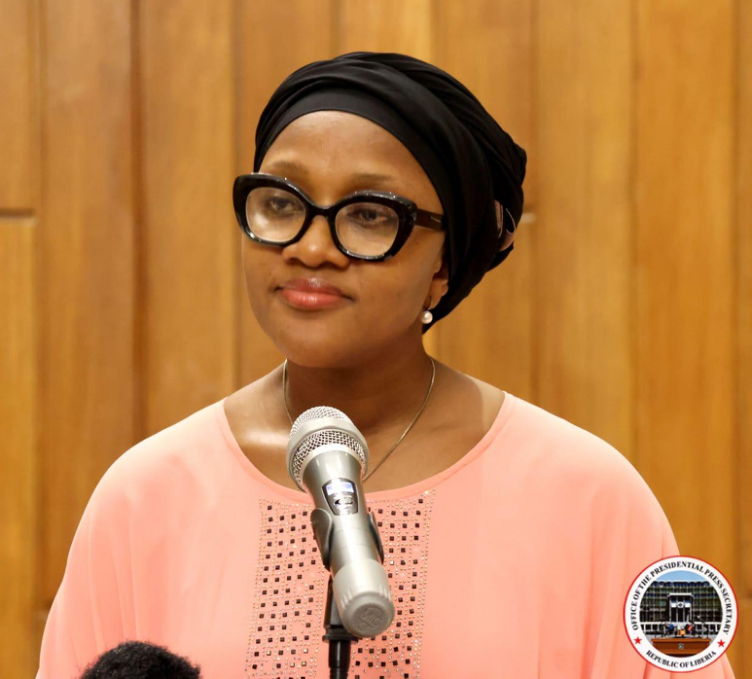
By Atty. Kula Bonah Nyei Fofana, contributing writer
In camps where every whispered story carried the weight of loss, families like mine survived not only bullets and bombs, but also the erasure of memory. Too often, the narrative of our war was reduced to statistics, forgotten in classrooms, or buried in political expediency. Yet for those of us who lived through fear and displacement, reconciliation never began with peace accords alone; it began with truth.
The 2009 Truth and Reconciliation Commission (TRC) sought to record the voices and wounds of Liberia’s two devastating civil wars that claimed an estimated 250,000 lives between 1989 and 2003. Its final report catalogued atrocities, offered a path toward healing, and urged the creation of mechanisms for justice and accountability. But for more than a decade after its release, that roadmap gathered dust, even as survivors continued to carry the burdens of trauma and unanswered questions.
For many victims, that prolonged silence was not neutral. It was a second wound.
When President Joseph Nyuma Boakai Sr. assumed office on January 22, 2024, he confronted not only economic and governance challenges but an unresolved moral debt to a generation shaped by war. In the first year of his administration, he took a decisive step by establishing the Office of the War and Economic Crimes Court and appointing officials to begin laying the foundation for accountability. This marked the first serious institutional effort, grounded in law and process, to act on the TRC’s long-neglected recommendations.
As someone who now serves within the Executive Mansion and has observed these initiatives firsthand, I can attest that this was not a symbolic gesture. It was a deliberate policy choice to confront a past that many found politically safer to avoid.
But it was in his second year that President Boakai’s reconciliation agenda took on a deeper national meaning.
In July 2025, he issued a public apology on behalf of the Liberian state to victims of the civil wars. Standing before a nation still learning how to mourn in public, President Boakai declared:
“To every victim of our civil conflict, to every family broken, to every dream shattered, we say: We are sorry. We are sorry for the pain you endured. We are sorry for the failure of the state to protect you. And we are committed to ensuring that such darkness never again defines our nation.”
In those words, he acknowledged not only the brutality inflicted by combatants, some of whom were victims themselves, but the deep wounds left by years of institutional silence.
For survivors of rape, mutilation, forced recruitment, and families who never saw justice served, this apology was not merely ceremonial. It offered something long denied: moral recognition. The permission to grieve openly. The affirmation that their pain had not been forgotten by the state.
President Boakai’s reconciliation efforts went further. His administration organized state processes to honor former Presidents William R. Tolbert Jr. and Samuel Kanyon Doe, both violently killed during Liberia’s cycles of political upheaval. In early 2025, he established a national committee to oversee their dignified reburials, acknowledging that national healing requires confronting all parts of our history, even the painful and divisive ones.
These gestures were not hollow symbolism. In societies like ours, where ancestry and memory shape community bonds, how we treat the dead reflects how we heal the living. To restore dignity to figures long denied it is to signal that violence will no longer be the final author of our national story.
Yet reconciliation must not end with apology and remembrance.
True reconciliation requires justice that is tangible, not rhetorical. The Office of the War and Economic Crimes Court must now be strengthened through legislation, resources, and sustained political will. Apologies must be matched with accountability where evidence permits. Memorialization must be paired with education, so that future generations understand not only what happened, but why it must never happen again.
From my vantage point as Presidential Press Secretary, reconciliation stands out as the most consequential achievement of President Boakai’s second year. Not because it is politically expedient, but because it is morally necessary.
As a daughter of displacement, I know reconciliation cannot be rushed nor superficial. It is forged in dialogue, in accountability, and in collective remembrance that refuses to erase the past. President Boakai’s actions, from institutional reform to public apology and national memorialization, signal a rare political courage: the willingness to govern not only for the present, but for the wounded past and the fragile future.
We must still walk the long road from apology to accountability, from memory to justice. But in confronting what was once unspeakable, Liberia takes a step closer to becoming the nation we aspire to be, one that honors every voice, acknowledges every wound, and holds unwaveringly to the promise that never again will silence define us.
Atty. Kula Bonah Nyei Fofana serves as Presidential Press Secretary in the Office of the President of Liberia. She is a lawyer and a student of transitional justice, with interests in local voices, public service, gender, governance, and intersectionality.
Support Independent Journalism
Your support helps FrontPage Africa continue delivering independent, credible, and impactful journalism. Every contribution strengthens our ability to investigate, inform, and hold power accountable while keeping quality journalism accessible to our readers.
Support our journalism or subscribe to receive the latest FrontPage Africa stories and updates.