Buchanan – The Independent National Commission on Human Rights (INCHR) and the United Nations Office of the High Commissioner for Human Rights (OHCHR) have called for ‘genuine’ partnership with the media to promote human rights in Liberia.
The institutions made the call at the end of nationwide capacity building training for journalists in Buchanan, Grand Bassa County.
In a bid to foster strong collaboration to promote human rights in Liberia, the Independent National Commission on Human Rights (INCHR) with support from the United Nations Office of the High Commissioner for Human Rights (OHCHR) completed the training of over 200 Liberian journalists.
The training, held in four phases, brought together selected participants from various media institutions including community radio stations from the 15 counties.
Participants, among other things, were enlightened on International Human Rights Principles, Obligations, Standards and Reporting strategies, the news reporting ethics in human rights reporting, among other things.
Journalists were also driven through the OHCHR’s mandate, International Covenant on Civil and Political Rights (ICCPR), the Convention on the Rights of the Child (CRC), Maputo Protocol, Ratification/Domestication of Conventions on Human Rights, and Liberian Constitution/Laws and media ethics & the role of the media in promoting and protecting human rights.
Meanwhile, the final phase of the training took place in the port city of Buchanan, Grand Bassa County with 35 participants from Grand Bassa, Montserado and Rivercess benefitting.
During the discussions, participants highlighted harmful practices, discrimination, rape, unlawful actions of state securities including arbitrary arrest and detention, child abuse, child labor, and compromising of rape cases as prevalent human rights concerns in the counties.
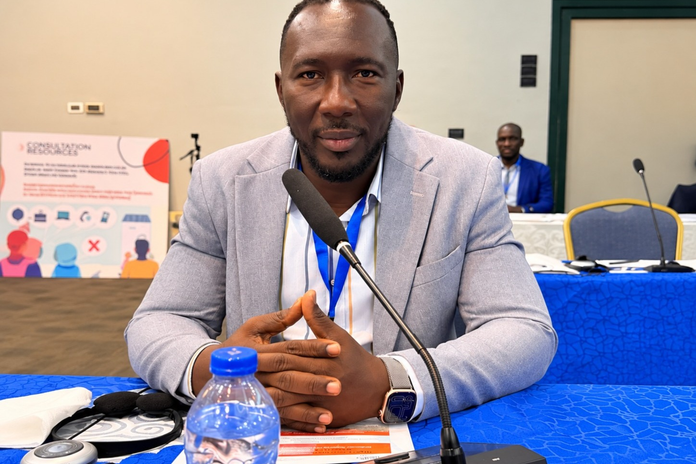
Speaking to journalists at the close of the trainings, Dr. Sonny Onyegbula, OHCHR’s Head of Programs, highlighted the importance of the training and said there has been limited training for journalists on human rights.
Dr. Onyegbula noted that in post-conflict nation such as Liberia, there is always need for the media to benefit from training bordering on human rights, justice and the rule of law so that their reportage can reflect respect for human rights, adequately address violations of such rights from angles that are objective, accurate, and balanced.
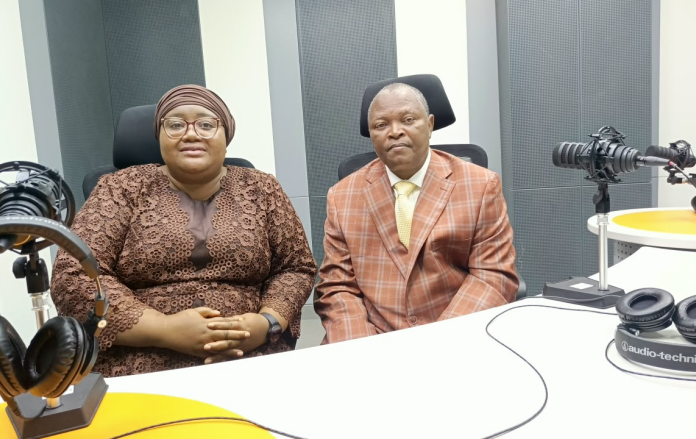
Also speaking, the Director for the Department of Education, Training and Information of the INCHR, Janet P. Johnson, encouraged journalists to prioritize human rights reporting on their respective platforms to remind Government of their obligations to protecting the rights of citizens including the marginalized, vulnerable and people living with disabilities.
Meanwhile, the ournalists thanked INCHR and OHRCH for the training and pledged to implement the knowledge acquired at their various entities.
Miama M. Pewee of the Bush Chicken said the training was an added advantage to her human rights reporting skills.
“This is an added advantage. It has empowered me to be more robust in covering and investigating human rights stories,” she said.
Another beneficiary, Henscin Dehgar of Truth FM hailed the two institutions and pledged to share the knowledge gained with his colleagues.
“It is important that we pass the knowledge over to our colleagues, who were not opportune to be here. With this, I believe the media in Liberia will be well positioned to report on the issues of human rights,” he noted.
The first phase of the training took place in Margibi County which brought together journalists from Bomi, Gbarpolu, Grand Cape Mount and Margibi counties; while the second was held in Bong County, and brought together reporters from Lofa, Nimba, Grand Gedeh and Bong Counties.
The third was held in Nimba, covering journalists from Sinoe, Grand Kru, Maryland and River Gee Counties.
The Objectives of the trainings were to enhance the capacity of journalists to report on human rights issues, ensure human rights issues form part of the national discourse by media practitioners in the country; and improve human rights education specific locations.
The activities are under a Swedish funded project for human rights capacity building implemented by the United Nations Office of the High Commissioner for Human Rights.
Support Independent Journalism
Your support helps FrontPage Africa continue delivering independent, credible, and impactful journalism. Every contribution strengthens our ability to investigate, inform, and hold power accountable while keeping quality journalism accessible to our readers.
Support our journalism or subscribe to receive the latest FrontPage Africa stories and updates.