Monrovia – Top officials of the Rubber Development Fund Incorporated (RDFI) and the Rubber Planters Association of Liberia (RPAL) have reported that the nation’s rubber industry is experiencing meaningful progress after years of instability, but warn that structural challenges including underfunding, weak monitoring capacity, and limited access to agricultural financing continue to hinder full sectoral transformation.
By Emmanuel Weedee-Conway
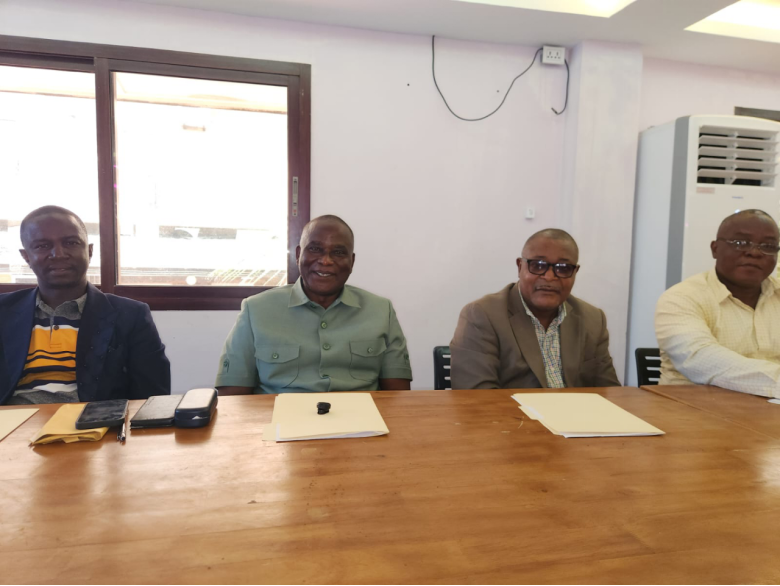
Speaking at a joint RDFI/RPAL press conference on November 25, 2025, senior officials, including RDFI Chairman J. Tokpa Mulbah, Co-Chair John Howard, RDFI Executive Director William H. Johnson, and RPAL Vice President Tom Bannie Browne, outlined achievements made since last year’s National Rubber Conference in Gbarnga and the interventions needed to sustain momentum.
Pricing Reform Gives Farmers Stability and Fairness
Speaking at the news conference, RDFI Chairman J. Tokpa Mulbah said the most visible improvement has been price stabilization.
The former Deputy Speaker of the House of Representatives of the 52nd Legislature, credited the government’s decision to impose a US$150 per ton fee on unprocessed rubber exports, a policy aimed at encouraging domestic processing and job creation.
While some farmers and processors have described the combination of taxes and fees as burdensome, Mr. Mulbah emphasized that the pricing system itself has improved dramatically.
According to him, the establishment of the Liberia National Rubber Pricing Committee (LNRPC), an independent body mandated to calculate and publish monthly rubber prices, has brought fairness and transparency after decades of what farmers described as arbitrary pricing by dominant buyers.
He indicated that prices have not only increased but stabilized, creating predictable income streams for farmers nationwide.
“We now have a system where pricing is determined by an independent committee, not by those who buy the rubber. This alone has brought more confidence and improved the livelihood of farmers,” said the former Bong County lawmaker.
He pointed out the importance of fair labor practices, recommending production-based compensation models that reward workers according to output. He also stressed that the rubber sector remains one of Liberia’s largest private-sector taxpayers, contributing significantly to national revenue.
Lack of Agricultural Financing Still a Major Obstacle
RDFI Co-Chair John Howard warned that the absence of government-backed agricultural financing continues to limit expansion, especially among smallholder farmers.
He noted that without an agricultural bank or subsidy program, farmers struggle to secure land financing, purchase inputs, or expand their farms.
“Most of our people want to grow. Growth is impossible without credit. Smallholders are bearing the full financial burden, and that is not sustainable for a sector so critical to Liberia’s economy.”
Howard highlighted upcoming interventions focused on productivity, including the planned distribution of high-yielding rubber clones such as ARA 237, and provision of other essential raw materials to farmers in multiple counties.
“These new clones have the potential to significantly boost national output. If we combine improved seedlings with fair pricing, Liberia’s rubber sector will regain its position among the strongest in the region.”
RDFI Operating on “Gentleman Basis” Due to Severe Underfunding
RDFI Executive Director William H. Johnson revealed that the RDFI operates far below the minimum capital level required to function effectively. The fund, which should maintain a strong field presence to monitor rubber processors and verify fee collections, has instead been forced to operate with only a handful of staff.
This lack of manpower prevents the agency from deploying field monitors, compelling the fund to rely on what Johnson described as a “gentleman basis” for verifying financial transactions — including millions in fees owed by processors.
“This is not how a national fund should operate. We are severely handicapped. Without adequate staffing, we cannot audit processors, we cannot track compliance, and we cannot verify collections.”
He disclosed that the agency is appealing to the Ministry of Finance and Development Planning to honor previously promised funding and to approve additional staffing to strengthen monitoring and transparency.
One Year After the Gbarnga Conference, Real Progress Is Visible
RPAL Vice President Tom Bannie Browne praised President Joseph Nyuma Boakai and Agriculture Minister Dr. J. Alexander Nuetah for prioritizing agriculture through the ARREST Agenda, calling their leadership pivotal to recent sectoral gains.
Browne highlighted the year’s biggest accomplishment: the successful operation of the LNRPC, which has consistently determined and published monthly rubber prices since June 2025.
“This is the first time in Liberia’s history that an independent committee — not a buyer — determines national rubber prices,” Browne said. “This was a core demand from our farmers, and it has finally been achieved.”
Concrete Gains: Over 200,000 Budded Stumps, Improved Roads, Expanded Nurseries
The RDFI and RPAL reported tangible achievements supported through US$389,286 in approved funding, including: 202,000 improved budded stumps distributed to 346 farmers across seven counties, 35 nurseries established across 11 counties, with 28 fully operational, 21 motorbikes and electronic tablets distributed to field staff for monitoring and farmer support, 30 RPAL field staff trained in nursery establishment, maintenance, grafting, and tapping, 35 farmers in three western counties issued free ID cards and road improvements in Grand Bassa (in collaboration with LAC) and upcoming grading of the Kakata–26th Gate road (with Firestone)
These interventions, Mr. Browne disclosed, are improving access, increasing productivity, and strengthening support services nationwide.
Support Independent Journalism
Your support helps FrontPage Africa continue delivering independent, credible, and impactful journalism. Every contribution strengthens our ability to investigate, inform, and hold power accountable while keeping quality journalism accessible to our readers.
Support our journalism or subscribe to receive the latest FrontPage Africa stories and updates.