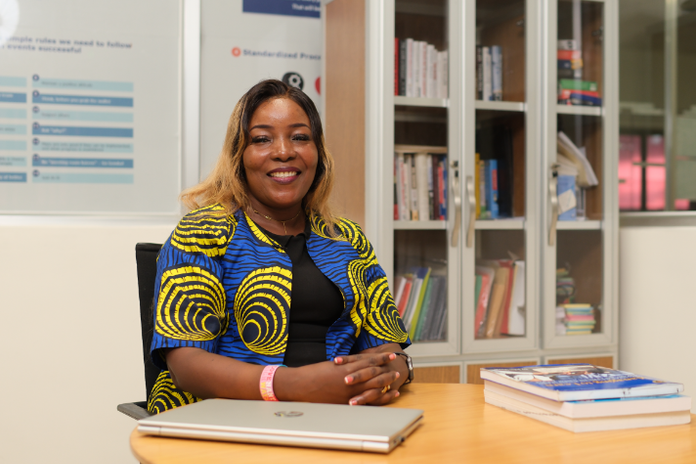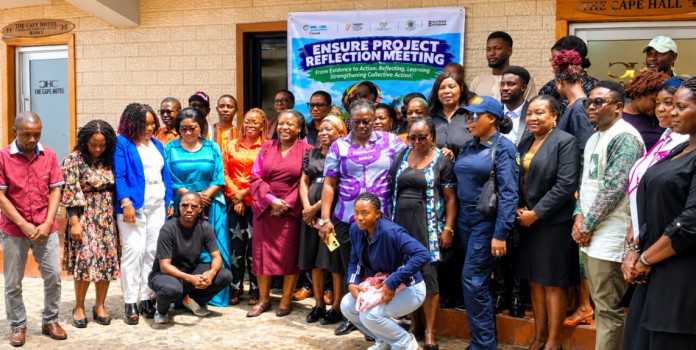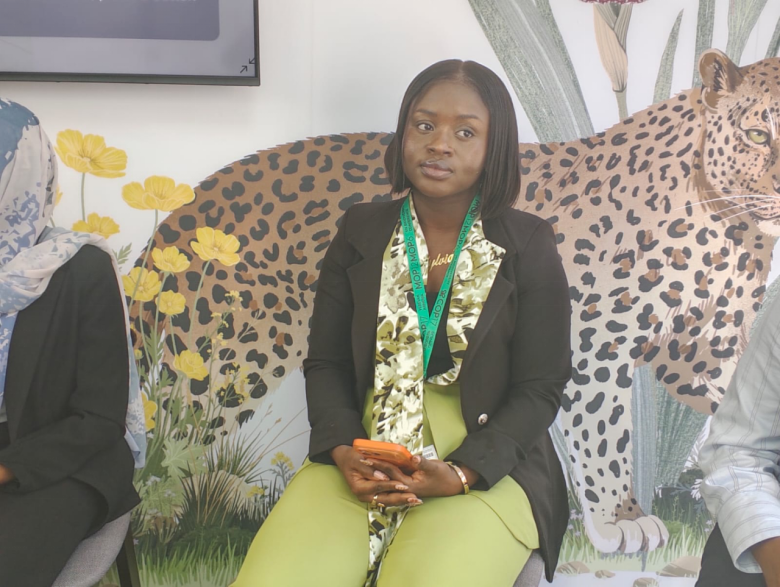
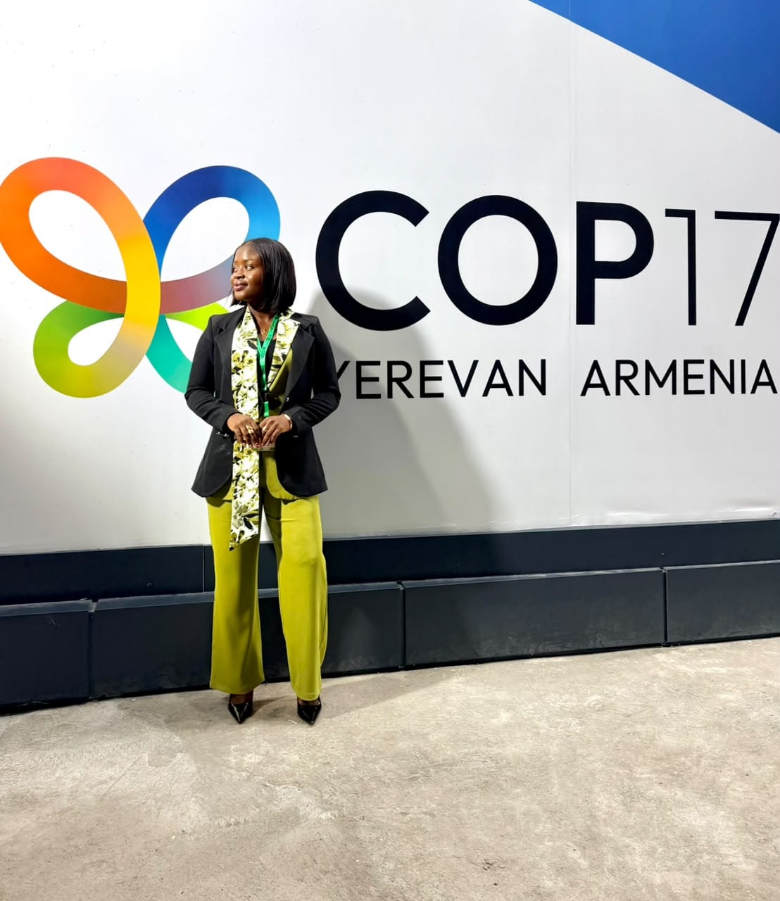
YEREVAN, Armenia — Liberian environmental expert Sylvia Diamond Dorbor has drawn praise from participants at the ongoing United Nations Biodiversity Conference in Yerevan, Armenia, after outlining Liberia’s longstanding forest conservation commitments, national legal framework and emerging approaches to ensuring that communities benefit financially from protecting the country’s natural resources.
By Selma Lomax, [email protected]
Dorbor, Technical Lead of the Guinean Forests Integrated Program Liberia Project and Sustainable Finance Coordinator at the Society for the Conservation of Nature of Liberia (SCNL), delivered her presentation during a panel discussion examining Africa’s progress toward achieving the global 30×30 biodiversity target by 2030.
Her intervention highlighted Liberia’s extensive forest resources, conservation legislation adopted before the international community agreed on the current global biodiversity framework, and efforts to develop a national action plan that translates international commitments into practical conservation measures.
She also drew attention to a fundamental question confronting countries seeking to protect their forests: how can governments ensure that communities receive predictable and equitable benefits from conservation, particularly when those same communities may already receive financial benefits from commercial activities involving their natural resources?
Participants at the panel discussion responded positively to Dorbor’s presentation, praising her explanation of Liberia’s conservation history and the importance of building on existing national laws to advance international environmental commitments. The reaction highlighted the relevance of Liberia’s experience to wider discussions about biodiversity protection, conservation financing and the role of local communities in safeguarding ecosystems.
The conference brings together government representatives, environmental experts, conservation organizations, researchers and development partners under the United Nations Convention on Biological Diversity, alongside meetings associated with the Cartagena Protocol on Biosafety and the Nagoya Protocol on Access and Benefit-sharing.
During her presentation, Dorbor challenged the perception that Liberia’s commitment to biodiversity conservation began with the adoption of the Kunming–Montreal Global Biodiversity Framework in December 2022. She explained that the country had already established policies and legal instruments intended to protect its forests long before the international community adopted the current 30×30 target.
“Liberia’s conservation commitments did not begin with the global 30×30 target. We have a longstanding national policy and legal foundation for forest conservation,” Dorbor told participants.
Her remarks placed Liberia’s conservation ambitions within a historical context, emphasizing that the country’s existing laws and institutions provide an important foundation for meeting contemporary international biodiversity obligations.
According to Dorbor, Liberia’s National Forest Inventory, conducted between 2018 and 2019 and officially launched in 2021, estimated that the country possesses approximately 6.6 million hectares of forest, representing about 69 percent of its total land area.
The figures underscore Liberia’s importance in West Africa’s conservation landscape, particularly because the country contains a substantial portion of the remaining Upper Guinean forest ecosystem, one of the region’s most biologically diverse and environmentally significant landscapes.
Liberia’s forests provide habitats for numerous wildlife species, support the livelihoods of forest-dependent communities and contribute to climate regulation, carbon storage, watershed protection and the maintenance of ecological balance.
However, the continued existence of these forests does not automatically guarantee their long-term protection. Agricultural expansion, logging, mining, infrastructure development and other land-use pressures present continuing challenges for conservation authorities and communities seeking to maintain forest cover while pursuing economic opportunities.
Dorbor argued that addressing these competing demands requires more than the designation of protected areas. It also requires effective institutions, sustainable financing and mechanisms that demonstrate to communities that protecting their natural resources can generate tangible and lasting benefits.
She pointed to legislation adopted more than two decades ago, including the Act for the Establishment of a Protected Forest Areas Network in 2003 and the National Forestry Reform Law of 2006.
“Our national commitment is also reflected in the Act for the Establishment of a Protected Forest Areas Network, adopted in 2003, and the National Forestry Reform Law of 2006. Section 9.1 of the 2006 law provides for a Protected Forest Areas Network and conservation corridors covering at least 30% of existing forested areas,” she explained.
The provisions demonstrate that Liberia had established a national forest conservation objective before the international community adopted the current global biodiversity framework.
Dorbor’s presentation also highlighted the need to distinguish between Liberia’s longstanding legal commitment to protecting a proportion of its forested areas and the broader international 30×30 target.
Adopted in December 2022 at the 15th Conference of the Parties to the Convention on Biological Diversity, the Kunming–Montreal Global Biodiversity Framework established a series of goals intended to address accelerating biodiversity loss, habitat destruction and ecosystem degradation.
Under Target 3, countries agreed to pursue the effective conservation and management of at least 30 percent of terrestrial and inland-water areas and at least 30 percent of marine and coastal areas by 2030.
The target requires more than simply designating land and water as protected. It calls for conservation systems that are ecologically representative, well-connected and effectively managed, while recognizing the rights and interests of Indigenous peoples and local communities.
For African countries, implementing the target presents significant challenges because conservation objectives must often be balanced against demands for agricultural land, mining, infrastructure development, settlement expansion and other economic activities.
Dorbor said Liberia began developing its national 30×30 Action Plan in 2024 as part of efforts to translate the international commitment into a practical framework suited to the country’s environmental circumstances.
“At the global level, the Kunming–Montreal Global Biodiversity Framework was adopted in December 2022. Its Target 3 calls for at least 30% of terrestrial and inland-water areas, and 30% of marine and coastal areas, to be effectively conserved and managed by 2030,” she said.
“Liberia subsequently embarked on developing its national 30×30 Action Plan in 2024, to translate that global commitment into a practical national pathway,” she added.
The development of the national action plan offers an opportunity to identify conservation priorities, strengthen protected-area management and establish mechanisms through which government institutions, conservation organizations, communities and international partners can coordinate their activities.
It also provides a framework for examining existing conservation arrangements and determining what additional measures may be necessary to achieve meaningful biodiversity protection by the 2030 deadline.
Conservation Benefits and Community Livelihoods
Beyond the legal framework and national action plan, Dorbor used her presentation to raise questions about the financial incentives available to communities that agree to conserve their forests rather than allow them to be used for commercial purposes.
She argued that Liberia must pay closer attention to the difference between the benefits communities receive from commercial resource extraction and the benefits available to them when they protect natural resources.
“I think one of the fundamental issues we need to address is the difference between how Liberia shares the benefits of commercial resource use and how it shares the benefits of conservation,” she said.
Dorbor explained that Liberia’s commercial forestry sector already has an established benefit-sharing framework through which communities receive a share of land rental fees paid by logging companies.
Under this arrangement, communities have used the proceeds to identify and pursue local priorities, including infrastructure and other social services.
However, she questioned whether communities that choose to preserve their forests have access to comparable, predictable benefits that can support their development needs.
“In the commercial forestry sector, we have an established benefit-sharing framework through which communities receive a share of land rental fees paid by logging companies. Communities have used this mechanism to identify priorities, including infrastructure and other social services. But this raises an important question: if communities can receive benefits from the commercial use of their forests, what predictable benefits do they receive when they choose to conserve those same forests instead?” Dorbor asked.
Her argument placed community participation at the center of the biodiversity discussion, suggesting that conservation strategies must address the economic realities facing people who live in and around forest landscapes.
Dorbor’s intervention therefore raised a question with direct implications for Liberia’s conservation policies: how can the country make forest protection economically meaningful to the people whose cooperation is essential to its success?
She linked that question to Liberia’s National Carbon Market Policy, which she said had recently been completed. The policy establishes different benefit-sharing arrangements based on ownership of the resource generating carbon credits.
Support Independent Journalism
Your support helps FrontPage Africa continue delivering independent, credible, and impactful journalism. Every contribution strengthens our ability to investigate, inform, and hold power accountable while keeping quality journalism accessible to our readers.
Support our journalism or subscribe to receive the latest FrontPage Africa stories and updates.