MONROVIA – The work-related lamentations from members of Liberia’s disability community have been amplified, again, to attract attention of Liberian Government, the private employment sector, and entire Global Community. This has been going on over decades, especially in post-civil war period that is characterized with intensification of discrimination against persons living with disabilities in every public work place—unlike prejudicial treatment against jobseekers/employees with no form of deformity.
The amplification-conduit for this lamentation has always been the United Nations Development Programme (UNDP), a foreign Country supporting Liberia’s post-war reconstruction projects, or a foreign international organization.
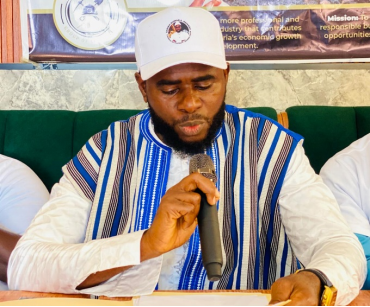
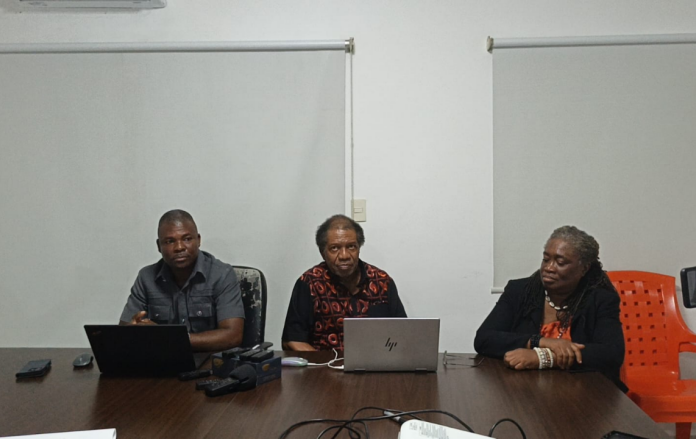
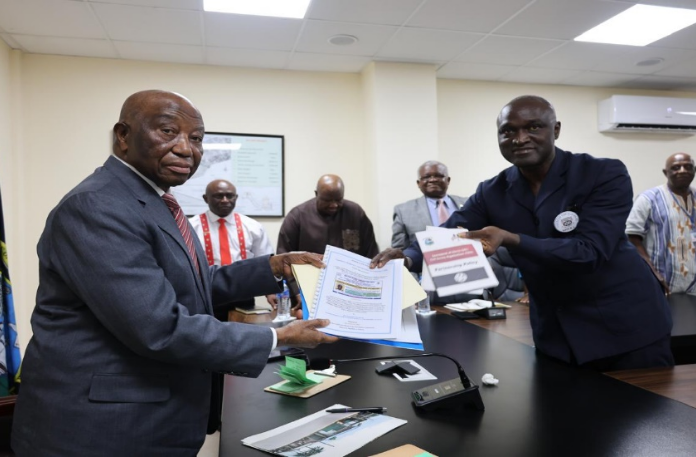
On May 21, 2021, the Liberian Government’s arm for disability matters—National Commission on Disabilities (NCD)—gathered “stakeholders” of Liberia’s disability community for a one-day interactive session (Workshop) that focused on awareness and advocacy.
The venue was the Lutheran (Church) compound on 13th Street, Sinkor, Monrovia.
The Workshop was funded by Swedish International Development Association (SIDA) through an Italian NGO— Association Friends of Raoul Follereau (AIFO), founded in 1961, and opened Office in Liberia in 1997. AIFO’s debut of humanitarian gesture in Liberia was a community-based rehabilitation program for Liberians living with leprosy. Later, the Italian NGO established a business setup program focusing on production of oil palm and rice, beginning with four of Liberia’s 15 Counties: Montserrado, Bong, Nimba, and Grand Gedeh Counties.
“This Workshop is an extension of the general awareness and advocacy project being implemented by the Coordinated Action on Disability in Liberia, a stakeholders’ group supported by the Swedish Embassy in Monrovia,” Madam Rebecca Stubberfield, Project Manager of CAD-L, informed the participants at the May 21 Workshop during her Overview of the Workshop.
Representing AIFO at the Workshop, Madam Stubberfield said the project started in 2020, but was paused in February of the same year, due to the Coronavirus pandemic.
The “stakeholders” include the Government of Liberia, Liberia Labour Congress, Disabled People’s Organizations (DPOs), the media, and civil society organizations, said Mrs. Ricardia Dennis, Executive Director of the National Commission on Disabilities (NCD), the Liberian Government’s arm on disabled people’s issues. NCD was the organizer of the Workshop.
Mrs. Dennis was assigned to the topic “Information on the Employment for PWDs (Persons with Disabilities), Legal Instruments, International Conventions, and a Glimpse into Current Status”
She began her presentation with her entity, NCD, with focus on the Act that created it and outsiders’ common perception of the NCD on employment.
“The Act that created the NCD says at least four percent of qualified persons living with disabilities should constitute the workforce of each Government’s Ministry or Agency,” the Government official announced.
However, Mrs. Dennis disclosed, investigations on presence of qualified PWDs at these Government’s entities revealed less than the mandatory 4%.
She said the Liberian Government doesn’t have an up-to-date statistics on its citizens living with disabilities, except the one produced in 2008.
“We cannot rely on the 2008 statistics, because it’s scanty,” stressed the Government official with disability (physically challenged)
Disabled persons should be employed on competence or qualification, not on sympathy, the NCD Chief said when speaking on another subtopic entitled “Affirmative Action”
On the United Nations Conventions on Persons with Disabilities (UNCRPD), Madam Dennis said Liberia ratified the UNCRPD in 2012, but the Country continues failing on implementation in majority of the UNCRPD’s provisions.
“Most of the Government’s buildings are not accessible to visually impaired persons and other disabled persons,” she picked one of the areas Liberia, through its national political leadership, has failed in.
She complained about the absence, at the Workshop, of the Ministry of Labour and the Ministry of Gender, Social and Child Protection—both with a “human rights” Department that covers PWDs working in each of these places
“Each received invitation for this Workshop,” she informed the body.
However, she advised PWDs to constructively and respectfully engage Government on their plights.
Mrs. Dennis said her entity relies most on UN Agencies or foreign Governments’ international Aid channels in Liberia for funding of NCD’s sensitization programs.
“When some qualified persons are looking for job, other people tell them, ‘go to the National Commission on Disabilities to be employed’. Other people think only disabled people should be at the NCD. Each of these perceptions is wrong,” she said.
Mr. Wilfred Gewon, visually impaired, spoke on “Advantages of PWDs being employed”.
He said his visual impairment started when he was age 14, and he got some of his school fees from commercial haircutting and polishing other people’s shoes at his Shoe-Shine business center along a road.
“Most times when I was cutting my customers’ hairs, some of their friends said, ‘you allowing a blind man to cutting your hair?’” said the speaker, who is a current Assistant Pastor of the A.M.E. Empowerment Church, in Monrovia.
On his personal professional success story, he said he was the first blind person with computer among visually impaired students going for training in South Africa.
“Currently I run the biggest computer training institute for visually impaired persons in Liberia,” Mr. Gewon, using Braille, blind people’s note book, during presentation, bragged.
He said, when a disabled person is employed, he or she contributes to the economic sustenance of the family, and contributes to national development; instead of the opposite.
“To be disabled on the job is more painful than being disabled before you were employed,” he said, and talked about an official of the National Social Security & Welfare Corporation (NASSCORP) who became blind while on employment and weeps most of the times “because he can’t see the computer and other office’s things he used to see,” Mr. Gewon added. He also talked about a lady who became visually impaired while working for a UN Agency.
Mr. Adama Dempster, Secretary General of the Civil Society Platform, presented on the topic “The Role of CSOs in Ensuring the Work Rights of PWD”
He began with introduction of a visually impaired first-class-honor graduate of the Cuttington University Colleague, who is entering the Louis Arthur Grimes School of Law at the University of Liberia.
In spite his outstanding academic status, the academically brilliant student is experiencing “bureaucratic barriers” at the Law School, Mr. Dempster disclosed to the Workshop participants.
“Mr. Austin Baryo graduated with First-Class Honor at the Cuttington University College,” Mr. Depmpster introduced the role model in the Liberian disability community. “The Civil Society Platform is pushing the general disabled people’s issues on qualification or competence of PWDs for work or advanced education, like in the case of Mr. Baryo,” Mr. Dempster said.
On his institution’s advocacy for PWDs, he mentioned engagement with the Liberian Government over disabled organizations’ complaints on being left out on the Government’s national food package (rice, beans and vegetable oil) to reduce economic hardship caused by the effects of the Coronavirus on poor citizens, especially persons in the “most vulnerable” category—including PWDs.
“Liberian Journalists are the watchdog of the society, to report on all citizen groupings in the society, but most time they ignore the most vulnerable group—the disability community,” said Mr. Kutaka Devine Togba, of the Ministry of Justice’s Human Right Office He presented on the topic: “The Role/Responsibility of the Media, through Its Reportage and How They Can Ensure the Achievement of the Right to Work for PWDs”
He also touched on the UNCRPD, with special focus on the Office of the Human Right Commission (OHRC) of the UN on “accessibility” of public facilities and “remuneration” for “working” PWDs.
Representing the Liberia Labour Congress, Madam Ophelia Carpenter, Deputy Secretary General, said her institution is most critical on the Government, due to its “chief national duty bearer role” on ensuring PWDs are absorbed into the public job market and are given their due reward for job done.
“If the Government doesn’t act, we will embarrass the Government before the International Labour Organization,” she disclosed.
Contributions came from members of stakeholders’ groups at the end of each presentation.
Madam Naomi B. Harris, president of the National Union of Organization of the Disabled (NUOD), said some of the disabled people are stuck to street-begging because it is lucrative for them. “Some have built two or more houses with money they got from street begging,” she reported.
Madam Theresa W. Garuo, Director of Special and Inclusive Education at the Ministry of Education, said: “The Ministry of Education has stopped the Subsidy for disabled people, because the beneficiaries are seen begging on the streets after collecting the money.”
Madam Daintowon Pay-Bayee, Consultant with the African Youth with Disabilities Network, and candidate in Liberia’s House of Representatives Elections in 2017, suggested an exclusive meeting with “media partners” of the Project for continuous reports on disability issues in Liberia.
Mr. Benjamin Nathan, Sr. and Mr. Matthew T. Bobowhe, served as Sign Language Interpreters of the Workshop for hearing-impaired participants. Mr. Nathan, Sr. is of the Liberia Sign Language Training Program; Mr. Bobowhe is of the National Commission on Disabilities.
Support Independent Journalism
Your support helps FrontPage Africa continue delivering independent, credible, and impactful journalism. Every contribution strengthens our ability to investigate, inform, and hold power accountable while keeping quality journalism accessible to our readers.
Support our journalism or subscribe to receive the latest FrontPage Africa stories and updates.