Monrovia— Concerns are mounting over the deteriorating condition of portions of Monrovia City Hall, with a FrontPage Africa investigation finding the building’s once-active theater section in a state of disrepair, while the Monrovia City Corporation (MCC) says the current administration inherited the facility in poor condition and has begun efforts to restore it.
By Emmanuel Weedee-Conway, [email protected]
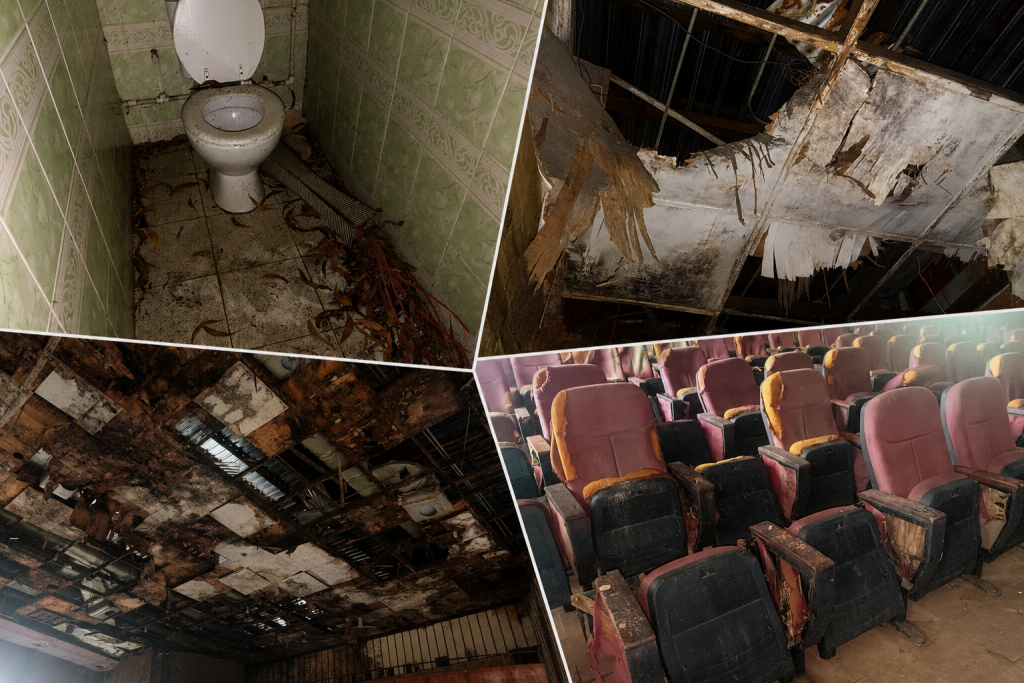
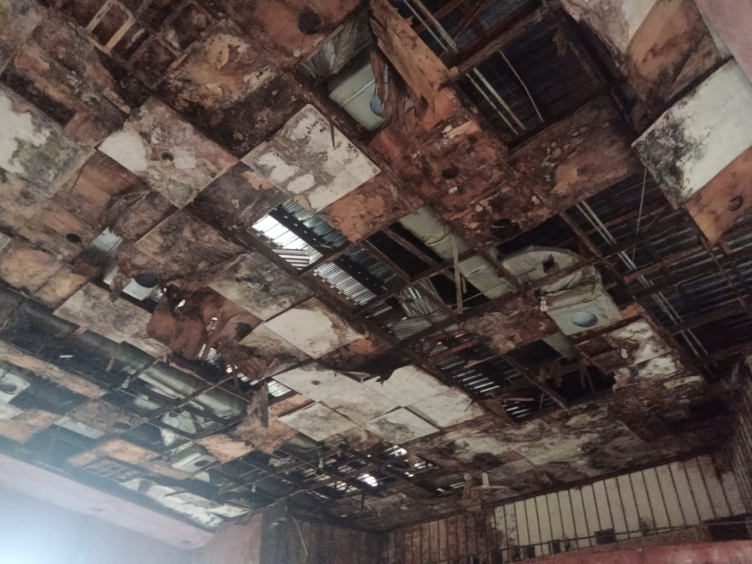
An on-the-ground assessment by FrontPage Africa found significant deterioration in the theater section, including a leaking roof, damaged ceilings, cracked and weathered walls, a deteriorating stage, and broken chairs.
The section has reportedly remained largely closed to regular public use, raising questions among residents and critics about the preservation of one of Monrovia’s historic public buildings.
The condition of the theater has also renewed broader concerns about the maintenance of public infrastructure under the administration of Mayor John-Charuk S. Siafa, who assumed office with promises of making the modernization, cleanliness, and improvement of Monrovia key priorities.
More than two years into his administration, however, critics say conditions at some public facilities remain troubling and that the city government must do more to protect and rehabilitate municipal assets.
FPA Findings Raise Questions
FrontPage Africa observed that the theater section appeared significantly more deteriorated than the functioning portions of City Hall.
The area includes facilities that were once used for public events and gatherings but are now largely inaccessible.
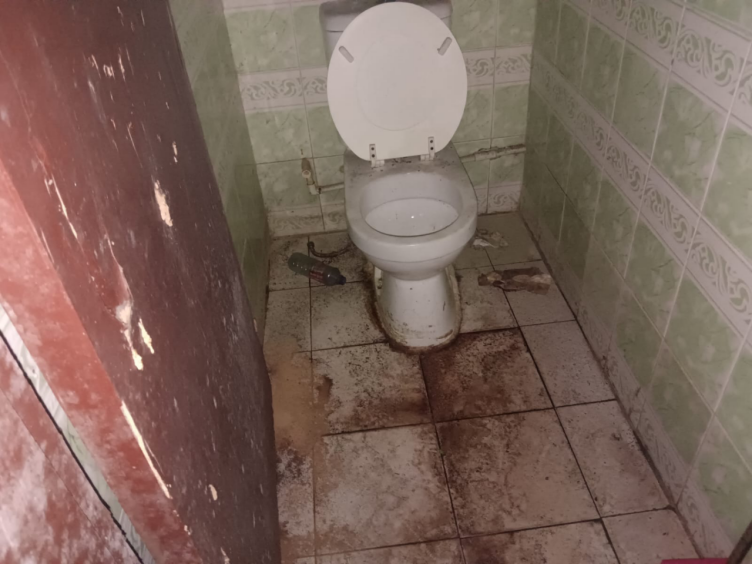
The paper also observed deteriorating sanitary facilities near the theater, including a bathroom area that appeared abandoned, with spider webs and an unpleasant odor.
The findings prompted questions about the structural condition of the theater, the reasons for its continued deterioration and whether the MCC has a funded rehabilitation plan for the facility.
FPA also asked the MCC why major rehabilitation work had not been undertaken despite the reported condition of the roof, ceiling, walls and stage, what budget and timeline had been established for rehabilitation, and which officials were responsible for the building’s maintenance.
MCC: ‘Complete Misrepresentation of the Facts’
In a written response, MCC Communications Director Varney Diggs strongly rejected what he described as the narrative presented by FrontPage Africa.
“All of the claims by the FPA are a complete misrepresentation of the facts,” Diggs said.
He argued that Mayor Siafa inherited City Hall, along with other MCC facilities, in a severely deteriorated condition.
According to Diggs, virtually all of the offices at City Hall had experienced leakage when the current administration took over.
He said the Siafa administration has since renovated major sections and offices of the building.
Diggs also pointed to the Fiamah and Stockton Creek transfer stations, saying both were inherited in what he described as “absolute ruins” and that the current administration undertook rehabilitation of the facilities.
He said the administration also inherited a city where garbage disposal was “at a total standstill.”
MCC Acknowledges Theater’s Poor Condition
While rejecting FPA’s broader characterization of the city government’s management of the facility, Diggs acknowledged that the theater was in poor condition when the Siafa administration assumed office.
He said the Mayor has been engaging development partners to secure assistance for a comprehensive renovation of the theater.
“Regarding the much-publicized theatre, the Mayor inherited it in ruins, but he has since demonstrated practical leadership by reaching out to partners for the full renovation of that section of the City Hall,” Diggs said.
He further claimed that renovation work was ongoing at the theater at the time of his response.
However, during FPA’s on-the-ground visit, it did not observe what appeared to be active renovation work in the deteriorating section.
The conflicting accounts leave questions about the scope and stage of any rehabilitation work and whether the project is being undertaken directly by MCC or with assistance from external partners.
Public Memory of Earlier Administrations
The condition of City Hall has also prompted comparisons with previous municipal administrations.
Liberians interviewed in connection with the investigation contend that portions of the facility were more functional and accessible under earlier administrations, including the periods associated with former Mayor Mary T. Broh and former Mayor Jefferson Tamba Koijee.
Broh, who served as Monrovia’s mayor from 2009 to 2013, became known for aggressive city-cleaning and urban-renewal campaigns. Her administration was also credited with improving the appearance and functionality of several municipal facilities.
“Under Broh, City Hall was a place to go. Everything was functional,” said Abraham Kollie, a resident of Capitol Bye-Pass. “I remember it was in the theater that the motorcyclists met with then- President Sirleaf and then Deputy Police Commissioner Abraham Kromah for a reconciliation meeting. Other programs were held there as well. To see it in such a terrible state is frustrating. It’s a leadership failure.”
Critics say Koijee’s tenure did not replicate all of Broh’s renovation efforts, but City Hall’s grounds and several public areas remained accessible and usable for official and social functions.
“The bathrooms were in use. City Hall was better than its current state,” Beatrice Saylee, a former volunteer at Monrovia City Hall. “There was a beautiful garden people used to visit for entertainment. Everything was not perfect, but it was better.”
Critics argue that the current administration should be judged not only by the condition it inherited but also by the progress it has made in preserving and improving municipal infrastructure.
MCC Rejects Claims of Decline Under Siafa
Diggs dismissed the suggestion that MCC was in significantly better condition before Mayor Siafa assumed office.
He accused critics of advancing politically motivated narratives and described claims that the corporation was previously in better shape as dishonest.
He maintained that Mayor Siafa has made “remarkable progress” during his tenure, particularly through the rehabilitation of municipal facilities and the restoration of services.
The MCC’s position, therefore, is that the deterioration observed at City Hall should be understood within the context of longstanding infrastructure problems inherited by the current administration rather than as evidence of neglect under Mayor Siafa.
Broader Sanitation Concerns
The dispute over City Hall comes amid persistent public criticism of sanitation and waste management in Monrovia.
Former President Ellen Johnson Sirleaf also publicly criticized the condition of the capital earlier this year.
Appearing on the Truth Breakfast Show in April, Johnson Sirleaf described Monrovia as “disgustingly dirty,” “stink,” and “shameful,” and called for stronger action to improve waste management and cleanliness.
Her comments added to growing public pressure on the city government to demonstrate measurable improvements in sanitation.
For critics, the deteriorating condition of portions of City Hall is particularly troubling because the building serves as a symbol of the capital and the municipal authority responsible for maintaining it.
A Question of Responsibility
The competing accounts ultimately raise a broader question: who bears responsibility for restoring and preserving City Hall, regardless of when the deterioration began?
The MCC says Mayor Siafa inherited a severely damaged facility and is now working to rehabilitate it.
FrontPage Africa’s findings, meanwhile, indicate that significant portions of the theater remain in poor condition, while questions remain about the timing, financing and scope of the reported renovation.
For members of the public, the distinction may matter less than the outcome.
City Hall remains one of Monrovia’s most recognizable public landmarks. Whether its deteriorating theater is a legacy of previous administrations, a consequence of years of inadequate maintenance, or a problem now being addressed by the current government, residents say what matters is that the facility is restored before further deterioration makes rehabilitation more costly—or potentially impossible.
Until then, the theater’s condition stands as a visible reminder of the wider challenge facing Monrovia: maintaining the capital’s public infrastructure while delivering on repeated promises of a cleaner, safer and better-managed city.
Support Independent Journalism
Your support helps FrontPage Africa continue delivering independent, credible, and impactful journalism. Every contribution strengthens our ability to investigate, inform, and hold power accountable while keeping quality journalism accessible to our readers.
Support our journalism or subscribe to receive the latest FrontPage Africa stories and updates.