MONROVIA — SAMA Mineral Holdings Incorporated (SMHI) on Wednesday commended the Ministry of Mines and Energy (MME) for advancing reforms aimed at strengthening transparency, accountability, regulatory compliance and responsible sourcing across Liberia’s mineral sector, describing the measures as important catalysts for investment, formalization and sustainable economic growth.
By Leroy Maxwell Sonpon II, contributing writer
The company’s endorsement follows the Ministry’s launch of a Gold Traceability and Capacity-Building Training Program targeting licensed gold dealers, regional mining officers, artisanal and small-scale mining operators, cooperatives and other stakeholders participating in Liberia’s mineral value chain.
SAMA said the initiative represents an important step toward strengthening Liberia’s mineral governance architecture, particularly through improved documentation, digital traceability, regulatory compliance and greater oversight of the movement of gold from production sites through aggregation, trading and export.
The company’s position comes against the backdrop of Liberia’s long history as a mineral-producing country, where the extractive industry has played a central role in the national economy.
According to Liberia Extractive Industries Transparency Initiative (LEITI) reporting, Liberia’s mineral sector has historically been a key pillar of economic development, with iron ore, gold and diamonds among the country’s principal mineral commodities. Before the civil-war era of the 1990s, the minerals sector—particularly iron ore—accounted for more than 65 percent of export earnings and approximately 25 percent of GDP, underscoring the strategic importance of mining to Liberia’s economic history.
Liberia’s mineral economy was subsequently severely disrupted by years of civil conflict. The extractive sector, particularly the diamond and timber industries, was significantly affected during the Second Liberian Civil War from 1999 to 2003. Following the end of the conflict and the lifting of United Nations sanctions on timber and diamonds in 2007, Liberia began intensifying efforts to rebuild institutions and strengthen natural-resource governance.
It was within that broader post-war governance environment that Liberia joined the Extractive Industries Transparency Initiative in September 2008, creating a multi-stakeholder platform bringing government, companies, civil society and communities into discussions around transparency, accountability and natural-resource governance.
Today, Liberia’s mining sector remains primarily driven by iron ore, gold and diamonds, making effective regulation of the mineral value chain a matter of national economic significance.
SAMA said effective mineral traceability has become increasingly important as international markets demand greater assurance that minerals entering global supply chains are legally produced, properly documented and subject to credible due-diligence mechanisms.
The initiative also aligns with the broader principles of the OECD Due Diligence Guidance for Responsible Supply Chains of Minerals from Conflict-Affected and High-Risk Areas, which emphasizes risk identification, supply-chain transparency, responsible business conduct and continuous due diligence.
Dumoe: Reform Must Produce a Predictable Business Environment
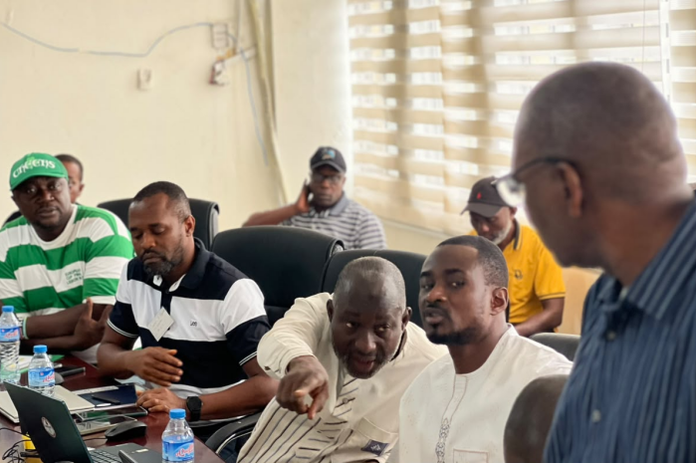
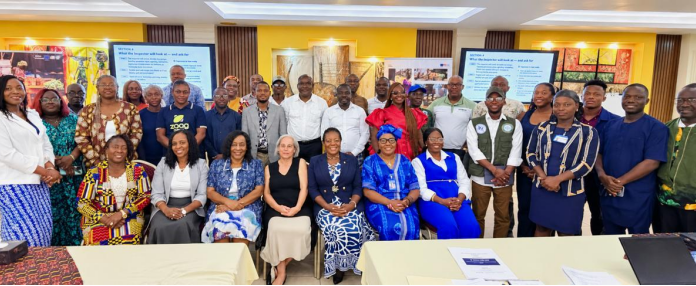
Speaking during a gathering of key mineral-sector stakeholders hosted by the Ministry of Mines and Energy on Wednesday, SAMA Mineral Holdings Incorporated Chief Executive Officer Minepakai Dumoe stressed the importance of greater coordination among licensed dealers and other actors across Liberia’s mineral industry.
Dumoe said stronger coordination, transparent regulation and predictable administrative procedures could help address longstanding challenges confronting legitimate operators while creating stronger incentives for businesses to participate in Liberia’s formal mineral economy.
He particularly advocated for a devolved and responsive licensing regime, arguing that decentralizing appropriate regulatory services could reduce administrative bottlenecks, improve access to government services and make licensing more responsive to operators working outside Monrovia.
According to Dumoe, regulatory reform should not be limited to enforcement.
He argued that regulation should also create an enabling and predictable business environment in which compliant operators can invest, expand their operations and contribute more effectively to employment, government revenue and economic activity.
Dumoe characterized the Ministry’s ongoing initiatives as “farsighted reforms,” particularly efforts designed to simplify the acquisition and renewal of mining licenses while strengthening regulatory engagement between government and industry.
Traceability and the Fight Against Illicit Mineral Flows
The SAMA CEO’s position comes amid growing attention to the need to address illicit mineral flows, informal trading, under-declaration, weak documentation and potential revenue leakages within Liberia’s extractive economy.
Liberia’s own transparency experience has demonstrated why accurate production and trade data matter. Previous EITI assessments identified differences between government production data and information reported through the EITI process, including differences involving artisanal-mined gold. Such gaps underscore the importance of reliable production information and stronger systems for tracking mineral flows.
Against that background, effective traceability can serve as more than a regulatory requirement. It can become an important governance, accountability and supply-chain integrity instrument by establishing a verifiable chain of custody from the point of extraction through aggregation, trading and export.
A credible chain-of-custody system can strengthen revenue assurance, public accountability, regulatory oversight, responsible sourcing and environmental and social safeguards, while helping legitimate dealers and licensed miners distinguish themselves from actors operating outside the legal framework.
For Liberia’s artisanal and small-scale mining subsector, however, formalization must go beyond enforcement.
It should include practical access to licensing, technical assistance, market information, financial services and fair trading arrangements.
Such an approach could move Liberia toward inclusive formalization, in which artisanal miners and mining cooperatives become recognized participants in the formal mineral economy rather than being viewed primarily through an enforcement lens.
Momolu: Mineral-Sector Reform Remains a “Work in Progress”
Assistant Minister for Mines Sumo Momolu described the Ministry’s reform agenda as a “work in progress,” emphasizing that the government’s efforts are intended to improve Liberia’s business climate and strengthen legal mineral trade.
According to Momolu, the traceability training is designed in part to reduce the impact of illegal trading in Liberia’s minerals and strengthen the capacity of government and industry actors to monitor mineral movements through the supply chain.
He further emphasized that the reforms are intended to protect officially licensed operators from being undermined by illegal miners and traders.
Momolu also welcomed the proposal advanced by Dumoe regarding stronger coordination among mining cooperatives, noting that greater organization could give cooperatives increased collective bargaining power within the mineral marketplace.
A Reform Agenda With Historical Significance
For Liberia, the present reform effort carries significance because it addresses challenges that have followed the country’s mineral economy for decades: how to regulate extraction effectively, distinguish legal from illegal trade, protect public revenue, attract responsible investment and ensure that communities benefit from the resources beneath their land.
The country’s experience with the extractive sector also demonstrates that mineral governance cannot be separated from broader questions of institutional capacity, transparency, accountability and social legitimacy.
Liberia’s modern mining sector is governed principally by the Mining and Minerals Law of 2000, while the EITI process has provided an additional platform for transparency and multi-stakeholder engagement.
The historical evolution from a mineral economy dominated by iron ore, through the disruption of civil conflict, to the post-war emphasis on transparency and responsible resource governance provides important context for the Ministry’s current focus on gold traceability and licensing reform.
The issue today is therefore not simply how much gold Liberia produces.
It is where that gold comes from, who produces it, who buys it, how it moves through the supply chain, whether transactions are properly documented, whether government receives the revenues due to it, and whether communities and legitimate operators receive a fair share of the economic value generated by the sector.
From Regulation to Inclusive Mineral Governance
SAMA’s position places renewed emphasis on the relationship between regulatory reform, responsible mineral sourcing, investment confidence, community participation and sustainable resource governance.
For civil society organizations and extractive-sector advocates, the effectiveness of the reforms will ultimately be measured by whether traceability produces greater transparency, licensing reform reduces barriers to formal participation, enforcement becomes more credible, government revenue improves and mining communities experience tangible economic and social benefits.
That requires a regulatory framework supported by credible enforcement, transparent licensing, accessible grievance mechanisms, meaningful community engagement, environmental and social safeguards, reliable production data and transparent mineral-trade reporting.
SAMA believes that a modern traceability system, combined with an efficient and responsive licensing regime, can help Liberia move toward a more formalized, transparent, accountable and investment-ready mineral economy.
The company said sustained collaboration among the Ministry of Mines and Energy, licensed dealers, mining cooperatives, civil society organizations, development partners and other sector stakeholders will be essential to ensuring that reforms translate from policy commitments into measurable improvements throughout the mineral value chain.
Ultimately, responsible mineral governance should ensure that Liberia’s natural resources create shared economic value, protect legitimate operators and communities, strengthen government revenue, uphold environmental and social standards, and enhance Liberia’s credibility within regional and international mineral supply chains.
For SAMA Mineral Holdings, the Ministry’s latest initiative therefore represents more than a regulatory exercise. It is an opportunity to advance another chapter in Liberia’s long-running effort to transform its mineral wealth into a transparent, accountable, responsible and inclusive engine of national development.
The historical figures and institutional milestones above are supported by Liberia’s EITI records, including the country’s pre-1990s dependence on iron ore, the disruption caused by the civil wars, Liberia’s 2008 EITI accession, and the current Mining and Minerals Law framework.
Support Independent Journalism
Your support helps FrontPage Africa continue delivering independent, credible, and impactful journalism. Every contribution strengthens our ability to investigate, inform, and hold power accountable while keeping quality journalism accessible to our readers.
Support our journalism or subscribe to receive the latest FrontPage Africa stories and updates.