NIMBA COUNTY, Liberia_ In many parts of the world, especially in low-income regions, the lack of proper Water, Sanitation, and Hygiene (WASH) facilities in schools poses significant challenges to children’s health, education, and overall well-being. Without access to clean and safe drinking water, children are at a greater risk of waterborne diseases, leading to higher absenteeism rates and hindering their academic performance. Insufficient sanitation facilities often force students, particularly girls, to miss school during menstruation due to inadequate privacy and hygiene options. Additionally, the absence of adequate handwashing stations makes it difficult for children to practice good hygiene, further exacerbating health issues.
By Jerome Saye, Internews Water and Sanitation Reporting Fellow
In Nimba, Liberia’s second most populous county, three in every four public schools lack Water, Sanitation and Hygiene, WASH facilities threatening students’ education.
A FrontPage/Radio Nimba survey of 20 public schools in Sanniquellie Mah, Gbelay Geh and Bain Garr Education Districts found that in every four public schools surveyed, only one has some kinds of WASH facilities, a situation that is putting the students’ and teachers’ health at risk.
In the middle of Sanniquellie City, the political capital of Nimba is a high school where the classrooms are crammed. Not only are the classrooms crammed, but a simple need for the students to have access to WASH facilities like hand pumps and latrines is a major challenge for the students and the teachers.
At New Sanniquellie High School, there is a lack of access to clean water, proper sanitation, and hygiene (WASH) facilities forcing students and teachers alike to struggle with conditions that undermine smooth learning at the institution.
Genevie Saye is one of the students of New Sanniquellie High School. The 19-year-old female student has voiced her frustration about this situation. She says the lack of those essential facilities of the school is forcing the students to go to nearby communities in search of latrine.
“We don’t have good toilet on our campus and also drinking water,” says Miss Saye. “We can go out there asking people for water to drink. And also when we want to urinate, we go to peoples’ houses asking them for their toilets to use it.”
For Genevie Saye, the consequences of the absence of the facilities is hampering both teaching and learning at the school as the students will unnecessarily ask for excuses only to go home to attend nature when teachings are ongoing, something education experts say will derail the learning process of students here.
“Sometimes a teacher can be in class when we want to urinate no good latrine on our campus we can ask for an excuse to go outside there to people’s houses to ask them for their toilets before we can use their bathroom,” says Miss Saye.
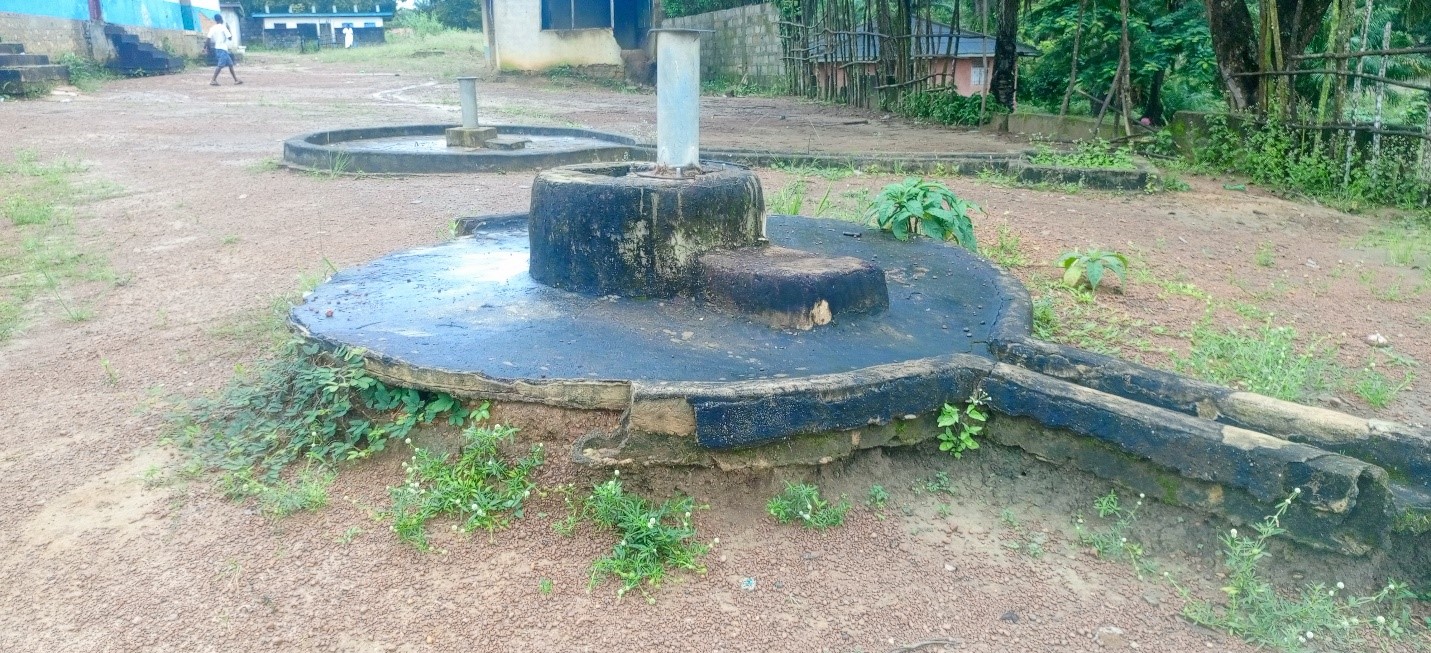
The school, which serves over 2000 students, has not had reliable access to WASH facilities for years. Those ones constructed by UNICEF some years ago are now deplorable. The nearest well is about 2 kilometers away and it belongs to an individual. Students must walk there during school hours if they are to drink water or watch their hands.
Another challenge this situation poses affects female students during menstruation. This is a time in females’ lives where the issue of cleanliness comes into play. No water! No latrine! How will the female students change their sanitary pads? This was one of the bitter experiences for Genevieve Saye last month.
“Sometimes you can just be sitting and you start receiving, so you need to get a good bathroom that you will get pads there for you to go and change and which of course we don’t have latrine and water so we can be gam with it,” says Miss Saye.
D. Melvin Cooper is another student of the school. The senior student outlines similar challenges and wants the Government of Liberia and other philanthropists to help the school construct those essential facilities.
“Please help us. We are in need of many things like fencing of the school, building of latrine and also hand pumps,” says Student Cooper.
Boycotting classes to go home to attend nature is now a daily routine for students attending here according to Student D. Melvin Cooper as he points at some of the students who are boycotting classes for this same purpose.
“Some students who have motorbikes, you can see them boycotting classes to go,” he says. “Look at some of them there,” he points at a group of students who are believed to be leaving the campus to attend nature at nearby communities or at their houses.
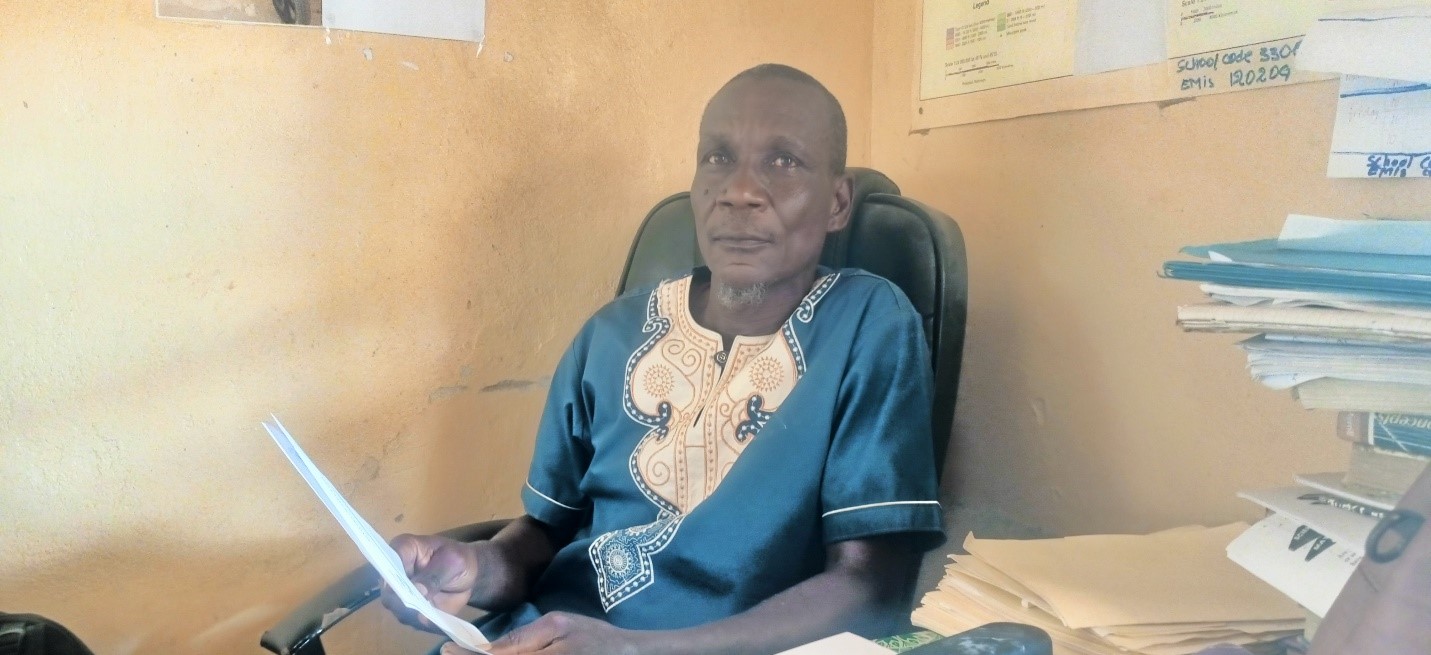
Noua A. Damey is the principal of the school. The 60-year-old principal admits that his school lacks these basic necessities. He says the lack of those facilities is one of the major impediments to the smooth running of the school.
“Yes, it is true we have serious of problem on this campus,” says Principal Damey. “We have a few latrines that are dilapidated and the one we try to renovate is for teachers. And there is no hand pump at all on this campus. So, it is difficult for the children. In fact, when they have nature call, they are forced to leave the campus and go back homes or to their various homes to ease themselves.”
The poor sanitary state of the school is also contributing to the poor running of it. Students’ control is difficult because they (students) will ask for excuses only in the name of going home or nearby communities to ease themselves. Something Principal Damey says is a hindrance to the school control.
“It is difficult to control students,” says Damey. “Because every time you will see students going in and going out of campus. When you ask them, whether they are going for true to attend nature, they will just tell you that they are going to attend nature.”
The Ministry of Education that is responsible for the running of public schools in Liberia is aware of the lack of water, sanitation, and hygiene at this school. But it appears like it has failed to mitigate the situation here as the students and teachers are still going to their houses for WASH purpose despite many pleas for help.
“The Ministry of Education is aware because the DEO and the CEO here know the constraint of this school,” says Damey.
The administration of New Sanniquellie High School has repeatedly called on partners, local authorities and donors for support, but no progress has been made.
“We have been talking with partners, donors so that they can come to aid us but it has not been fruitful,” says Damey. “For insurance, at certain time we even wrote Solway Mining Inc. at the time and they came and did assessment. Later, they disappeared. We been talking with people, but it has not been fruitful.”
Meanwhile, Principal Damey is calling on the Government of Liberia and partners to swiftly intervene to prevent open defecation that has polluted the campus as a result of this situation.
According to UNICEF, lack of WASH facilities in schools in Liberia especially in rural areas like Nimba spreads diseases such as cholera, diarrheal and childhood malnutrition that result in missed days of learning. “For girls who have started to menstruate, the absence of separate girls/boys bathrooms discourages them from coming to school on menstrual days and contributes to drop-out,” UNICEF says.
A report published by the World Health Organization (WHO) states that sanitation is very poor in Liberia, with vast majority of the people in rural areas lacking decent toilets and latrines, and having to defecate in the open instead
About 42 percent of the Liberia population practices open defecation according to the Joint Monitoring Program. With the lack of WASH facilities at the New Sanniquellie High School and other schools in Nimba, it can be accepted that this figure might double when care is not taking to remediate it.

Zorgowee Public School is another school in Nimba that lacks basic WASH facilities including latrine and hand pump. Here, the public school hosts about 700 students according to the principal of the only high school in Zor Chiefdom.
As a result of this, the principal, Mr. Matthew W. Bouh has issued a plea for urgent government’s and donors’ intervention as the institution grapples with this severe lack of latrines, causing the students to practice open defecation. This is putting the health and safety of students here at risk.
“The last time we wrote letters to some of our representatives, senators to give an assistance to us, but we are still waiting,” said Bouh. “Myself hand delivered the letters to their colleagues that work with them in the office. “Up to this time, we are still on the waiting list.”
Principal Matthew W. Bouh, who has led the school for over six years, voiced his concern when he spoke with our WASH reporter on his campus. The two latrines in this school are all in a state of dilapidation.
“The problem we are facing is two of our latrines over there are not in good condition,” said Bouh pointing to a very old and dilapidated five room latrine constructed by CIPORD since 2012.
In the meantime, Bouh and the teachers of the school are pushing for local solutions. They have tasked one another to pay some amount to explore ways to construct some kind of latrines while waiting for government and partners to provide fund to build permanent ones.
“At the end of this month, each of us will be paying $LD1000 as contribution to help us put something together,” Bouh noted. “We cannot sit down to put our hands between our legs for something to happen.”
As the dry season approaches, which typically exacerbates sanitation issues here, Bouh’s concerns are lightly to intensify. For now, students of the school continue to practice open defecation as a solution that is expected to go a long way.
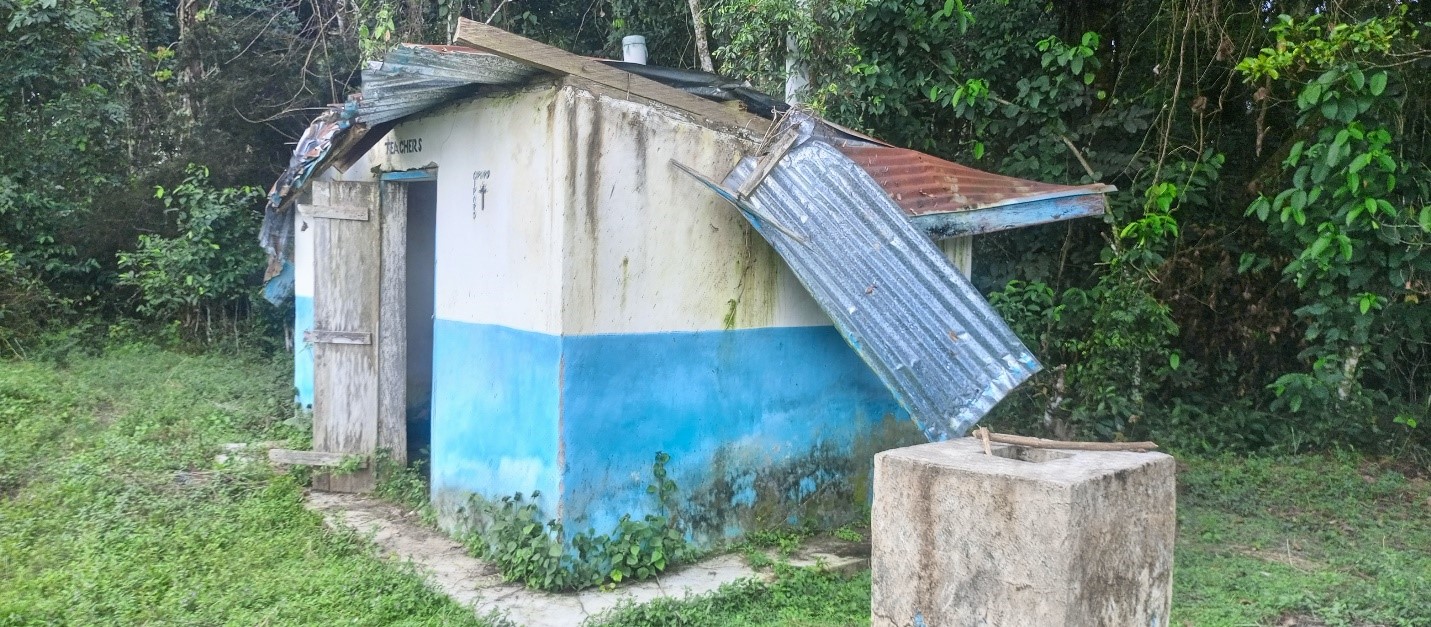
Jenkins K. Zeambo is the principal of the Kpolay Public School in Gbelay Geh Education District.
On this rainy afternoon, Principal Jenkins K. Zeambo walks around the school campus in frustration. His school lacks latrines and his students are forced to go to their homes when they want to use WASH facilities.
“We are finding it difficult, we use only the town people’s latrines, said Zeambo. “The ones we have, had been destroyed by the wind,”
Standing under the canopy of the forest is an old latrine built by CIPORD in 2013 that has been destroyed by wind. Around it is a hand washing facility known as hand washing station. It has outlived its usefulness.
For years, Mr. Zeambo has been sounding the alarm, writing local officials and meeting with parents to discuss potential solutions. But so far, the school has received no assistance.
Funding constraints have left schools like Kpolay Public School without WASH facilities.
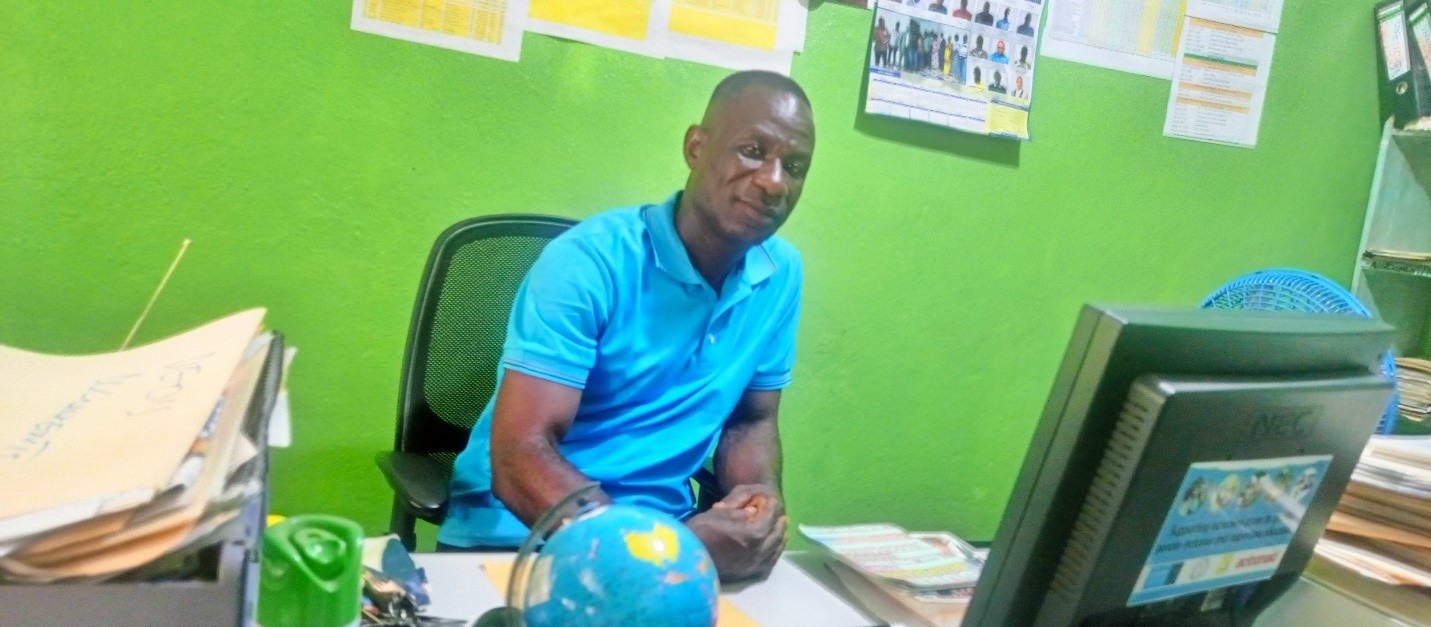
District Education Officer Lemuel G. Saye confirms lack of WASH facilities at the New Sanniquellie High School and says he is working with the administration to find solution to this embarrassing situation. But he and the school administrators’ efforts have not yielded any result because of financial constraints.
“We have been struggling along with the school administrators and teachers to see how best we can improve not only the WASH facilities but the school environment and buildings,” said Saye. “Actually, the WASH facilities especially our latrines are in deplorable conditions.”
Mr. Saye attributed the lack of finance to develop the school to students’ failure to pay a little fee that is enshrined in the calendar of the Ministry of Education to be paid by enrolled students. The Ministry of Education charges a little over LD$1000 for elementary, LD$2000 for junior high and LD$3000 for senior high students in public schools like the New Sanniquellie High School. But the students are not responding accordingly. According to this academic year’s registration record, out of the 2000 students seeking education here, only 350 have registered. The Ministry says no child should be put out of school for fees. So, it is only the government and other partners that can solve this problem.
“Most of the students have not registered,” said Saye. “They occupy the seats, occupy the classrooms but yet they have not registered. Besides, the money is very little and can’t do anything.”
The Sanniquellie Mah Education District Officer wants the public and non-governmental organizations to come to build hand pumps and latrines for the school. New Sanniquellie High School is essential for the city as it is now reducing the over crowdedness of the Sanniquellie Central High School which was the only public high school in Sanniquellie.
“We are asking all of our stakeholders in Nimba, in Sanniquellie Mah Education District that we need help at the New Sanniquellie High School campus. “Education is everyone’s business, it is not one-person business, so we are appealing to everyone to respond to this request that is coming from our office,”
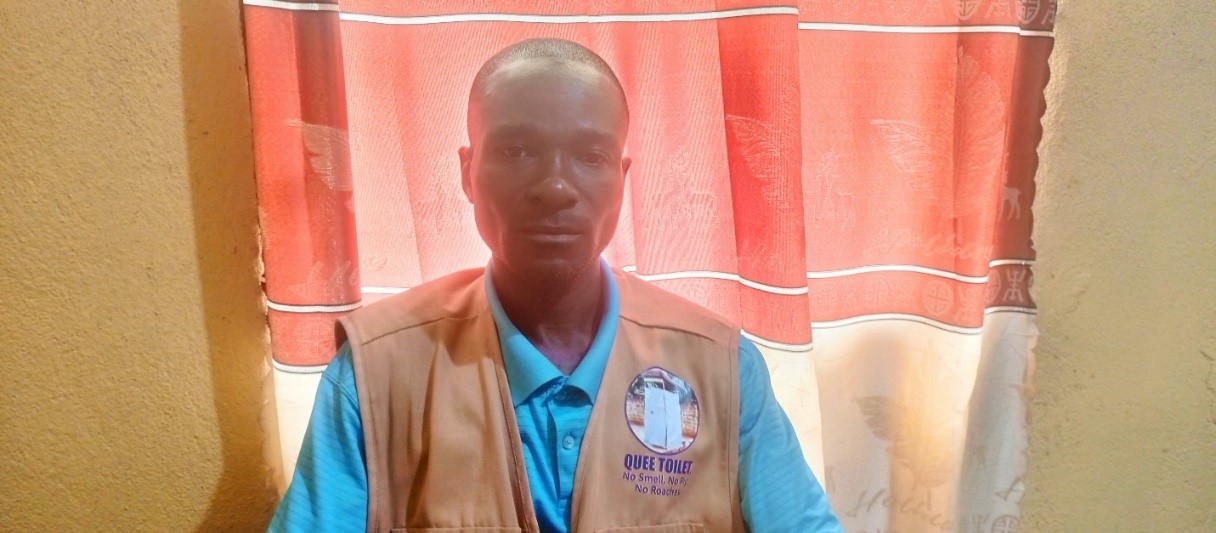
Environmental Health Technician for Sanniquellie Mah Health District is a big advocate for WASH in schools and wants to see more support from the government and donors to improve the facilities in schools in Liberia.
Franklin K. Moore said, the lack of WASH facilities at public schools has severe health risks to students and teachers. He said, it would be prudent for the government, school communities and donors to save those schools like New Sanniquellie High School, Zorgowee Public School, Kpolay Public among others without WASH to get some.
“The government or even the PTA and administration can work with other donors to build toilet and hang pump to avoid the spread of WASH related diseases,” said Moore. “We are appealing to the government to provide safe drinking water. You can’t say you having school that you don’t hand pump.”
Speaking to our Water and Sanitation reporting fellow in Sanniquellie, Mr. Moore underscored the dangers of operating schools without WASH. He said in the absence of WASH in schools, diseases such cholera, dysentery and diarrhea will spread rapidly among students and teachers in time of outbreak. Open defecation will also be practiced once there is no toilet at the school.
“In the absence of toilet, open defecation will occur and that will lead to the spread of other diseases,” said Moore. “We visited a certain school, people were going into the bushes, the teachers were going into the bushes to practice open defecation. Once there is no toilet there, people will practice open defecation.
Open defecation according to WHO is the practice of defecating in fields, forests, bushes, bodies of water, and other open places. It is an affront to dignity and risk to children’s nutrition and community health. It is still practiced in Liberia. The Government of Liberia and partners are fighting to minimize this. But their fight is undermined by the lack of WASH facilities in schools in Nimba County.
Moore emphasized the importance of having infrastructure such as clean water for drinking, hand washing stations and proper sanitation facilities in schools across Liberia. He described the lack of WASH in schools as a ticking time bomb for potential outbreaks of waterborne diseases including cholera and dysentery, which could seriously affect school attendance and over all community health.
The Sanniquellie Mah Health District Environmental Health Technician has called on parents of children attending schools without WASH facilities to coagulate efforts to have some.
For now, these schools continue to operate under challenging circumstances, their students are pushing forward despite the odds. For New Sanniquellie High School last academic year, the school won some competitions ranging from quizzing to debate.
But as the situation worsens, those school leaderships fear that the community’s hopes for brighter future may slip further out of reach.
Support Independent Journalism
Your support helps FrontPage Africa continue delivering independent, credible, and impactful journalism. Every contribution strengthens our ability to investigate, inform, and hold power accountable while keeping quality journalism accessible to our readers.
Support our journalism or subscribe to receive the latest FrontPage Africa stories and updates.