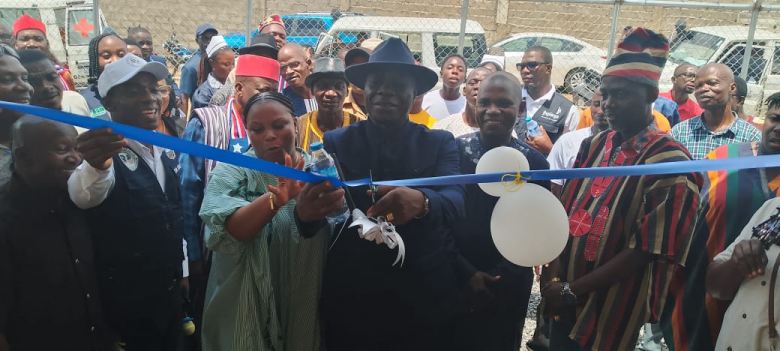
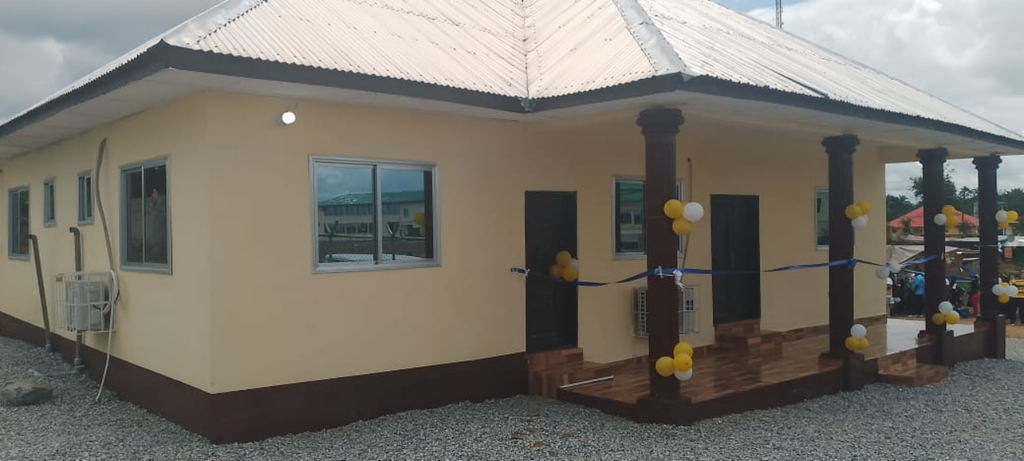
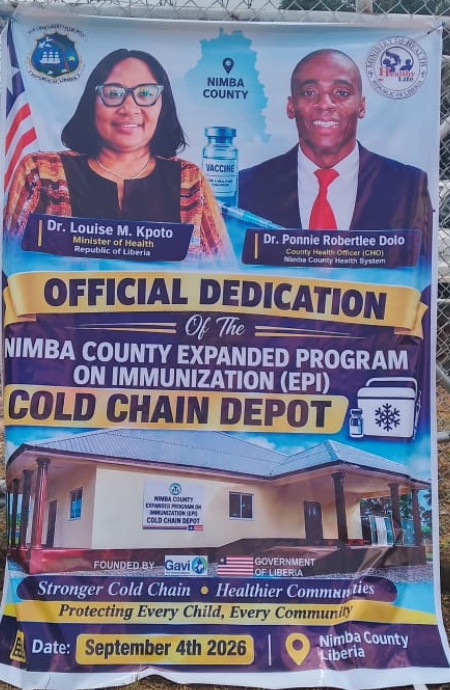
Sanniquellie, Nimba County — Nimba County Health Officials, Ministry of Health Delegations, development partners and community leaders over the weekend dedicated a newly constructed Expanded Programme on Immunization (EPI) Cold‑Chain Depot designed to expand and secure vaccine storage, strengthen supply management and improve immunization outreach across the county.
By Franklin Doloquee / Nimba County
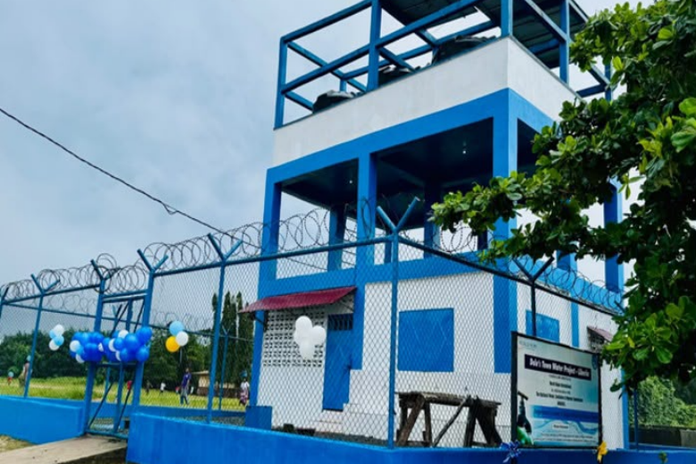
The purpose‑built depot, completed after roughly a year of construction, replaces a cramped 8-by-10‑foot storage room that had constrained the county’s immunization operations.
Nimba County Health Services Administrator Alex L. Gban described the old facility as inadequate for safe vaccine storage, cold‑chain equipment management and a scaled immunization program.
The project began with an initial grant of US$31,518 from Gavi, the Vaccine Alliance, to renovate the existing storage space.
After a condition assessment and consultations led by the Nimba County Health Team under County Health Officer Dr. Ponnnie Robertlee Dolo, local leaders determined that a new facility would better meet the county’s long‑term needs.
Despite initial concerns from the Ministry of Health about altering the original renovation plan, county officials proceeded.
The Government of Liberia contributed an additional US$48,356.52, bringing total project funding to US$79,874.52. Contractors used the funds to build a multi‑purpose EPI depot, demolish and relocate the old structure to create operational space, furnish interiors, improve landscaping and upgrade infection‑prevention measures.
Alex L. Gban, Nimba County Health Service Administrator said the new depot includes dedicated cold‑chain storage sized for county‑level vaccine stockpiles, secure shelving for immunization commodities and climate‑resilient features to protect vaccine potency.
The site also provides workspaces for storekeepers, a small training room for immunization coaching, improved sanitation and drainage and perimeter fencing to secure supplies.
County and national officials said the Ministry of Health will provide a vehicle to support vaccine distribution and cold‑chain logistics, enabling staff to reach remote communities and maintain timely immunization outreach.
The handover ceremony drew representatives from the Ministry of Health, Jhpiego and other development partners, civil‑society groups, religious leaders, health worker unions, traditional chiefs and elders and District Number two lawmaker.
The mood combined gratitude, pride and renewed focus on child health.
Jhpiego County Coordinator GREG Wogbeh called the depot “far more than a physical building,” describing it as a lifeline that will keep vaccines safe, prevent supply interruptions and preserve potency.
“Through technical support and capacity building, our aim is to build resilient, sustainable health systems that protect Liberian communities,” he said.
Dr. Adolphus T. Clark, the Ministry of Health’s EPI Manager, called the depot a prototype for a strengthened county depot model and stressed the central role of the cold chain in vaccine programs.
“You can have committed health workers, but if the cold chain is broken children will not receive vaccines that provide the full protection they need,” he stated.
He added that the depot will double as an immunization coaching hub to ensure correct vaccine administration and quality care for families.
County officials’ remarks
County Health Officer Dr. Ponnnie Robertlee Dolo thanked partners, the county health team, the Ministry of Health and the county administration for their collaboration and persistence, and pledged continued support for improved health services.
Nimba County Superintendent.
Superintendent Kou Meapeah Gono praised the project as a symbol of better child health and highlighted the Ministry of Education’s contribution of land that enabled construction.
Officials noted the Nimba County health team was recently recognized by the Ministry of Health as the best‑performing county health team in Region 3.
Community benefit and operational outlook
Health officials said the depot will reduce vaccine waste, improve storage reliability and speed the county’s response to outbreaks by maintaining cold‑chain integrity for routine and emergency supplies.
The added space and training hub are expected to support expanded routine immunization sessions and targeted outreach to remote communities, increasing coverage for infants and young children.
Operational details such as precise storage capacity, inventory targets and outreach schedules were not disclosed at the ceremony.
County health authorities said they will publish those details in the coming days after final checks and staff training.
They also plan a schedule of coaching sessions for vaccinators and storekeepers to ensure the depot is managed according to national cold‑chain protocols.
Dr. Adolphus T. Clark and partners said they hope the Nimba depot will serve as a model for similar investments in other counties, reinforcing Liberia’s county‑level immunization systems and helping protect children from vaccine‑preventable diseases.
Speaking at the dedication, District Number two lawmaker, Nyahn Garsaye Flomo Sr., congratulated the county health team for being named Liberia’s best‑performing county health team for two consecutive years and said the facility will strengthen routine vaccination and primary health care.
He noted the Ministry of Health contributed more than US$40,000 to the project, while Gavi provided about US$31,000–39,000. Representative Nyahn Garsaye Flomo Sr. said he helped establish the Liberia Immunization and Primary Health Care Caucus in the Legislature to promote sustained support for immunization and primary health care, improve legislative oversight, and mobilize domestic funding to reduce donor dependency.
He also updated attendees on the Public Health Insurance Bill (Liberia Health Equity Fund bill), which has presidential endorsement and, if passed, would create a national health insurance scheme.
The Nimba legislative caucus announced plans to hold county‑level oversight hearings to review receipt and use of national appropriations, identify bottlenecks, and improve the flow and impact of funds at the county level.
Meanwhile, the dedication closed with prayers and blessings from traditional leaders and council members for the health workers, partners and people of Nimba County.
Health officials, county administrators, development partners and members of the fourth estate attended the event.
Support Independent Journalism
Your support helps FrontPage Africa continue delivering independent, credible, and impactful journalism. Every contribution strengthens our ability to investigate, inform, and hold power accountable while keeping quality journalism accessible to our readers.
Support our journalism or subscribe to receive the latest FrontPage Africa stories and updates.