MONROVIA – When the Kingdom of Saudi Arabia delivered 29,412 bags of rice to Liberia in April 2023, then-Foreign Minister Dee-Maxwell Saah Kemayah stood at the center of the ceremony.
But nearly three years later, the former Foreign Minister is no longer being remembered simply as the official who helped secure the humanitarian assistance.
He is now a defendant in one of the most politically charged corruption cases arising from the former George Manneh Weah administration.
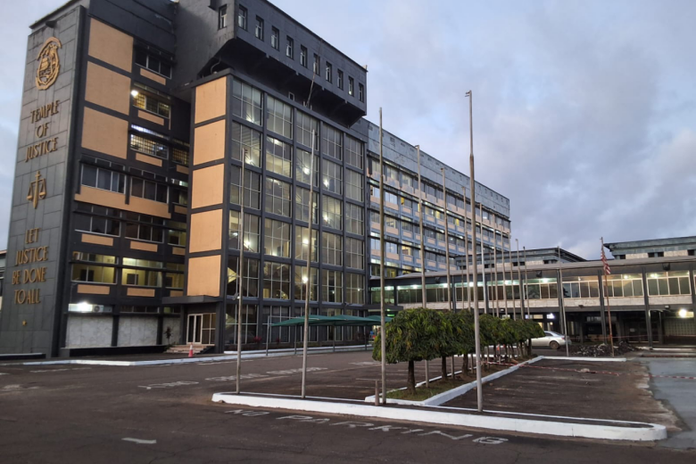
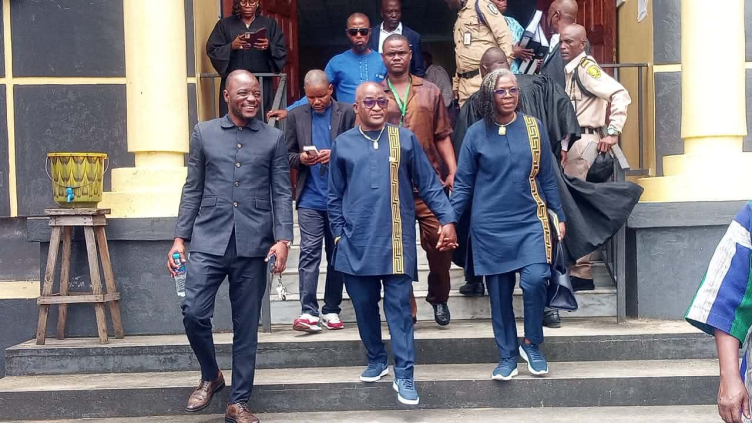
On Tuesday, August 18, Criminal Court “C” completed the selection of a 15-member jury to hear the case involving Kemayah and 12 other former officials and government employees who have pleaded not guilty.
Judge Ousman F. Feika has scheduled the trial to resume Wednesday, August 19.
What now unfolds before the jury is a contest between two sharply different narratives.
The prosecution alleged that Kemayah and other officials interfered with the distribution of 25,054 bags of Saudi-donated rice and diverted the commodity from its intended humanitarian purpose.
Kemayah, however, has consistently denied stealing, receiving or misappropriating the rice.
He has described the prosecution as a political witch-hunt and insists that the rice was distributed through government institutions responsible for handling relief.
And the documentary record presents a key question at the heart of his defense about
What exactly was Kemayah’s role after he helped bring the rice into Liberia.
The Minister Who Helped Bring the Rice
The Saudi rice did not originate as a Liberian government procurement project.
The Kingdom of Saudi Arabia, through the King Salman Humanitarian Aid and Relief Centre, provided Liberia with 29,412 bags of 25-kilogram rice, weighing 735,300 kilograms, for distribution to vulnerable people and disaster victims.
Saudi Arabia’s official news agency reported that the rice was handed over to Liberia through Kemayah, who represented the Liberian government at the ceremony, with the National Disaster Management Agency designated to distribute the commodity to approximately 88,236 beneficiaries.
But records from the period show that Kemayah’s involvement did not end with a ceremonial handshake.
In an earlier account published by FrontPage Africa, Kemayah explained that the Ministry of Foreign Affairs was not the appropriate government institution to distribute humanitarian food.
He said the Ministry therefore facilitated the arrangement for the NDMA, the agency with responsibility for disaster management, to take charge of the distribution.
More importantly, Kemayah issued a warning that would become important, years later.
He told the NDMA leadership that the rice was not for government officials and that not one grain should be diverted for personal use.
He also emphasized accountability and transparency in the distribution. That position creates an important contrast with the prosecution’s theory.
The indictment alleged that Kemayah later became involved in decisions concerning the distribution and that he helped move thousands of bags away from NDMA control.
Yet, the same historical record established, that the NDMA was identified from the outset as the institution responsible for distribution.
The 2023 Warning That Now Reads Differently
The irony of the case is that Kemayah’s own public statements from 2023 now form part of the broader context surrounding the controversy.
At the time, he warned NDMA officials that the rice was intended for disaster victims and vulnerable Liberians.
He even said public officials should not expect to receive any portion of the donation.
The Minister’s position was consistent with Saudi Arabia’s stated purpose for the donation. The Saudi government did not hand the rice to Kemayah for personal or ministerial use. It was handed over to the Liberian government for distribution through NDMA.
The indictment, however, later alleged that Kemayah and other officials “overlapped” their functions and became involved in decisions concerning the rice.
It specifically accused him of influencing the transfer of 13,895 bags from NDMA to GSA warehouses and alleged that he instructed former Internal Affairs Minister Varney Sirleaf to oversee distribution.
Those are allegations contained in the indictment, not findings of fact. Kemayah has pleaded not guilty.
Where the Rice Was Stored
The original 29,412 bags were divided among three warehouses. According to the indictment, 11,200 bags were placed at a GSA warehouse, while 12,292 bags and 5,920 bags were kept at two NDMA warehouses.
But even before Kemayah was arrested, questions about the handling of the rice had already emerged.
In May 2023, FrontPage Africa reported that an internal assessment had identified problems with NDMA’s storage and distribution practices.
The assessment found that 7,774 bags had been dispatched but raised questions about whether the rice had actually reached intended beneficiaries.
It also documented the transfer of 5,000 bags from the GSA warehouse toward the NDMA’s Gbarnga regional hub.
The problem was that NDMA officials reportedly could not establish that the 5,000 bags actually reached the Gbarnga hub. That development is cardinal, because it occurred within the NDMA’s operational structure, not within the Foreign Ministry.
The same 2023 report identified NDMA officials, including then Deputy Director for Operations Augustine Tamba, in connection with the movement of the rice. Tamba would later become one of the defendants in the case. He has since died.
Rice Was Distributed Through Multiple Government Channels
The record also shows that the Saudi rice was not sitting untouched in a single warehouse waiting for one massive disappearance. There were documented distributions.
The NDMA’s original distribution plan identified vulnerable and disaster-affected families across virtually the entire country. The plan included thousands of families in Montserrado, Margibi, Lofa, Bong and Nimba, among other counties.
Another documented distribution involved the Group of 77 Disabled Center. Former Executive Director Wayfa Ciapha maintained that her institution received rice through official government procedures and distributed it to disabled beneficiaries.
According to documents she presented, Vice President Jewel Howard-Taylor requested 3,000 bags from NDMA in July 2023 for disabled beneficiaries.
The Group of 77 ultimately documented the distribution of 1,293 bags, with records showing deliveries to beneficiaries in multiple counties.
These distributions do not, by themselves, resolve the question of what happened to every bag. But they complicate any narrative suggesting that the entire consignment simply disappeared.
The central issue before the jury will therefore be more precise, as to which officials authorized each transfer, who physically controlled the rice, where did each consignment go, and who ultimately received it.
A Document That Could Become Central to Kemayah’s Defense
Perhaps one of the most consequential pieces of evidence surrounding Kemayah is not from documents showed that the Saudi food assistance was not money placed under Kemayah’s control.
The rice was financed and arranged directly through Saudi Arabia’s humanitarian mechanism, with Fouta Corporation serving as the vendor.
A May 10, 2023 communication from Fouta Corporation confirmed that the company received payment directly from the Saudi side and was seeking settlement of a remaining balance.
In other words, the documentary trail does not show Kemayah receiving the money used to purchase the rice.
That distinction matters because allegations circulating after his arrest had suggested that Kemayah had controlled Saudi funds.
Then Came the Arrest On June 26, 2025, the controversy moved from government records to the home of the former Foreign Minister.
In the early hours of that morning, heavily armed Liberia National Police officers surrounded Kemayah’s residence and arrested him in connection with the Saudi rice investigation.
FrontPage Africa reported at the time that Kemayah, Mary Broh, Thelma Sawyer and several NDMA officials were detained in connection with the investigation.
Kemayah’s political organization, the Movement for Economic Empowerment, immediately condemned the arrest as politically motivated.
After his release, Kemayah himself described the action as a “public witch-hunt” and accused the Joseph Nyuma Boakai administration of using the justice system against political opponents.
The government, however, has maintained that the case is part of its anti-corruption campaign and has denied that the prosecution is politically motivated.
The Human Cost Inside the Kemayah Family
For Kemayah, the case would become more than a legal battle. His mother, Ma-Watta Kumba Larmie, was at the family residence when security officers arrived.
According to the family, security personnel searched areas of the residence, including her apartment, during the operation. The family later said the incident caused severe shock and trauma that contributed to the deterioration of her health.
Ma-Watta died on March 11, 2026, at St. Joseph Catholic Hospital in Monrovia.
Kemayah and his family have publicly linked her declining health to the events surrounding his arrest.
That claim has become part of the family’s account of the human consequences of the prosecution, although no court has determined that the security operation caused her death.
For Kemayah, the rice case therefore carries an emotional burden that extends beyond the courtroom.
He has repeatedly accused the Boakai-Koung administration of using the case to persecute him and other political opponents.
The Case Now Goes Before a Jury
The prosecution’s case remains serious. The indictment accuses Kemayah and other defendants of participating in the diversion of thousands of bags of rice and charges them with offenses including theft of property, economic sabotage, abuse of office and related offenses.
But an indictment is an allegation. It is not a conviction. Kemayah has pleaded not guilty and the trial will now test whether the government can establish beyond a reasonable doubt that the former Foreign Minister personally committed the crimes alleged against him.
The jury will have to examine the paper trail. It will have to examine who controlled the warehouses, who authorized individual distributions, determine whether transfers were lawful government decisions or criminal diversions and critically, it will have to determine whether Kemayah’s involvement was that of a minister who facilitated a foreign humanitarian donation, or that of an official who unlawfully interfered with its distribution.
There is another question that could loom large, if the rice was placed under NDMA’s statutory responsibility for distribution and why should the former Foreign Minister bear criminal responsibility for every subsequent movement of the commodity, a question the prosecution will have to answer with evidence.
Support Independent Journalism
Your support helps FrontPage Africa continue delivering independent, credible, and impactful journalism. Every contribution strengthens our ability to investigate, inform, and hold power accountable while keeping quality journalism accessible to our readers.
Support our journalism or subscribe to receive the latest FrontPage Africa stories and updates.