MONROVIA – The Liberian Senate has passed a controversial bill seeking to transform the Liberia Petroleum Refining Company (LPRC) into a full-fledged state-owned enterprise, amid concerns over the speed of its passage and limited time given to lawmakers to review the final draft legislation.
By Obediah Johnson
The bill, titled An Act to create the LPRC, was introduced by Abraham Darius Dillon of Montserrado County and seeks to repeal key provisions of the 1989 Petroleum Law.
The proposed legislation grants the LPRC exclusive authority over petroleum importation and distribution, while also redefining its legal status with governance, accountability, and oversight structures.
The passage of the bill followed a tense and prolonged consultative process that culminated in a closed door meeting held in the office of Senate Pro Tempore Nyonblee Karnga Lawrence.
The meeting, which lasted approximately three hours, resulted in significant changes to the Senate’s agenda prior to the formal sitting in the Chambers.
Lawmakers were subsequently provided with the final version of the more than thirty page draft bill less than thirty minutes before the session began, raising serious procedural concerns.
Earlier deliberations had stalled after members of a Joint Committee comprising Judiciary, Human Rights, Claims and Petition, Ways, Means and Finance, and Public Corporations recommended the bill’s passage with amendments. However, objections raised by Amara Konneh of Gbarpolu County and Gbehnzohngar Findley of Grand Bassa County led to a temporary halt in proceedings on Tuesday, March 17.
The lawmakers expressed frustration that the final draft had not been circulated in accordance with Senate rules to allow adequate scrutiny before debate.
Their concerns prompted a brief deferment, but the bill resurfaced the following day under circumstances that many observers described as rushed.
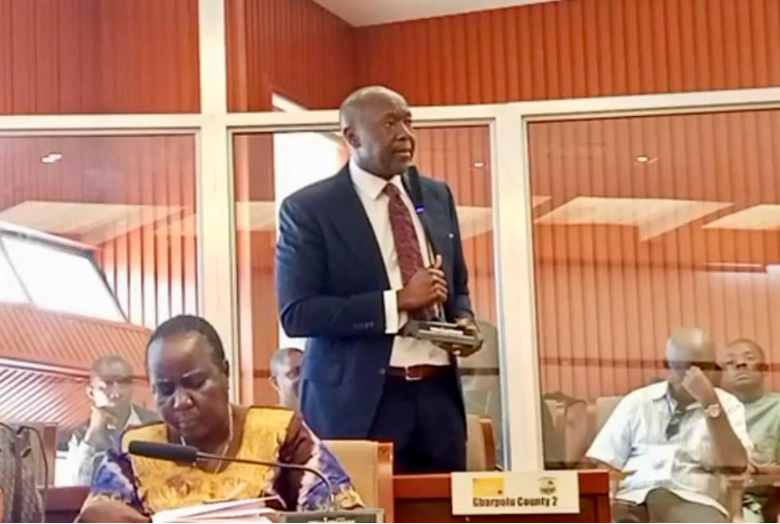
During earlier discussions, Senator Konneh cautioned against tailoring legislation to favor the current management of the LPRC, headed by Amos Tweh. He warned that granting the entity sweeping authority as regulator, importer, distributor, and price setter would distort competition in Liberia’s petroleum sector and potentially drive private importers out of business.
Stakeholders from the private sector had echoed similar concerns during public hearings, arguing that allowing the LPRC to control storage facilities while also competing in the market would undermine fair competition and threaten their operations.
They also warned of potential job losses, noting that many Liberians depend on private petroleum businesses for employment.
Senator Konneh emphasized that such a move could worsen the country’s already high unemployment rate. He also raised issues regarding conflict of interest, noting that the LPRC should not simultaneously act as a market competitor and price regulator alongside the Ministry of Commerce.
He further questioned why the final version of the bill had not been made available ahead of time, as required by legislative procedures. According to him, although the LPRC has long operated as a commercial entity, lawmakers must avoid rushing to enact laws without proper review.
In addition, Senator Konneh urged his colleagues to respect existing legal frameworks, particularly the law establishing the Liberia Petroleum Regulatory Authority. He noted that the proposed LPRC legislation overlaps significantly with the functions of the regulatory authority, thereby creating potential institutional conflicts.
He also highlighted provisions within the bill that grant significant financial powers to the Managing Director of the LPRC, including authority over expenditures exceeding half a million dollars without board approval. He warned that such provisions contradict the country’s Public Financial Management Law of Liberia, which outlines strict rules for the management of public funds by state owned enterprises.
Senator Konneh cautioned that failure to address these issues could undermine corporate governance and lead to financial mismanagement similar to challenges observed in other public entities.
However, during the final sitting that led to the passage of the bill, he indicated that his earlier concerns had been addressed, though details of those resolutions were not fully disclosed.
For his part, Senator Gbehzohngar Findley described the bill as having structural deficiencies, particularly regarding the nationalization of refining and storage operations. He stated that he was not fully prepared for debate and stressed the need for a more thorough review of the legislation.
He warned that the bill, as crafted, could lead to the monopolization of Liberia’s petroleum sector by positioning the LPRC as a regulator, operator, and policymaker across both upstream and downstream activities.
He added that such an arrangement contradicts the existing Petroleum Law and could have far reaching implications for the sector.
Despite these reservations, the tone of the debate shifted as several lawmakers expressed support for the bill. In a controversial move, Pro Tempore Lawrence opted for a voice vote rather than the standard recorded voting procedure typically used for major legislative decisions.
The “yea and nay” method, which does not provide a clear count of votes for or against a measure, ultimately led to the passage of the bill.
Support Independent Journalism
Your support helps FrontPage Africa continue delivering independent, credible, and impactful journalism. Every contribution strengthens our ability to investigate, inform, and hold power accountable while keeping quality journalism accessible to our readers.
Support our journalism or subscribe to receive the latest FrontPage Africa stories and updates.