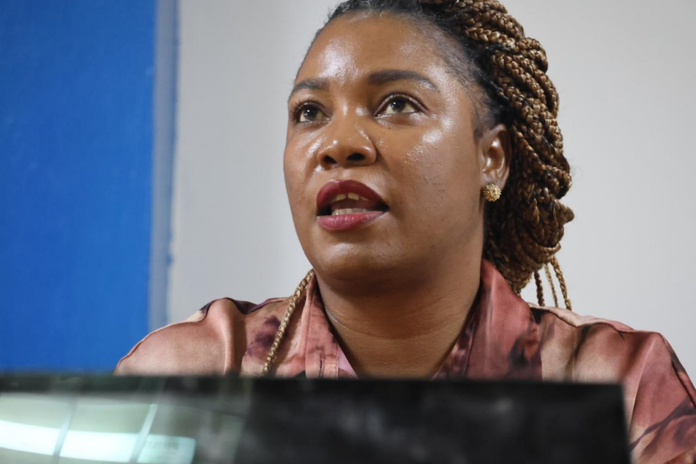

CAPITOL HILL, MONROVIA – A fresh constitutional storm is brewing within Liberia’s bicameral Legislature, as long-standing tensions between the House of Representatives and the Liberian Senate deepen over conflicting interpretations of Article 34(d)(i) of the 1986 Constitution regarding the National Budget.
By Emmanuel Weedee-Conway
The dispute—marked by accusations, fiery exchanges, and dueling constitutional claims—has once again thrust into the spotlight the uneasy balance of power between the two chambers.
House Accuses Senate of Overstepping
The latest confrontation began after several government ministries, agencies, and state-owned enterprises failed to appear before the House for revenue hearings, opting instead to honor invitations from the Senate. House members described the action as “gross disrespect” and a violation of the constitutional mandate that revenue and financial bills must originate in the House.
Article 34(d)(i) states that revenue and financial bills must originate in the House of Representatives, with the Senate permitted only to “propose or concur with amendments.”
Rep. Bility Wants Senate to Halt Hearings
Nimba County District #7 Representative Musa Hassan Bility has written the House Plenary, calling for a formal communication to the Senate demanding an immediate halt to its ongoing budget hearings.
In his letter to Speaker Richard Nagbe Koon, Bility argued that the Senate’s decision to conduct budget hearings before the House completes its review is “procedurally improper” and inconsistent with both Article 34(d)(i) and long-standing legislative practice.
He warned that the Senate’s action risks “institutional conflict, legislative disorder, and constitutional uncertainty” within Liberia’s bicameral structure.
“No budget can be properly before the Senate for concurrence or non-concurrence until it has first been originated and passed upon by the House,” Bility wrote.
He said his position is not confrontational but necessary to safeguard constitutional order and preserve harmony within the Legislature.
Dillon Fires Back: House Does Not Have Exclusive Power
Montserrado County Senator Abraham Darius Dillon strongly rejected Bility’s interpretation, saying the House does not have exclusive authority over the Budget.
He noted that while the budget must originate in the House, nothing in the Constitution prohibits the Senate from holding hearings before the House acts—provided the Senate does not vote to approve the Budget ahead of the House.
“Because the passage ‘originates’ in the House does not preclude or prohibit the Senate from holding hearings,” Dillon asserted.
“What the Senate is prohibited from doing is voting to pass the Budget before the House.”
Dillon added that preemptive hearings simply prepare the Senate to concur or propose amendments once the House completes its action.
“Hearings at the Senate will proceed. When the House passes it, the Senate will already be prepared. This is being elderly, wise, and proactive.”
He also reminded lawmakers that the Budget cannot become law without the Senate’s concurrence, and that both chambers must meet in Conference Committee if material differences arise.
Senate Hearings Not Unlawful
Supporting the Senate’s position, Liberian Attorney-at-Law Atty. Samwar Fallah said that while revenue bills must originate in the House, nothing prevents the Senate from conducting budget hearings.
He argued that separate Senate hearings enhance efficiency and help avert government shutdowns.
“There is no constitutional provision that says the Senate shouldn’t conduct budget hearings,” Fallah told FrontPage Africa.
“The Senate has to scrutinize the budget. It is not just there to agree with the House.”
Fallah recalled that joint budget hearings were once the norm, ensuring smoother and faster passage, especially when tight timelines threatened delays and supplementary budgets. Now that the Senate has decided to conduct hearings separately does not make it illegal.
A Recurring Institutional Conflict
This is not the first time the Legislature has clashed over Article 34. In 2021, the House rejected a concession agreement the Senate had ratified, claiming the Senate overstepped its authority. The Senate sought Supreme Court interpretation, which ruled that non-revenue agreements—such as investment and concession deals—may originate in either chamber.
However, the Court reaffirmed that all revenue bills must originate in the House, with the Senate allowed to propose or concur with amendments.
Following the ruling, the two chambers returned to joint budget hearings through 2024. But after an impasse in the House that year, the Senate opted to conduct separate hearings—a practice that has continued into the 2025 legislative cycle, much to the frustration of House members.
The widening rift reflects deeper issues of power, procedure, and institutional pride within the Legislature. With the National Budget hanging in the balance, the two chambers appear headed toward another prolonged constitutional tug-of-war—one that could shape legislative relations for years to come.
Support Independent Journalism
Your support helps FrontPage Africa continue delivering independent, credible, and impactful journalism. Every contribution strengthens our ability to investigate, inform, and hold power accountable while keeping quality journalism accessible to our readers.
Support our journalism or subscribe to receive the latest FrontPage Africa stories and updates.