
MONROVIA – “If data is the new oil, Africa must have its own refinery” that idea sits at the center of Surna Technologies, a young African startup building what it describes as sovereign AI infrastructure for governments and financial institutions across the continent.
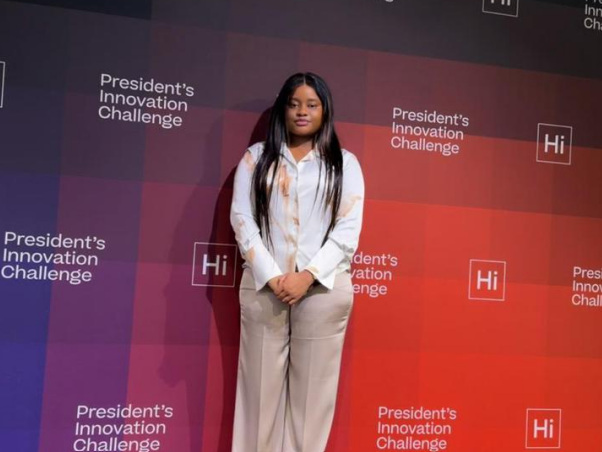
Founded by Liberian Harvard graduate student Hellen S. Momoh, Surna has emerged as a finalist in the Harvard President’s Innovation Challenge (PIC), one of the university’s most competitive global startup competitions. But beyond the recognition, the company’s work is already unfolding in real time.
Its flagship platform, MONARCH — the Monetary Analytics and Research Control Hub — is currently live inside the Central Bank of Liberia.
For decades, many central banks across emerging markets have relied on delayed reports, fragmented datasets, and manual processes to monitor their economies.
MONARCH is designed to change that. The system provides real-time visibility into foreign exchange markets, tracking both official and parallel rates, monitoring liquidity pressures, and identifying volatility as it happens.
It also introduces forecasting models and early warning systems that help policymakers anticipate risks before they escalate. By integrating internal bank data with external global indicators — from institutions like the IMF and World Bank — the platform processes over a million data points each month, transforming them into structured insights for decision-makers.
At its core, MONARCH is not just a dashboard. It is an attempt to rethink how national institutions interact with their own data — shifting from reactive decision-making to proactive intelligence.
Surna’s broader vision goes even further. The company is building what it calls a sovereign AI stack: infrastructure that allows countries to own, host, and govern their data and the intelligence derived from it, rather than relying entirely on external systems.
For Momoh, the motivation is deeply personal and structural at the same time.
“When you grow up in systems that depend on external infrastructure for intelligence, you see what that dependency costs,” she says. “Decisions come late. Visibility is limited. And control is often outside your borders. We are building the alternative.”
Surna’s progress comes at a time when conversations around data sovereignty and AI governance are intensifying globally. Across Africa, governments and institutions are beginning to ask not just how to use AI, but who controls the systems behind it.
For Harvard’s Innovation Challenge, the stakes are high. Finalists will be selected in March 2026 to compete for over $500,000 in funding. But for Surna, the milestone carries a broader meaning.
“This isn’t just about one company,” Momoh says. “It’s about showing that African institutions can build and own the systems that shape their economic future.”
Support Independent Journalism
Your support helps FrontPage Africa continue delivering independent, credible, and impactful journalism. Every contribution strengthens our ability to investigate, inform, and hold power accountable while keeping quality journalism accessible to our readers.
Support our journalism or subscribe to receive the latest FrontPage Africa stories and updates.