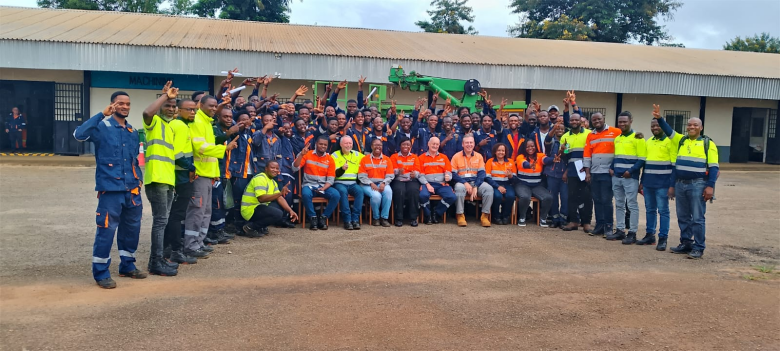
Yekepa, Nimba County – In a strong demonstration of its commitment to workforce development and national growth, Arcelor Mittal Liberia has officially inducted 56 young Liberian artisans into its permanent workforce.
By D. Franklin Doloquee
This milestone transforms years of intensive training, discipline and perseverance into meaningful, long-term career opportunities for the beneficiaries.
The newly employed professionals, trained in specialized fields such as plant fitting, electrical installation, boiler making, heavy-duty mechanics, and industrial maintenance, are graduates of the ArcelorMittal Liberia Training Academy.
Their transition from trainees to full-time employees represents not only a personal achievement, but also a strategic investment in Liberia’s industrial capacity and future self-reliance.
The ArcelorMittal Liberia Training Academy has over the years become a cornerstone of technical and vocational education in the country.
Designed to equip young Liberians with internationally competitive skills, the program blends classroom instruction with hands-on industrial experience, ensuring that graduates are well-prepared to meet the demands of modern mining and infrastructure operations.
Speaking during the official induction ceremony, ArcelorMittal Liberia’s Chief Executive Officer, Michiel Van Der Merwe, urged the new employees to apply their skills with dedication and integrity.
“Take the knowledge you have gained and execute it in a way that brings value not only to the company, but to Liberia and to your own personal growth,” he stated.
His remarks reflect a broader vision that places education, technical competence, and a strong work ethic at the center of Liberia’s development agenda.
By creating a clear pathway from training to employment, ArcelorMittal Liberia continues to demonstrate how private sector investment can directly impact national progress.
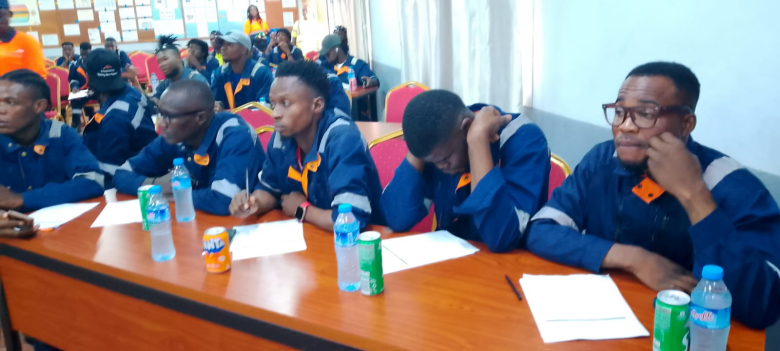
For many of the 56 artisans, this opportunity represents more than just employment—it is a life-changing moment. It offers financial stability, the ability to support families, and the chance to contribute meaningfully to their communities.
In regions like Nimba County where access to stable jobs can be limited, such opportunities are especially transformative.
Beyond individual success, this initiative strengthens Liberia’s local workforce by reducing reliance on expatriate labor and promoting homegrown expertise.
It also supports the government’s broader goal of building a resilient economy driven by skilled Liberians who can lead in key sectors such as mining, construction, and energy.
Community members and local leaders have praised the initiative, noting that it not only creates jobs but also inspires younger generations to pursue technical education and skills development.
The success of these artisans serves as a powerful example of what can be achieved when opportunity is matched with determination and proper training.
These disciplines include diesel mechanics, electrical installation, boiler making, fabrication and welding, plant fitting, and machining.
Support Independent Journalism
Your support helps FrontPage Africa continue delivering independent, credible, and impactful journalism. Every contribution strengthens our ability to investigate, inform, and hold power accountable while keeping quality journalism accessible to our readers.
Support our journalism or subscribe to receive the latest FrontPage Africa stories and updates.