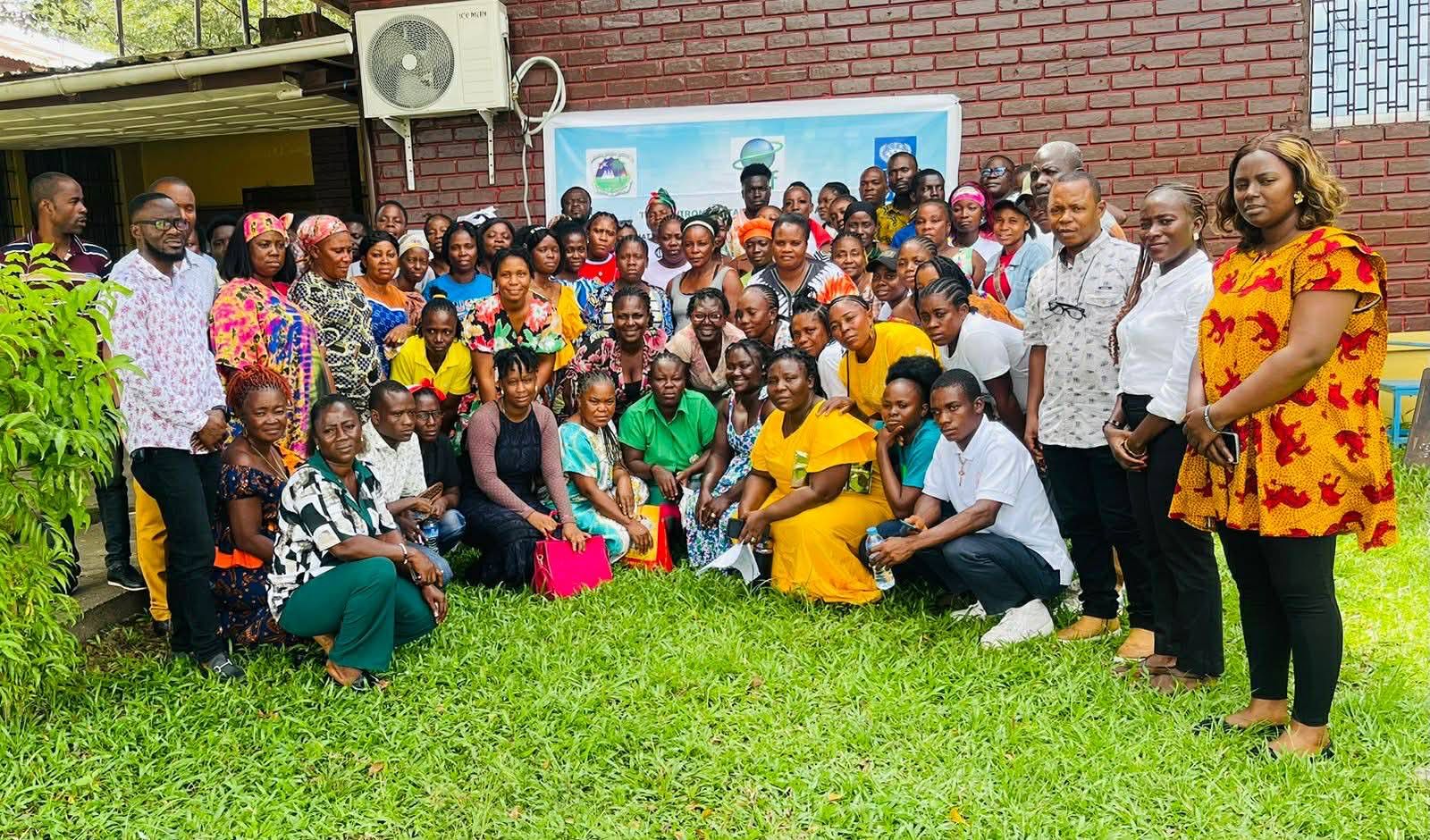
KAKATA, Margibi County – The Environmental Protection Agency of Liberia (EPA), with support from the United Nations Development Programme (UNDP), has concluded a three-day business development training aimed at strengthening climate-resilient livelihoods among coastal entrepreneurs, with a special focus on empowering women and youth.
The training, held in Kakata under the EPA’s Enhancing Resilience of Vulnerable Coastal Communities to Climate Change in Liberia (ERVCCS) project, brought together small business owners, emerging entrepreneurs, youth leaders, and community representatives from Kakata and surrounding communities.
The ERVCCS forms part of a broader initiative, Enhancing the Resilience of Vulnerable Coastal Communities, managed by UNDP’s Energy and Environment Programme and funded by the Global Environment Facility (GEF). The project targets several coastal communities across Liberia that continue to face increasing climate risks.
Participants engaged in practical sessions covering business planning, financial literacy, market linkages, and climate-smart livelihood techniques tailored to coastal economies.
Dr. Freddie Kobba, an international consultant for the Sinoe Coastal Project under UNDP, described the training as timely and essential. He cited ongoing challenges hampering coastal livelihoods—including limited access to finance, weak business management skills, and inadequate market connectivity—conditions that have been worsened by sea-level rise, erosion, and frequent storm surges.
Over the course of the workshop, participants received hands-on guidance in key areas such as developing simple and locally adaptable business plans, improving financial literacy, savings culture, and access to microfinance and grants, marketing, record-keeping, and basic accounting for small enterprises and integrating climate-smart approaches and diversifying income sources.
The sessions featured Liberia-specific case studies and group exercises designed to help entrepreneurs apply these concepts to fisheries, small-scale trading, food processing, eco-tourism, and other coastal-based livelihood activities.
By the end of the training, participants revised their business plans and outlined practical steps to improve access to financing and strengthen market partnerships.
Dr. Kobba emphasized the crucial role of women and youth in building community resilience, noting that empowering women entrepreneurs and engaging young people in sustainable ventures boosts local economies and reduces social vulnerability.
Princess Doyah, Project Manager of the EPA’s ERVCCS initiative, reaffirmed the agency’s commitment to expanding capacity-building and community outreach in coastal areas. She explained that the training forms part of a broader effort to strengthen technical support, improve market connections, and facilitate access to finance for coastal families.
“As we scale these trainings, our goal is to combine skills development with financial opportunities so families can earn dependable incomes while protecting the environment that sustains them,” she said.
The Sinoe Coastal Project Manager also underscored the link between climate threats and limited economic opportunities in coastal communities, stressing that building business skills and promoting climate-smart livelihoods are vital to reducing vulnerability and fostering sustainable local economies.
Speaking on behalf of the beneficiaries, Miss Fatu S. Cooper, a businesswoman from the Mardina Community in Kakata, praised the EPA for offering the training free of charge. She described it as “a golden opportunity,” noting that similar courses are often expensive in universities and vocational institutions.
Cooper pledged that participants will make meaningful use of the skills gained from the workshop.
Support Independent Journalism
Your support helps FrontPage Africa continue delivering independent, credible, and impactful journalism. Every contribution strengthens our ability to investigate, inform, and hold power accountable while keeping quality journalism accessible to our readers.
Support our journalism or subscribe to receive the latest FrontPage Africa stories and updates.