We commend the 1986 Constitution Commission, led by Dr. Amos C. Sawyer, and the Constitution Advisory Commission, led by Dr. Edward B. Kesselly, for a job well done under military pressure.
“A Constitution is more than a document of laws; it is the soul of a nation, the foundation of its democracy, and the covenant between the people and their government. Liberia’s Constitution must rise beyond inherited templates to reflect the nation’s history, cultural identity, traditional values, and aspirations for a just and prosperous future.”
“No Constitution can truly serve a people if it speaks only the language of inherited institutions while ignoring the wisdom of their ancestors, the diversity of their cultures, and the realities of their society. Liberia must reimagine its Constitution as a living charter rooted in African identity, strengthened by indigenous traditions, and responsive to the demands of the 21st-century.”
“Africa’s constitutional future must be built on the bridge between heritage and humanity: preserving the dignity of our cultures and traditions while upholding equality, justice, freedom, and the universal human rights of every person. Liberia’s Constitution must honor its African roots without compromising the fundamental rights and freedoms that unite us as members of the human family.”
“From inherited template to living charter, Liberia must embrace a Constitution that belongs to its people, reflects its cultural and traditional heritage, draws wisdom from the historical experiences and aspirations of the African continent, and meets international human rights standards. A truly enduring Constitution is not merely inherited from the past; it is courageously shaped by the present and safeguarded for generations yet unborn.”
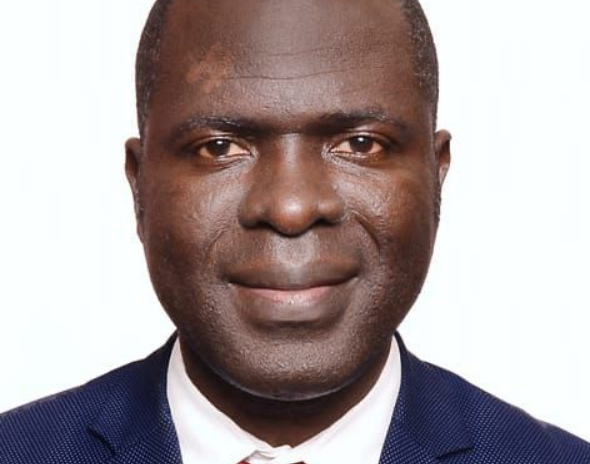
By: Austin S Fallah – A True Son of the Planet Earth Soil: [email protected]
A constitution is more than a legal document. It is a nation’s statement of identity, a guide for distributing power, and a promise that every citizen belongs to the political community.
It should reflect the people whose lives it governs, their history, their moral values, their languages, their institutions, and their aspirations.
Liberia’s 1986 Constitution contains important democratic principles, including commitments to representative government, individual liberties, and periodic elections.
Yet it also carries the weight of an older constitutional framework that was designed around an imported model of governance and social organization.
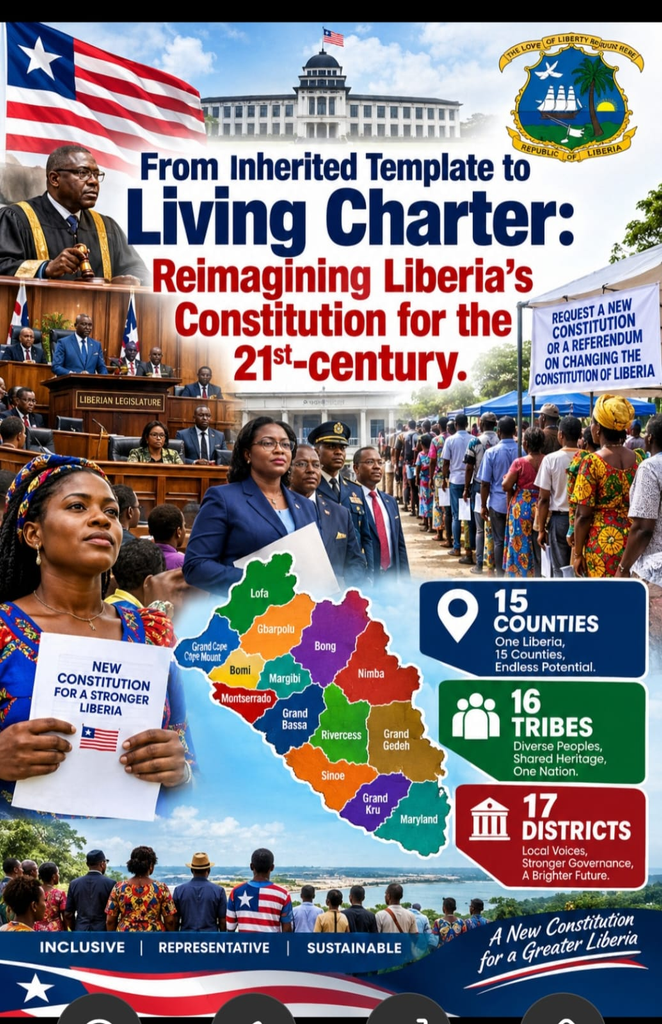
That framework did not fully emerge from the cultural realities of Liberia’s indigenous communities, the collective experience of its sixteen ethnic groups, or the complex traditions that have shaped life across its 15 counties, 16 tribes, and 73 districts.
The question, therefore, is not whether Liberia should abandon constitutional democracy.
Rather, it is whether Liberia can develop a more authentic constitutional democracy: one that combines African identity, Liberian customs, modern human-rights principles, and accountable institutions.
A 21th-century Liberian constitution should not be a carbon copy of a 19th-century political order.
It should be a living charter that recognizes the country’s cultural diversity while protecting the equal rights of every individual.
Such a constitution must compare and reconcile two essential realities: the inherited state-centered model of government and the community-centered traditions found throughout Liberian society.
It must also balance freedom with responsibility, respect for elders with equality before the law, and cultural values with international norms of human dignity.
The inherited constitutional model emphasizes formal institutions: a president, legislature, courts, elections, written laws, and administrative divisions.
These institutions are necessary because a modern state requires clear rules, limits on power, and mechanisms for resolving disputes peacefully.
However, Liberia’s constitutional order can not be meaningful if it exists only in courtrooms, executive offices, and legislative chambers.
For many citizens, governance is also experienced in towns, villages, clans, chiefdoms, families, religious communities, women’s associations, youth organizations, and traditional councils.
In these settings, leadership often depends not merely on formal authority but on wisdom, age, integrity, service, and the ability to maintain harmony.
A revised constitution should recognize this difference between imported governance structures and indigenous systems of social responsibility.
Recognition does not mean global competence; it means cultural grounding in disputes, preserving land, caring for children, honoring elders, and promoting communal peace.
A constitution that ignores these foundations risks becoming distant from the people.
By contrast, a constitution that respectfully incorporates legitimate customary institutions can strengthen national unity and public trust.
The greatest challenge is ensuring that culture serves human dignity rather than becoming an excuse for discrimination.
Some people may argue that traditional practices should be protected without question because they are part of African identity.
Others may argue that modernization requires rejecting traditional authority altogether. Both positions are too simplistic.
A constitution should reject the pusillanimous approach of avoiding difficult questions about culture, power, gender, and citizenship.
It must have the courage to affirm that traditions deserve respect when they promote peace, mutual responsibility, and social cohesion. Still, they must be reformed or prohibited when they deny equality, harm children, silence women, or undermine the liberty of citizens.
For this reason, constitutional reform should begin with an inclusive national process.
Liberia’s 16 ethnic groups, 15 counties, and 73 districts should not be treated as symbolic categories mentioned only during elections.
They should participate directly in constitutional dialogue.
Town-hall meetings, county consultations, civic forums, women’s gatherings, assemblies, disability organizations, religious leaders, traditional leaders, legal professionals, educators, journalists, and diaspora communities should all have opportunities to contribute.
A constitution made through broad participation is more likely to command respect than one written only by political elites or technical experts.
Expertise is valuable, but constitutional reform should not be controlled by a sciolist who knows a few imported theories yet lacks an understanding ofalignes.
One major feature of a modern constitution should be a clear and enforceable bill of rights.
Liberia must first align with freedom of association, freedom of peaceful assembly, due process, and equal protection under the law.
These rights are not foreign luxuries.
They are essential safeguards against corruption, authoritarianism, arbitrary detention, censorship, and political violence.
A citizen who cannot criticize leaders cannot hold them accountable.
A journalist who fears intimidation cannot expose the misuse of public funds.
A community that cannot organize cannot defend its interests.
A voter who cannot freely choose cannot claim to live under democracy.
At the same time, freedom of expression must be understood alongside responsibility.
Liberians should be able to criticize public officials, debate national issues, challenge laws, and publish opinions without fear.
Respect for elected officials should not require silence in the face of poor leadership.
Public officials are servants of the people, not persons beyond criticism.
However, citizens also have responsibilities not to use speech to incite violence, spread deliberate falsehoods that threaten public safety, or promote hatred against ethnic, religious, regional, or political communities.
The constitutional line between free speech and indecency in public display should be drawn carefully.
Government should not use vague language about indecency to suppress art, journalism, political opposition, or unpopular opinions.
Yet the constitution may permit narrowly tailored laws that protect children from explicit exploitation, punish harassment and threats, and regulate public conduct when it directly harms the rights and safety of others.
This balance is especially important in the age of social media.
Harmful rumors, manipulated images, ethnic insults, and political misinformation can spread rapidly and create real danger.
The answer, however, should not be broad censorship.
A democratic constitution should require that any limitation on speech be lawful, necessary, proportionate, and subject to independent judicial review.
Citizens should know exactly what conduct is prohibited and why.
This approach protects public order without allowing leaders to define criticism as disrespect or opposition as indecency.
The right to vote must also be strengthened.
Voting should not merely be a privilege exercised occasionally by those who can afford transportation or who live close to polling centers.
It should be a practical, protected right for every eligible citizen, including women, people with disabilities, rural residents, first-time voters, and citizens living in remote areas.
A revised constitution should require transparent voter registration, independent electoral management, accessible polling places, timely resolution of election disputes, and meaningful penalties for intimidation, bribery, and electoral violence.
Elections should reflect the will of the people rather than the financial advantage of powerful candidates.
In comparing national and local political life, Liberia must recognize that democracy is more than casting ballots for national leaders.
It also involves participation in county, district, city, and community decisions. Decentralization should therefore be a constitutional principle. Counties and districts need clearly defined authority, fair access to public resources, and mechanisms for citizens to monitor local officials.
Local government should not be reduced to waiting for instructions or funding from the capital.
A constitution that empowers counties and districts can reduce the distance between citizens and decision-makers.
It can also ensure that development priorities, such as roads, schools, clinics, clean water, markets, and agricultural support, reflect local needs rather than only national political calculations.
Education should occupy a central place in constitutional reform.
A country can not sustain democracy when large numbers of citizens are denied the tools to understand their rights, participate in public life, and pursue economic opportunity.
Liberia should establish a mandatory requirement for free, quality education from kindergarten through 12th grade, commonly known as K–12.
This should not be an empty promise.
The constitution should require the government to progressively provide trained teachers, safe schools, learning materials, sanitation facilities, transportation support in remote areas, and protection from violence and exploitation in educational settings.
Free K–12 education is not simply a social service policy; it is a democratic necessity.
Educated citizens are better able to vote responsibly, evaluate political claims, understand public budgets, defend their rights, and contribute to national development.
Education also provides a bridge between tradition and modernity.
Schools should teach literacy and sciencee, mathematics, technology, civic responsibility, and global awareness, while also teaching Liberian history, local languages, cultural heritage, environmental stewardship, and the values of communal service.
A child should not be forced to choose between becoming globally competent and remaining culturally grounded. A strong education system can cultivate both.
A renewed constitution should also address gender equality clearly and decisively.
Women have sustained families, farms, markets, schools, religious institutions, and communities throughout Liberia’s history.
Yet legal equality has not always translated into equal access to land, education, employment, political representation, or protection from violence.
Customary norms and modern laws sometimes conflict, particularly in matters involving inheritance, marriage, property, and family authority.
A constitution must state that women and men are equal citizens with equal rights and responsibilities.
Cultural practices cannot be used to justify forced marriage, domestic violence, exclusion from property ownership, or denial of educational opportunities. Respect for tradition should never mean accepting the subordination of women.
Respect for elders is another principle that deserves constitutional recognition, but it must be framed wisely.
In many Liberian communities, elders serve as guardians of memory, mediators of conflict, and advisers to younger generations.
Their experience can be an important national resource.
A constitution may encourage intergenerational respect and establish appropriate roles for traditional and community leaders in local dispute resolution, cultural preservation, and civic education.
Yet respect for elders must not mean that younger citizens have no voice, that women must remain silent, or that elected institutions can be replaced by unelected authorities.
The wisdom of elders and the energy of youth should complement each other.
A healthy democracy listens to both.
The relationship between traditional leaders and elected officials should likewise be carefully defined.
Elected officials must remain accountable to citizens through elections, transparency, ethical standards, and the rule of law.
Traditional leaders may be recognized as cultural and community representatives, but they should not exercise unchecked governmental power.
Their roles should be consistent with constitutional rights, especially the rights of women, children, minorities, and dissenting community members.
Where customary dispute resolution mechanisms are used, individuals should retain the right to appeal to formal courts.
This comparison between customary justice and formal justice is crucial: customary systems may offer accessibility, reconciliation, and local legitimacy, while formal courts offer procedural protections and legal consistency.
Liberia does not need to choose one system and destroy the other.
It can build a coordinated system in which both operate under the same constitutional commitment to fairness and human dignity.
Land rights should also be a constitutional priority.
Land is not merely an economic asset in Liberia; it is connected to ancestry, identity, survival, and belonging.
Conflicts over land can divide families, communities, investors, and local governments.
The constitution should protect community land rights, individual property rights, and the rights of citizens to participate in decisions involving concessions, natural resources, and environmental protection.
Development projects should not displace communities without genuine consultation, fair compensation, and legal remedies.
At the same time, constitutional rules should promote responsible investment, sustainable agriculture, and resource management that benefits present and future generations.
Finally, a 21st-century constitution must make public power accountable.
The country needs stronger protections against corruption, conflicts of interest, misuse of public funds, and abuse of office.
Public officials should declare assets, disclose conflicts, obey term limits where applicable, and face independent investigation when accused of wrongdoing.
Courts must be impartial, adequately funded, and accessible to ordinary citizens.
The legislature must have real oversight authority, and the media must be free to investigate public affairs.
Constitutional reform cannot succeed if it changes language but leaves power unrestrained.
Liberia’s future should not be built on the rejection of all inherited institutions, nor should it be trapped by them.
The country can preserve the best elements of constitutional government, elections, rights, courts, separation of powers, and accountable leadership, while rooting those institutions in Liberian cultures, African identity, and the lived realities of communities throughout the nation.
The task is not to reproduce an old constitutional template with minor adjustments.
It is to create a charter that speaks to farmers and teachers, elders and youth, women and men, urban residents and rural communities, traditional leaders and elected representatives.
A truly Liberian constitution would recognize diversity without producing division, defend liberty without encouraging irresponsibility, honor tradition without accepting injustice, and meet international human-rights norms without surrendering national identity.
Such a constitution would belong not merely to legal experts or political leaders, but to every citizen across the 15 counties and 73 districts.
It would be a constitution shaped by Liberia’s past, accountable to its present, and prepared for its future.
Support Independent Journalism
Your support helps FrontPage Africa continue delivering independent, credible, and impactful journalism. Every contribution strengthens our ability to investigate, inform, and hold power accountable while keeping quality journalism accessible to our readers.
Support our journalism or subscribe to receive the latest FrontPage Africa stories and updates.