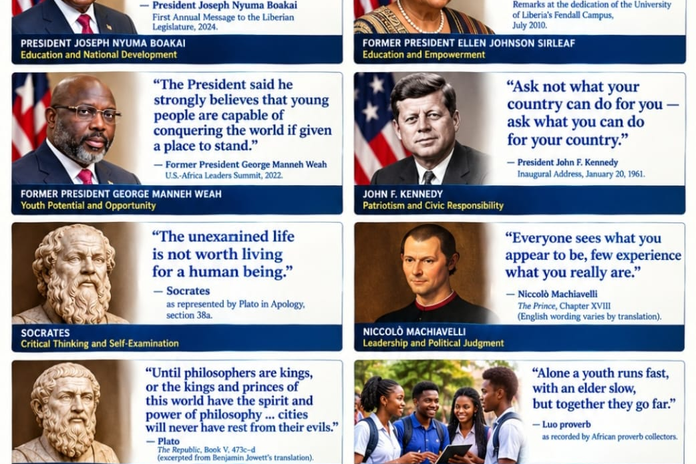
George Washington: “The unity of government which constitutes you one people is now dear to you. It is just so; for it is a main pillar in the edifice of your real independence, the support of your tranquility at home, your peace abroad; of your safety, your prosperity, your liberty.”
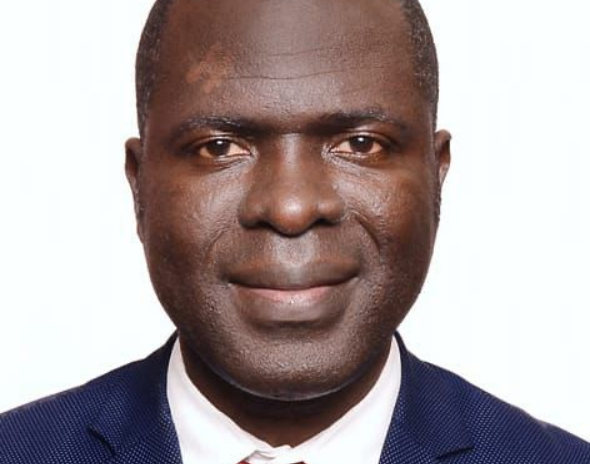
By: Austin S [email protected], contributing writer
Mahatma Gandhi: “Unity, to be real, must stand the severest strain without breaking.” (Highlighting that true unity withstands economic challenges.
“Political awakening: Knowing the true enemy and rivalry in the socioeconomic well-being of Liberia and Liberians: There should be room for positive rivalries of intellectualism, not enemies.” – Dr. Anthony Fallah Swaray, Non-Profit Expert and Intellectual Project Management Philosopher.
Modern Political Sentiment: “My brother or sister who belongs to another political party is not and will never be my enemy because we all have the right to our choices as adults for reasons best known to us. Stop creating enemies for yourself.” (A call for civility and recognizing shared citizenship over partisan divides).
Liberia stands at a critical juncture in its history. The aspirations of its citizens for social and economic growth are palpable, pulsating with hope and a shared dream of a nation that thrives through collective effort.
In the quest for progress, a crucial understanding emerges—distinguishing between an enemy and a rival.
This understanding’s distinction is not merely semantic; it is foundational to the processes that govern national unity and success.
If Liberia’s government and its citizens can recognize that their actual adversaries are not each other, but rather the challenges that impede their growth, then a brighter future may lie ahead.
At the heart of this discussion is the understanding that enmity should have no place in Liberia’s governance.
A government that aspires to be effective must promote harmony and collaboration among its people.
True rivals can stimulate progress through healthy competition, but enemies only serve to divide and undermine.
When government officials and citizens alike begin to view one another as collaborators in a shared destiny rather than combatants in a zero-sum game, remarkable transformations may ensue.
This korero aims to illustrate how understanding the distinction between rivalry and enmity can support national development and the welfare of the Liberian people.
The current socio-economic landscape of Liberia is fraught with challenges.
Historical strife and infrastructural deficiencies have created a fertile ground for disillusionment among the populace.
Yet, it is essential to remember that no government, irrespective of its structure or ideology, can exist without facing these social and economic hurdles. Liberia is no exception.
However, it is the collective efforts of its citizens that may bring about sound education, a robust health care system, improved sanitation, reliable electricity, enhanced security apparatus, and, ultimately, national development that addresses the common good.
Challenges as Opportunities for Growth:
At the core of Liberia’s growth lies the urgent need for sound governance and civic participation.
Economic challenges such as high unemployment, inadequate infrastructure, and limited access to basic services contribute to a society that is often fractious.
Nonetheless, within these challenges are opportunities for engagement and collaboration.
The government must emphasize that progress is not only the responsibility of the administration but also of each citizen.
Acknowledging that the struggles of governance are not isolated events, but rather reflections of shared societal issues, can help direct the narrative towards collective empowerment.
Citizens must be encouraged to take a positive, active role (not hooliganism or unnationalistic battle cries)in advocating for their rights and not view government decisions as inherently adversarial.
Programs that foster community, national engagements, and stakeholder participation will reduce the perception of governance as ‘the other,’ transforming it into a collaborative enterprise.
The significance of this social cohesion can not be embellished.
An informed populace that understands they are part of the solution can advocate more effectively for essential services, such as quality education, healthcare, and sanitation.
For example, a concerted public health campaign addressing waterborne diseases resulting from contaminated water sources (such as pupu water) can involve both the government and the communities in a united effort.
Such initiatives require not only government oversight but also grassroots involvement, drawing on the strength of local wisdom and community networks.
National P, ride through Collective Responsibility:
Emphasizing national pride can be a powerful motivator for collaborative efforts.
Liberians must be encouraged to appreciate the fruits of their labor and recognize that development is a shared journey.
With government institutions often at the forefront of criticism, it is essential to redirect that energy towards productive discussions about national growth.
Discussions that dwell on trivia or the blame-game mentality divert focus from the goals that matter most.
By shifting the narrative to one of collective achievement and shared responsibility, Liberia’s development trajectory can change.
Celebrating the contributions of the Liberian people and leveraging the support of the nation’s partners in progress can unite society in a common cause.
Recognizing that progress is not an individual achievement, but rather a collective endeavor involving both citizens and their partners, creates a sense of belonging among the populace.
Nurturing alliances among governmental agencies, civil society organizations, and international partners ensures that solutions are contextually relevant and sustainable.
Liberia’s most significant assets lie in its abundant natural resources and the resilience of its people.
By showcasing successful partnerships, be it in agriculture, education, or health, the government can create a narrative that inspires hope rather than division.
The liberation from historical grievances and rivalries enables a new, more promising narrative: Liberia as a land of opportunity, where every contribution matters.
Moving Beyond Politics of Division:
Political differences can often sow discord within communities and the nation; these rivalries become entangled in the social fabric, leading to divisions that hinder development.
The political sphere is replete with actors who perpetuate enmity to assert dominance, and often, the most affected are the ordinary citizens who yearn for progress.
The government must commit to a narrative that promotes unity rather than responding to a bunch of irrelevant nonentities, non-contributive noisemakers.
This includes taking active steps to cultivate an environment where healthy competition thrives based on ideas rather than personal stakes.
The government must prioritize transparency and accountability to cultivate trust.
When citizens feel heard and involved in governance, they can help to shape policies that directly affect their lives.
A participatory government can facilitate platforms where dialogue is prioritized, allowing citizens to voice their concerns while also promoting constructive criticism.
The drama of political rivalry must not take precedence over the welfare of the Liberian people.
Building a Sustainable Future:
In the context of sustainability, it is crucial to recognize that social and economic challenges are interconnected; addressing one often leads to progress in the other.
An improved health system can lead to an educated workforce, while economic initiatives can enhance public sanitation.
For Liberia, building an integrated approach towards its challenges will amplify the collective efforts of its citizens and the government.
Education stands at the forefront of this integration.
It is the bedrock upon which national development is established.
Schools must not only teach academic subjects but also civic duty(Wait for our books ” Civic Responsibility of Every Liberian: Modern Day Liberia: 1980-The First Quarter of the 21st century), social responsibility, and environmental stewardship.
Collaborations between the government, NGOs, and communities can yield educational curricula that resonate with national values and collective goals.
Furthermore, the government should draw on international best practices, adapting them to fit Liberia’s unique context.
Learning from partners in developmental progress ensures that Liberia remains abreast of global standards while tailoring solutions that resonate locally.
The vision for a better Liberia is achievable if educational systems are designed to meet both national and international standards.
Moving forward, the government must invest in creating a vibrant economy that balances environmental sustainability, social equity, and economic viability.
Building strong institutions that safeguard human rights, provide equitable access to resources, and promote justice allows citizens to dream and aspire within a framework of security and empowerment.
The public health sector can be strengthened through collaborative efforts in addressing sanitation issues, remedying the polluted water (pupu water)supply, and cleaning up urban areas.
Unity for a Stronger Liberia:
Let me summarize by saying that the realization of a better Liberia relies on an understanding that political rivals or social divisions do not define the true enemies of progress, but on the systemic challenges that perpetuate a cycle of discontent.
The government, in partnershipship with its citizens, must create a narrative of unity and purpose.
By recognizing that true rivalry fosters progress through healthy competition and does not breed enmity, Liberia can mobilize its collective resources, its people, its government, and its international partners to address the pressing issues of education, health, sanitation, and beyond.
Trivia discussions that do not advance national growth detract from the fundamental goal of building a brighter future for all Liberians.
Let every air-breathing Liberian rise above the noise, reject the politics of division, and work together toward a shared vision of a flourishing Liberia, where every citizen is not just a bystander but an architect of a prosperous future.
The time for action is now. Together, Liberians can lay the foundation for sustainable growth and a brighter tomorrow for all who call Liberia home.
Support Independent Journalism
Your support helps FrontPage Africa continue delivering independent, credible, and impactful journalism. Every contribution strengthens our ability to investigate, inform, and hold power accountable while keeping quality journalism accessible to our readers.
Support our journalism or subscribe to receive the latest FrontPage Africa stories and updates.