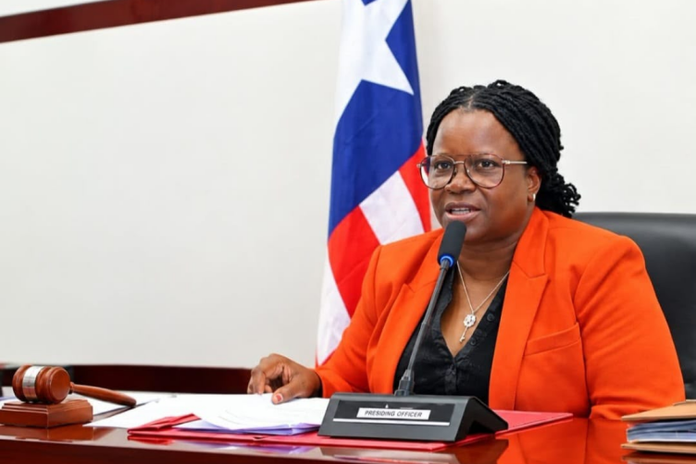
A NEW MINISTER of Justice and a new Solicitor General now sit atop an institution carrying some of the heaviest cases in Liberia’s recent history — a sprawling narcotics investigation, the prosecution of a former vice president, and a public increasingly unsure whether the law is being applied evenly. However, the reshuffle came about, and whatever role the events at Rehab Junction played in it, Cllr. Betty M. Lamin-Blamo and Cllr. Abrahim Boimah Sillah Sr. now bear a responsibility that outlasts the controversy of their appointment: to make Liberians believe, again, that justice in this country answers to evidence and not to politics.
THAT BELIEF IS in short supply. Former President Weah has accused the government of interfering with justice. Opposition figures have called the case against former Vice President Jewel Howard-Taylor bogus. Alexander Cummings’ own defense team has invoked the language of a “witch hunt.” One can debate how much of this is genuine grievance and how much is the reflexive posture of politicians under legal pressure — but a government that wants the public, and its critics, to take its prosecutions seriously cannot simply dismiss every objection as noise. It must make selectivity impossible to allege with any credibility.
THIS IS SQUARELY the new team’s inheritance, and it is worth stating plainly what fairness will require of them.
THE NARCOTICS investigation implicates enormous sums of money and, by extension, powerful interests. If that investigation is to mean anything, it must follow the money and the evidence wherever they lead — whether toward a former vice president, a police officer, a businessman, or anyone connected to the current government. Liberians watched investigators and the outgoing Justice Minister clear the President’s own son of wrongdoing in July. That finding may well have been correct. But the public’s confidence in it depends entirely on whether the same rigor, the same standard of evidence, and the same willingness to investigate is applied to everyone else caught in the net — including those who happen to be political opponents of the men now in office.
THE CALLS for Police Inspector General Coleman to step back from an investigation that touches people close to the presidency are not, in themselves, accusations of wrongdoing. They are a reasonable request that the appearance of independence be protected as carefully as its substance. The new Justice Ministry should treat these calls, and any future ones like them, as an opportunity to strengthen public trust rather than a nuisance to be managed.
THE GOVERNMENT’S refusal to say whether the demolition of stalls at Rehab Junction was connected to the previous day’s gathering — or to explain its legal basis, or whether the affected owners were given notice — has done more to fuel suspicion than any opposition statement could. The same is true of the ministry’s silence on why Cllr. Tweh and Mr. Fayiah were really removed. A government that wants to be believed when it says its prosecutions are impartial should extend that same transparency to its own personnel and enforcement decisions. Opacity breeds exactly the accusations of a “witch hunt” that officials say they want to avoid.
A DEFENSE LAWYER’S instincts are an asset, not a liability. Cllr. Sillah’s history representing an opposition figure against politically charged criminal charges should not be seen as a conflict to be overcome, but as an asset this ministry badly needs. Few people understand better what selective or overreaching prosecution looks like from the receiving end. He should bring that understanding to bear from his new seat — ensuring that the state does not become the very thing he once stood against in court.
LIBERIA HAS BEEN down this road before, where prosecutions rise and fall with the political weather, where cases against allies quietly disappear while cases against opponents are pursued with unusual zeal, and where “rule of law” becomes a phrase invoked selectively rather than a standard applied evenly. The temptation to use the machinery of justice as a tool of political consolidation is not unique to any one government or party — it is a temptation this ministry, this president, and this country must resist together.
CLLR LAMIN BLAMO and Cllr. Sillah did not create the mistrust they now inherit. But they will be judged by whether they deepen it or dismantle it. The Howard-Taylor case, the broader narcotics prosecutions, and whatever comes next from the Rehab Junction affair will all serve as tests. Liberians are watching not for convictions, but for consistency — for a Ministry of Justice that pursues wrongdoing wherever it is found, defends the accused’s rights as vigorously as it presses the state’s case, and refuses, regardless of who is asking, to turn prosecution into persecution.
JUSTICE DELAYED is an old complaint. Justice weaponized is a newer and more dangerous one. This new team has an opportunity to prove it understands the difference. Liberia cannot afford another Justice Ministry that fails to.
Support Independent Journalism
Your support helps FrontPage Africa continue delivering independent, credible, and impactful journalism. Every contribution strengthens our ability to investigate, inform, and hold power accountable while keeping quality journalism accessible to our readers.
Support our journalism or subscribe to receive the latest FrontPage Africa stories and updates.