Monrovia – The Coalition of Civil Society Organizations has identified and raised a red flag over what it described as troubling gaps in the African Union Convention on Ending Violence Against Women and Girls (AU CEVAWG).
The group is also demanding the House Committee on Gender to place an immediate halt to any ratification of the instrument in its current form.
The group strongly recommended that the House Committee on gender evaluate the clauses of the convention in consultation with women’s rights and CSO actors, ensuring they reflect Liberia’s national development plan (ARREST Agenda) for inclusive development and incorporate an inclusive response to end all forms of violence against women and girls.
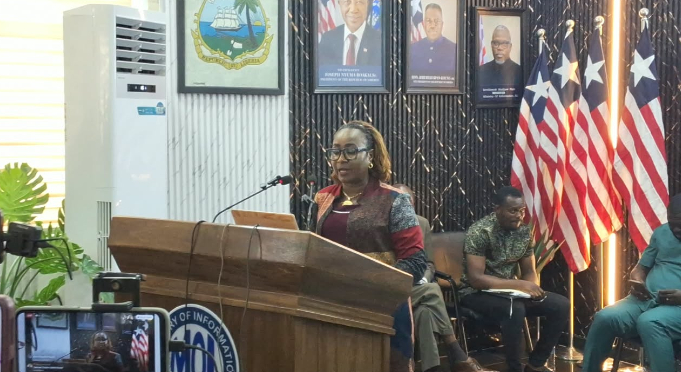
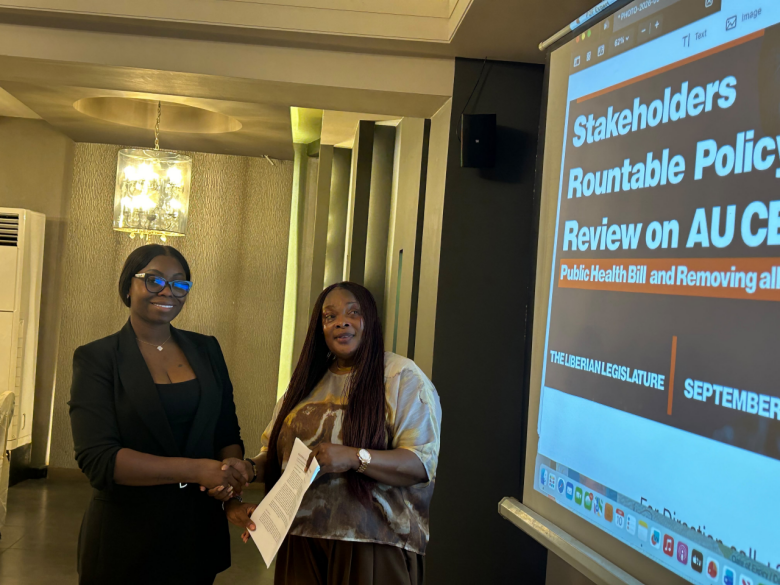
The Coalition presented the petition statement to the House Committee Chairperson on Gender, Bong County Representative Moima Briggs Mensah at the National stakeholders Review on the AU-CEVAWG meeting held at the Mamba Point in Monrovia over the weekend.
Reading the statement on behalf of the coalition, Naomi Tulay-Solanke said that they support the Convention’s objective of ending violence against women and girls, but however, warned that any continental instrument adopted or ratified by Liberia must reflect Liberia’s local realities and provide clear, enforceable protection against all forms of violence experienced by women and girls in their homes, communities, schools, workplaces, institutions and cyber settings.
She further stated that they are concerned that gaps in the AU CEVAWG’s definitions, State obligations, prevention and response duties, accountability mechanisms, monitoring arrangements, and enforcement provisions may weaken its ability to address Liberia’s specific challenges.
She warned that the Convention must not dilute protections already recognized in Liberia’s national laws or in the Protocol to the African Charter on Human and Peoples’ Rights on the Rights of Women in Africa, commonly known as the Maputo Protocol.
“We, the undersigned women’s rights and civil society organizations, respectfully petition the House Committee on Gender to urge the Government of Liberia to pause any ratification of the African Union Convention on Ending Violence Against Women and Girls (AU CEVAWG) in its current form. We are also concerned that the drafting and consultation process did not sufficiently include Liberian and African women’s rights organizations, and other affected stakeholders. A Convention intended to protect women and girls must be shaped by those who experience and respond to violence directly, not by those who define our problems with abstract inferences,” Madam Tulay-Solanke stated.
Justifying their request, she pointed out that in 2024, Liberia’s Ministry of Gender, Children and Social Protection reported 3,381 cases of gender-based violence, equivalent to approximately nine reported cases per day.
Madam Tulay-Solanke added that the 2019–2020 Liberia Demographic and Health Survey further shows that 55.29% of ever-married women aged 15–49 had experienced some form of intimate partner violence by their current or most recent partner.
This same analysis found that 45.57% had experienced physical and/or sexual intimate partner violence. Harmful practices also continue to affect Liberian women and girls. According to the FGM/C Research Initiative, twenty-four-point nine percent of women aged 20–24 were married or in a union before age 18. In addition, 38.2% of women aged 15–49 had undergone female genital mutilation/cutting (FGM/C).
The reported prevalence was higher in rural areas, at 52.3%, compared with 29.9% in urban areas,” Madam Tulay-Solanke concluded.
Support Independent Journalism
Your support helps FrontPage Africa continue delivering independent, credible, and impactful journalism. Every contribution strengthens our ability to investigate, inform, and hold power accountable while keeping quality journalism accessible to our readers.
Support our journalism or subscribe to receive the latest FrontPage Africa stories and updates.