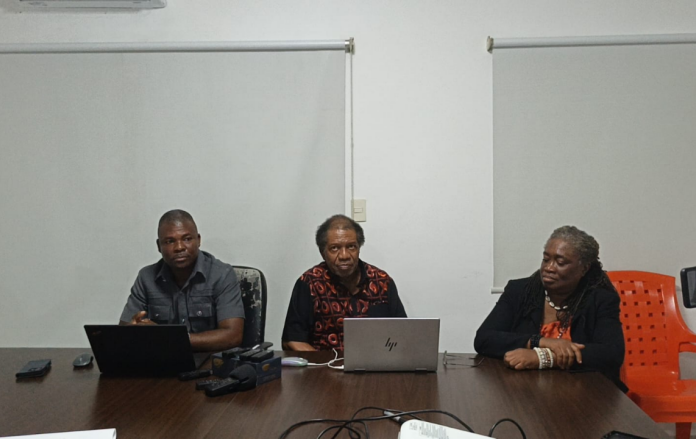
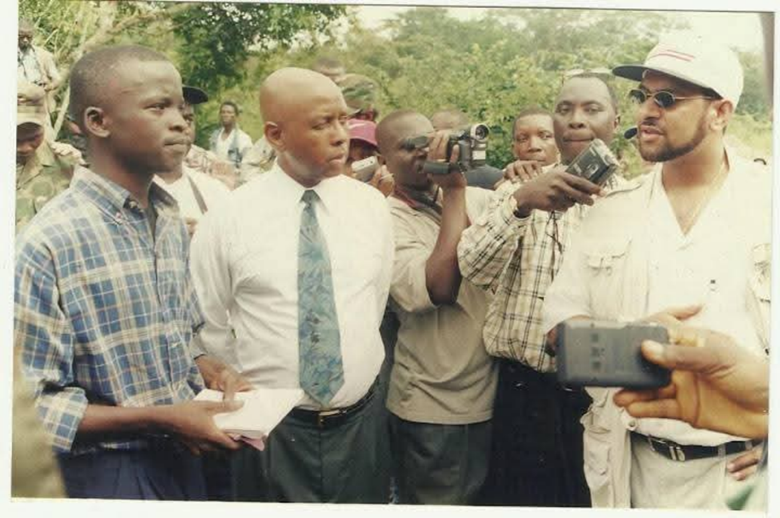
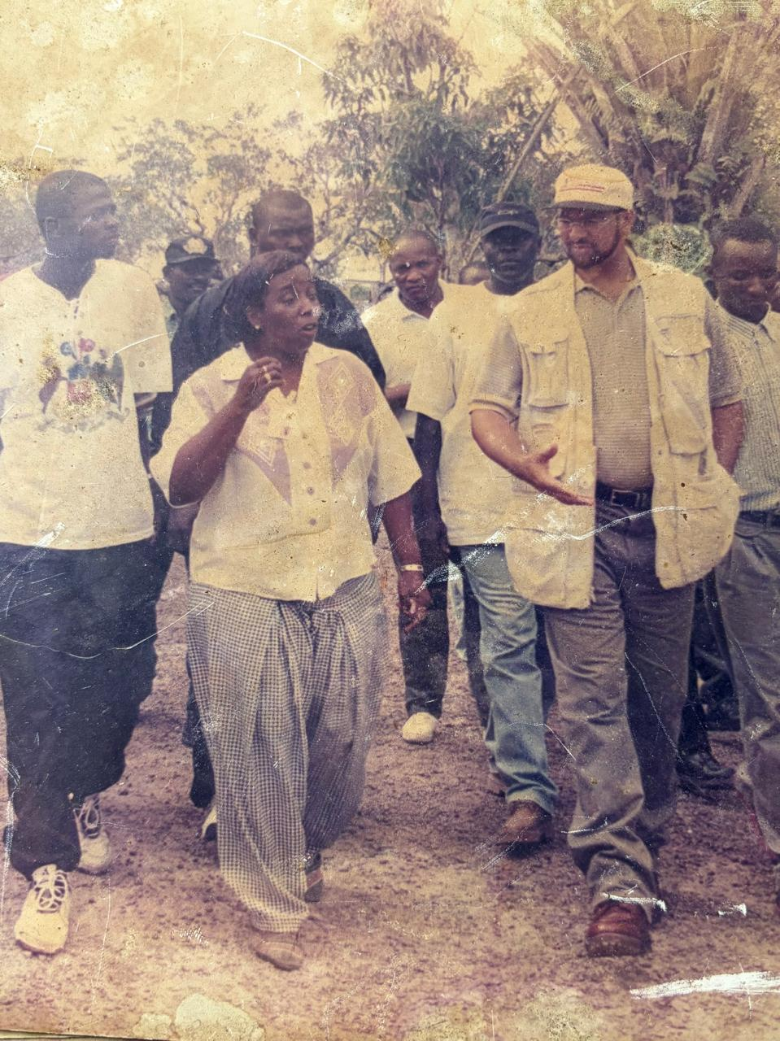
In 2002, while serving as Minister of Foreign Affairs, I led a delegation of representatives from international organizations and diplomatic missions to Lofa County on a humanitarian assessment mission focused on internally displaced persons (IDPs) affected by the Liberian Civil War. The delegation included U.S. Ambassador Bismarck Myrick, UN Representative Dr. Adeneji, Nigerian Ambassador Ogbonnaya Nduaka, Ghanaian Ambassador Kwame Amoah Awuah, Sierra Leonean Ambassador Patrick James Foyah, the EU Head of Delegation, and the Head of UNHCR. Among the journalists accompanying us Ansu Sekou Konneh (Daily Times), Jonathan Paye-Layleh (BBC), Pewee Flomoku (AP), Jimmy Mangou (Reuters) and Robert Lormia (who was also Asst. Minister, MFA).
By: Monie R. Captan, contributing writer
In preparation for the trip, I appealed to the Liberian business community for support, and they responded generously with donations of rice and used clothing. Our convoy departed with several trucks loaded with these relief supplies. Our first stop was Totota in Bong County, where we had breakfast at Coocoo Nest at Tubman Farm. From there, we continued through Gbarnga and onward to Lofa County. Along the way, we visited multiple IDP camps, distributed relief items, and assessed the humanitarian conditions firsthand.
Ambassador Myrick was deeply disturbed by what he witnessed. Using my satellite phone, he contacted the U.S. State Department to urgently advocate for increased humanitarian assistance.
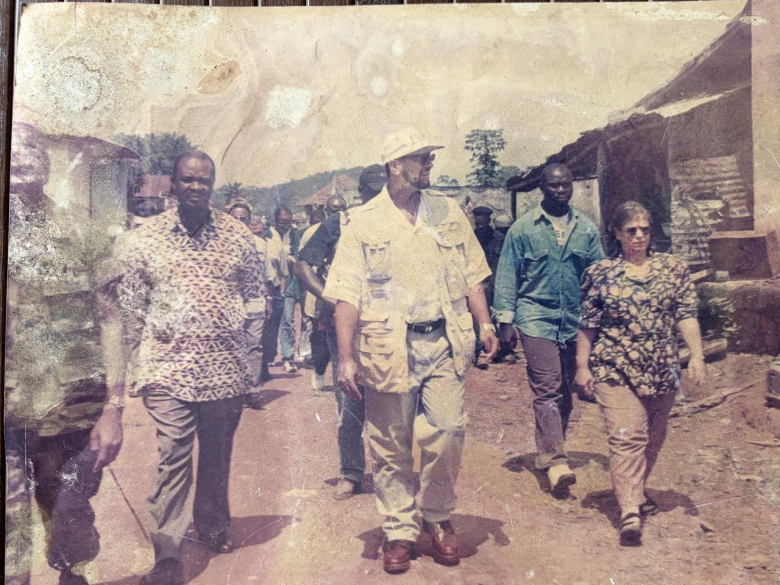
While in Zorzor, I was encouraged by security personnel to visit the border town of Yealla. Unaware of the risks involved, the delegation—including the U.S. Ambassador—proceeded there. Upon arrival, we observed that the Guinean flag had been raised on the Liberian side of the border. The bridge and river separating the two countries lay entirely beyond the Guinean flag. Ambassador Myrick and I walked toward the midpoint of the bridge and briefly engaged Guinean soldiers. We also noticed LURD fighters positioned along the riverbanks. After a short but cordial exchange, we withdrew due to the volatile situation.
Only later did I fully grasp the danger we had faced. Had it not been for the presence of the U.S. Ambassador and his armed security detail, we might have found ourselves caught in active conflict.
Upon returning to Monrovia, I submitted a report to the President detailing the situation.
I recount this experience to emphasize that the tensions along the Lofa–Guinea border are not new. They did not begin under President Doumbouya; rather, they have persisted for over two decades. Despite numerous Mano River Union and ECOWAS meetings, and agreements on joint border controls, communication mechanisms, and stakeholder engagement frameworks, the issue remains unresolved. It continues to pose a threat to peace among Mano River Union countries.
The underlying motives and claims remain unclear—whether rooted in historical grievances, territorial ambitions, or economic interests. However, one thing is certain: cordial meetings alone will not resolve this issue. At best, they provide temporary relief while leaving the core dispute unaddressed.
Border conflicts are best resolved through structured legal processes involving international institutions such as the International Court of Justice (ICJ). The first step should be a comprehensive fact-finding mission, including a review of historical and legal documentation alongside field assessments. The findings can then be submitted for arbitration through ECOWAS, the African Union, or the United Nations. Ultimately, recourse to the ICJ may be necessary.
Border disputes are fundamentally legal—not political—matters. While diplomacy can ease tensions, it cannot substitute for legal resolution. Liberia and Guinea must seek clarity through international law. This approach offers a sustainable pathway to peace, rather than one driven by emotion or nationalism. Liberia, in particular, should strive to remain firmly on the side of international law.
In closing, I appeal to all Liberians to refrain from inflammatory statements, threats, and accusations—especially on social media—that risk escalating tensions. Our forefathers did not envision division among the peoples of the Mano River Union. They saw us as one people, separated only by artificial colonial boundaries. They did not fight over land; they fought for unity, brotherhood, and a shared African identity.
Our path forward should be guided by their vision—one that our younger generation must not lose sight of. We share languages, cultures, and histories that transcend colonial borders. We can still speak to one another in Kissi, Lorma, and Kpelle—not merely in English or French—and rediscover the understandings our elders forged in harmony, respect, and mutual trust.
It is unfortunate that we now require external actors to remind us of agreements our forefathers reached in good faith. Yet perhaps this moment offers an opportunity—not only to resolve a border dispute, but to reaffirm the unity that has always bound us together.
Support Independent Journalism
Your support helps FrontPage Africa continue delivering independent, credible, and impactful journalism. Every contribution strengthens our ability to investigate, inform, and hold power accountable while keeping quality journalism accessible to our readers.
Support our journalism or subscribe to receive the latest FrontPage Africa stories and updates.