Context and Examples
Over the past few months, a troubling pattern has begun to emerge in our public life. Five months ago, a political commentator was accused of insulting the Court, indicted, and sentenced by that same Court to six months in prison for “insulting the Judiciary.”
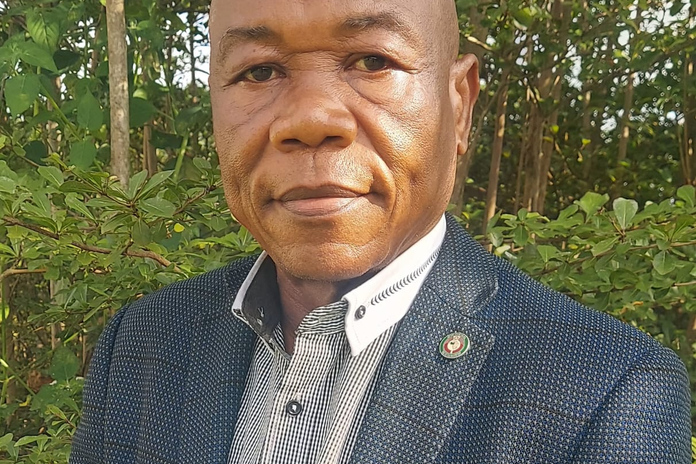
By Abdoulaye Dukule, [email protected], Contributing Writer
Not long after, a member of the House was expelled for comments made on social media.
The Senate, not to be outdone, summoned a government official to answer for a social media post on a current public issue.
An ambassador-at-large was effectively forced to resign unless he apologized for stating that the legislature was corrupt—a claim that, ironically, many Liberians openly agree with.
Meanwhile, journalists are increasingly being dismissed as “mercenaries.” Yet disagreement does not require degradation. One can challenge a message without attacking the messenger.
Taken individually, these incidents may appear isolated. Taken together, however, they point to something far more troubling: a slow but steady drift toward intolerance.
We are inching back to an era defined by “big shots” and the familiar refrain, “Do you know who I am?”—a time when public office was mistaken for personal entitlement, and institutions became shields for those in power rather than instruments of service to the people.
This is where the danger lies. If citizens cannot express their views on national issues without fear of reprisal—whether from the judiciary, the legislature, or the executive—then the very foundation of democracy is at risk.
Free expression is not a privilege granted by those in authority; it is a right that sustains accountability. A quarter of million of Liberia died to get us here.
Today, one may be publicly ridiculed as a “mercenary journalist,” dragged before lawmakers for perceived disrespect, or even jailed for expressing an opinion. These are not signs of a confident democracy. They are symptoms of arrogance and … worse.
There is, unmistakably, a rising tide of intolerance and arrogance among certain state actors. And history has shown that when institutions begin to close ranks against criticism, the democratic space narrows—often quietly, but always consequentially.
Power, it is often said, does not change people; it reveals them. But it also tests institutions. At this moment, Liberia’s institutions are being tested: can they rise above pettiness, or will they continue to personalize criticism and punish dissent?
When leaders respond to criticism with intimidation, they do not merely silence one voice; they send a message to everyone else.
If this pattern continues, the erosion will not be sudden. It will be gradual, almost imperceptible, until one day the space for dissent has all but disappeared. Then all be singing praises or shut up!
Leaders must resist the temptation to personalize criticism. Their role is to and strengthen the freedoms that legitimize their authority. Institutions must remember that their credibility depends not on silencing voices, but on upholding the rights of all—even the inconvenient ones.
The warning signs are already here. The question is whether we will heed them.
This is not the legacy UP- JNB wants to leave.
Support Independent Journalism
Your support helps FrontPage Africa continue delivering independent, credible, and impactful journalism. Every contribution strengthens our ability to investigate, inform, and hold power accountable while keeping quality journalism accessible to our readers.
Support our journalism or subscribe to receive the latest FrontPage Africa stories and updates.