Monrovia-A split jury verdict in a rape case involving a 13-year-old girl has reignited debate over the effectiveness and integrity of Liberia’s jury system, after eight jurors reportedly voted to acquit a defendant who had sought to withdraw his initial plea of not guilty and enter a guilty plea midway through the trial.
By: Willie N. Tokpah
The verdict, which resulted in a hung jury and a mistrial, has prompted the Ministry of Justice’s Sexual and Gender-Based Violence Crimes Unit to question the jury’s handling of the case and announce plans to pursue legal redress.
The case, Republic of Liberia versus Patrick Weefur, was heard at Criminal Court ‘E’ at the Temple of Justice, presided over by Judge Wesseh Alphonsus Wesseh.
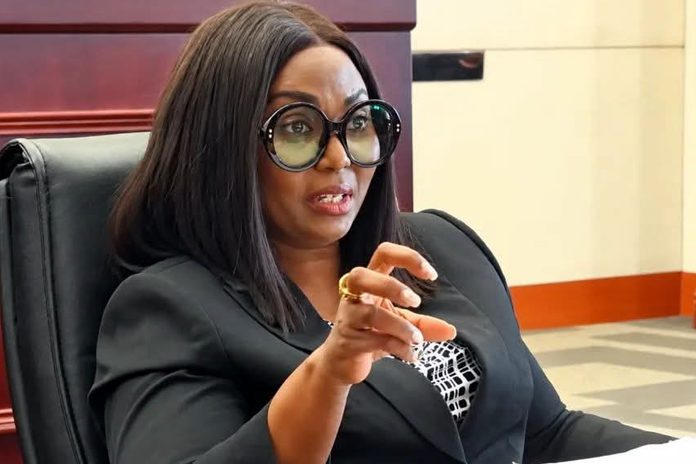
Speaking in an interview following the jury’s decision, the Director of the Sexual and Gender-Based Violence Crimes Unit at the Ministry of Justice, Cllr. Isaac L. George, described the outcome as troubling, arguing that the defendant’s attempted change of plea should have seriously influenced the direction of the proceedings.
According to the prosecution, the defendant initially pleaded not guilty to the rape charge but later sought to withdraw that plea and enter a guilty plea after the government had presented five witnesses, including the alleged victim.
The development occurred after the defense had presented its first witness, with the defendant expected to subsequently take the witness stand in his own defense.
However, rather than testify, Weefur reportedly informed the court of his decision to accept criminal responsibility and waive his right to testify.
Cllr. George said the prosecution was particularly concerned that the defendant’s attempted admission of guilt was followed by a jury decision that produced eight votes for acquittal and four for conviction.
“We are disappointed by the conduct of the jurors, the eight jurors,” Cllr. George said, questioning how the panel could return a not-guilty majority when the defendant had reportedly indicated his willingness to accept responsibility for the crime.
He argued that the jury’s decision raised serious questions about the administration of criminal justice, particularly in cases involving sexual violence against children.
Disputed Guilty Plea
The prosecution’s account indicated that Weefur’s decision to change his plea came after the government had presented its evidence, and the court had rejected a defense motion for acquittal.
Cllr. George explained that following the prosecution’s presentation of approximately five witnesses, the defense filed a motion for acquittal, which Judge Wesseh denied, directing the defense to proceed with its case.
The defense subsequently presented witnesses before the defendant decided to abandon his earlier not-guilty plea.
But the judge declined to accept the guilty plea, exercising the discretion provided under Chapter 16.4 of Liberia’s Criminal Procedure Law, according to the prosecution’s account.
The court nevertheless allowed the defendant to waive his right to testify.
Cllr. George maintained that once the defendant expressed his willingness to plead guilty, the court should have moved toward determining the case rather than allowing the jury process to continue.
He argued that the defendant’s attempted admission of criminal responsibility, combined with the evidence already presented, should have informed the court’s subsequent handling of the matter.
However, the legal distinction between an attempted guilty plea and a formally accepted plea remains central to understanding the controversy.
A guilty plea that has not been accepted by the court does not automatically amount to a conviction.
The court’s decision to reject the proposed plea meant that the case remained subject to the applicable trial procedure.
Prosecution Highlights Key Testimony
The prosecution also identified the testimony of one of its witnesses as a significant development in the trial.
According to Cllr. George, the witness, testified that she knew the 13-year-old girl and had previously seen her interacting with the defendant at her shop.
The witness reportedly recalled an incident in January when the defendant allegedly approached the child and asked whether she knew about “man business.”
The witness said she subsequently cautioned the defendant against asking children such questions.
Cllr. George described the testimony as a turning point in the prosecution’s case, arguing that it challenged the defendant’s earlier position that he did not know the child and had never interacted with her.
He suggested that the testimony contributed to the defendant’s decision to seek a change of plea after the prosecution had presented its evidence.
The prosecution further maintained that the alleged victim testified about her experience before the court.
However, the jury’s divided decision meant that the prosecution failed to secure the required unanimous verdict for conviction.
Calls for Jury System Review
Beyond the immediate case, the verdict has opened a broader conversation about the role, independence, and accountability of jurors in Liberia’s criminal justice system.
Cllr. George called for an inquiry into the circumstances surrounding the jury’s deliberations, expressing suspicion about the decision of the eight jurors who voted to acquit.
He, however, provided no evidence of bribery or improper influence, and the split verdict alone does not establish misconduct by any juror.
The prosecution director argued that jurors are expected to determine cases based on the evidence and applicable law rather than personal sympathy, emotions, or external considerations.
He also questioned the composition of some contemporary jury panels, noting that jurors increasingly come from government ministries, agencies, and academic institutions.
According to him, the educational and professional backgrounds of jurors should translate into a stronger appreciation of their responsibilities in dispensing justice.
His comments come amid continuing discussions about judicial accountability and the effectiveness of Liberia’s jury system.
Cllr. George also referenced concerns attributed to Chief Justice Yamie Quiqui Gbeisay about the need to examine the country’s jury-trial framework.
“I think there is a need for us to look at the jury system seriously,” he said, warning that unresolved weaknesses could undermine public confidence in the justice system.
He questioned whether Liberia should continue relying on the existing jury arrangement without addressing the challenges associated with jury deliberations and verdicts.
Government Plans Legal Redress
Despite the mistrial, the Ministry of Justice says the case is not over.
Cllr. George disclosed that the prosecution intends to return to court through the appropriate legal procedure to seek a new trial.
He said the government intends to pursue the matter immediately, while also pushing for an inquiry into the circumstances surrounding the jury’s decision.
The proposed legal action could provide another opportunity for the prosecution to present its case and seek a determination of the allegations against Weefur.
The controversy, however, raised a fundamental concern about the relationship between a defendant’s right to a fair trial, the court’s authority to accept or reject a guilty plea, and the jury’s constitutional responsibility to determine disputed facts.
While the prosecution considers the outcome a miscarriage of justice, the jury’s decision must also be assessed within the legal framework governing criminal trials.
Ultimately, the case has placed Liberia’s jury system under renewed scrutiny, particularly over whether existing safeguards are sufficient to ensure that justice is administered fairly, independently, and without undue influence.
For the 13-year-old alleged survivor, the hung verdict means that the legal process remained unresolved, with the government now preparing another legal move.