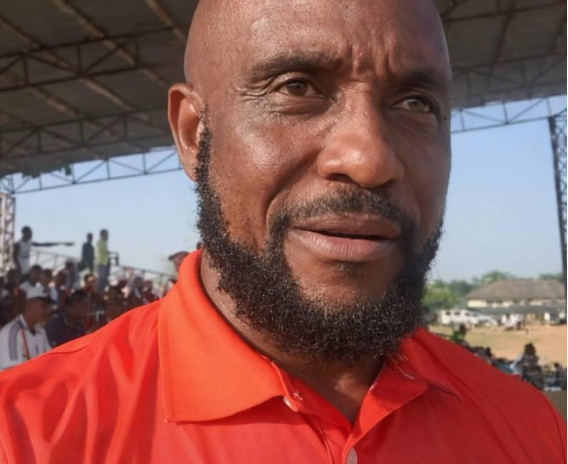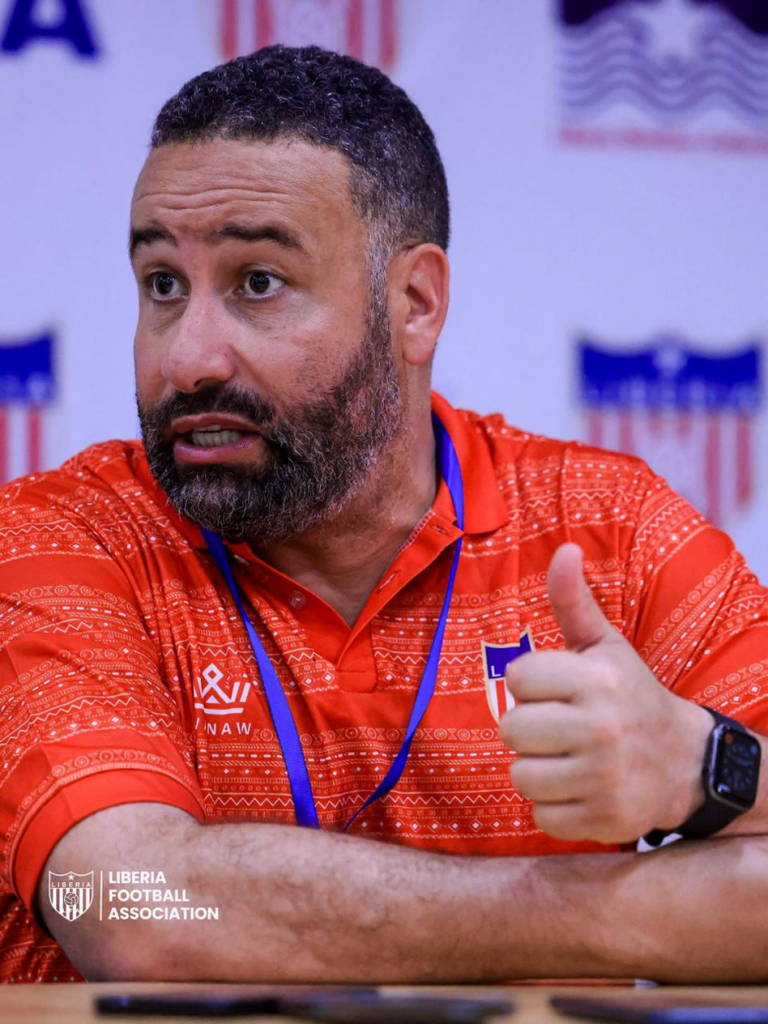
MONROVIA — Former Liberian international striker and national team head coach James “Salinsa” Debbah has publicly apologized to Lone Star head coach Mohamed Adil Erradi, the Liberia Football Association (LFA), and the wider football community over what he described as “harsh and inappropriate” remarks made during a recent podcast following Liberia’s victory over Cape Verde.
By Christopher C. Walker | [email protected]
Debbah’s apology comes days after he launched a blistering critique of the senior national team’s technical leadership, questioning Erradi’s team-building philosophy, player selection criteria, and engagement with local football stakeholders.
During the podcast appearance, Debbah initially commended Liberia’s impressive showing against Cape Verde, singling out goalscorers Kpah Sherman and Sylvanus Nimely for praise.
However, he quickly pivoted to criticize the technical staff’s broader approach to building a competitive squad.
Chief among his concerns was the technical staff’s limited presence in domestic football.
Debbah argued that building a sustainable national side requires consistent scouting and development of home-based talent.
“How are you expected to build a local national team when you and your entire technical staff live abroad?” Debbah asked during the broadcast.
The former Lone Star tactician also alleged a breakdown in communication between himself and Erradi. Despite being appointed as an advisor to the technical setup, Debbah claimed his efforts to share institutional experience and offer guidance had largely gone unheeded.
He further questioned specific player selections and tactical adjustments made during Liberia’s Africa Cup of Nations (AFCON) qualifying campaign.
In a conciliatory statement issued following widespread reaction to the broadcast, however, Debbah walked back the tone of his delivery, conceding that his choice of words crossed the line.
“Having reflected on what I said, I realized that some of my comments were out of line. I might have been carried away during the discussion following Lone Star’s victory, but that does not excuse the choice of words used,” Debbah stated.
Addressing Erradi and the football house directly, Debbah accepted full responsibility for any fallout caused by his comments.
“To the coach and the LFA, I am truly sorry if my words caused embarrassment, hurt, or ill feelings,” he added, noting that his delivery was wrong.
While retracting his harsh tone, Debbah maintained that his remarks were rooted in a deep passion for Liberian football and a desire to see the national team succeed. He insisted that critical debate remains essential to the sport’s growth, provided it is conducted with mutual respect.
“As someone who loves football and has been an integral part of the game, I understand that we can disagree, criticize decisions, and express our frustrations. However, there is a proper way to do so, and I admit that I could have handled the situation better,” he said. “Criticism should never take away the respect we owe one another.”
Despite the public walk-back, the substantive points raised by the former striker including domestic talent development, the residency of the technical staff, and the integration of former internationals into national team structures—remain central topics of debate among Liberian football observers.
Debbah concluded by expressing hope that the LFA and technical staff would accept his olive branch, paving the way for constructive collaboration.
“We look forward to opening a new channel of engagement moving forward,” he stated.
Football analysts note that the reconciliation could ease mounting tensions around the Lone Star technical bench and spark renewed dialogue on how local stakeholders and former national team legends can meaningfully contribute to the squad’s progress.