Summary
- A draft COP31 political agreement proposes raising annual adaptation finance to US$120 billion by 2035, while countries remain divided over funding and fossil fuel commitments.
- African negotiators are pressing for climate finance promises to be adequately funded, transparently tracked and delivered on fair terms.
- Liberia faces questions over implementation, with about US$360 million in climate finance commitments under its previous climate plan still undisbursed as of December 2024.
By Aria Deemie
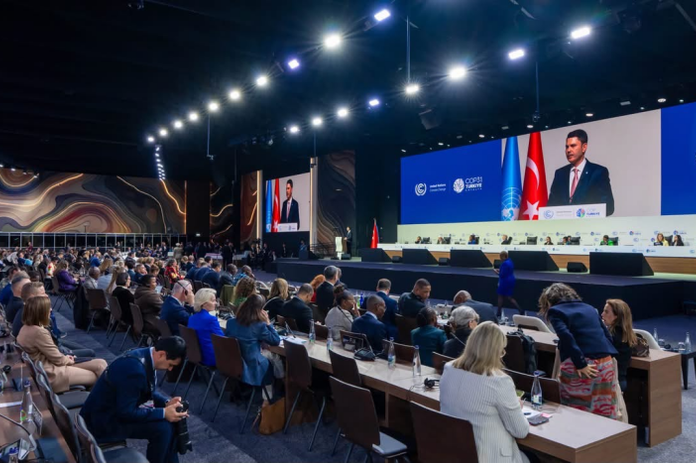
A draft political agreement at the 31st United Nations Climate Change Conference proposes that developed countries keep their promise to increase annual adaptation finance for developing countries to US$120 billion by 2035, accelerating the transition away from fossil fuels and expanding electricity’s share of global energy use.
The document, known as a cover decision, is intended to capture the conference’s broad political priorities. Its first draft, released by the COP31 presidency on November 16, also proposes a global target for electricity to account for 35 percent of final energy use by 2035. However, the text contains competing formulations on fossil fuels and other issues, and the presidency has stressed that it does not represent an agreed position.
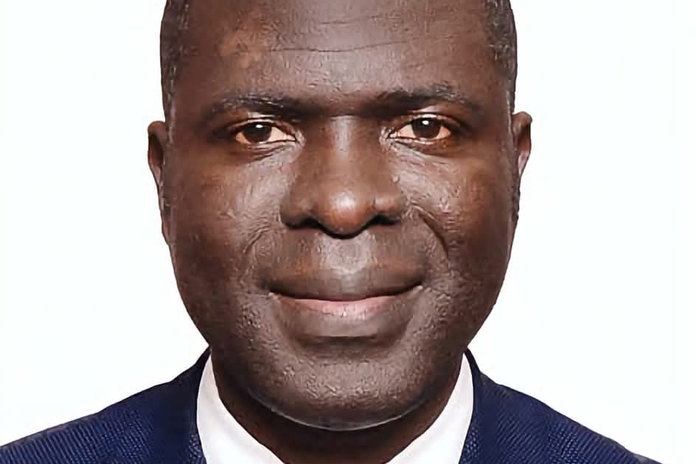
“Africa is not here to renegotiate promises; we are here to ensure they are delivered. Every climate finance commitment must be adequately funded, transparently tracked and delivered on fair terms,” Nana Dr Antwi-Boasiako Amoah, chair of the African Group of Negotiators, said in a statement published on the group’s official Facebook page.
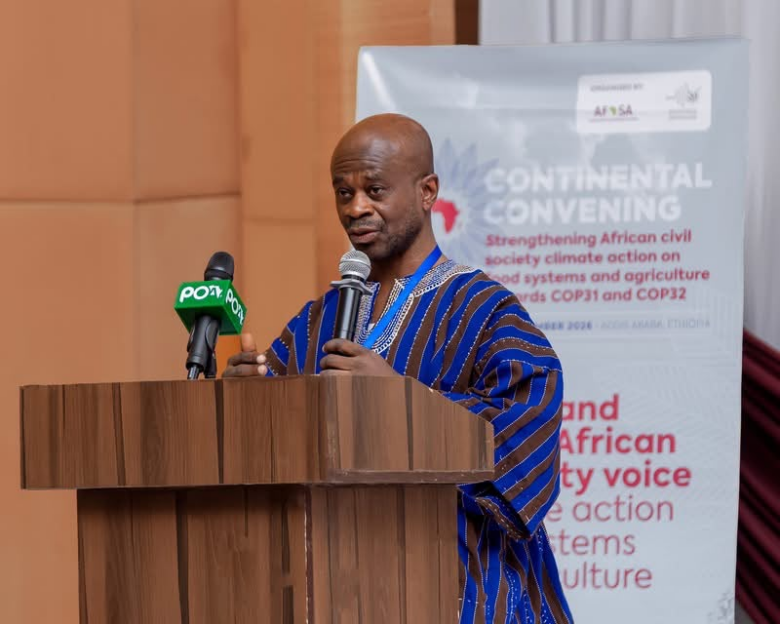
The remarks come as the African Group of Negotiators continues to push for stronger climate finance commitments at COP31. Amoah had been scheduled to brief journalists on November 14 on the first week’s negotiations and Africa’s expectations for the second week, but the planned press conference was cancelled.
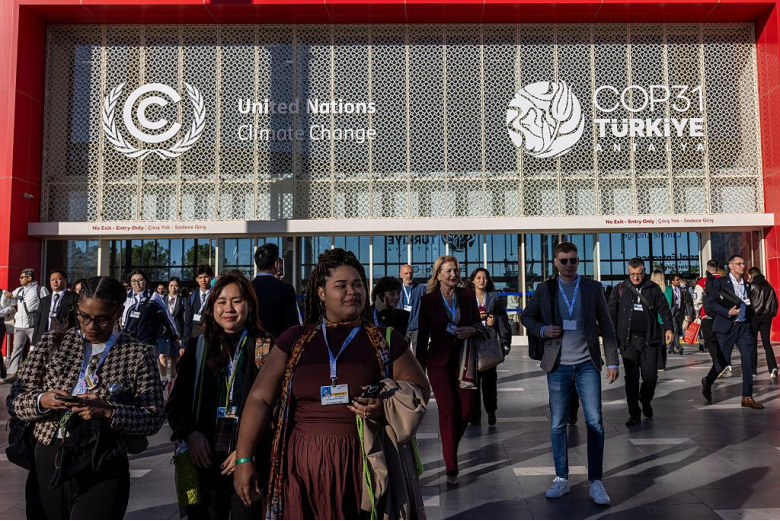
As negotiations enter their second week in Antalya, Türkiye, Liberia is pressing for predictable climate finance and adaptation support. Civil society groups are questioning whether the proposed cover decision will help secure those commitments or distract from the detailed negotiations needed to deliver them. For Liberia, the issue is especially urgent because much of its climate target depends on international support, while funding for existing commitments remains undelivered.
The US$120 billion adaptation finance proposal is among the most significant parts of the draft. It seeks to give a specific annual amount and a 2035 deadline to the previously agreed goal of tripling adaptation finance. The draft also proposes a time-bound pathway for delivering the target and a method that accounts for the grant value of climate finance, rather than treating loans as equivalent to grants.
The scale of the need is much greater. The draft cites an estimated US$305 billion in annual adaptation needs for developing countries by 2035. International public adaptation finance stood at between US$28 billion and US$32 billion in 2024. Even reaching US$120 billion would therefore cover less than a third of the estimated requirement.
The draft also calls for faster action to phase out fossil fuels, including an immediate transition away from fossil fuels in energy systems. It welcomes roadmaps developed under Brazil’s COP30 presidency for the transition away from fossil fuels and ending deforestation. But it also includes language reaffirming the earlier commitment to transition away from fossil fuels, leaving room for disagreement over how strongly the final decision should address the issue.
The proposals are not final decisions. In an accompanying note, the presidency said the draft was intended to reflect the range of views expressed by countries, not consensus. It added that every element remained open for discussion, including whether it should appear in the final document.
The disagreement is not only about what the document says, but whether attention to a broad political declaration is taking negotiators away from the formal discussions where countries are expected to resolve outstanding issues.
“We think that this cover decision is directing us, and the parties more importantly, towards the wrong place instead of the decision-making rooms, or instead of the negotiation rooms,” said Jacobo Ocharan, speaking at a media briefing organized by Climate Action Network International, a global network of civil society organizations working on climate change.
The network warned that the focus on the cover decision could divert attention from negotiations on climate finance, adaptation and a just transition. It also raised concerns that announcements presented as climate finance during the first week had brought very little new public funding.
Rebecca Thissen, who spoke on climate finance at the briefing, said developed countries were expected to present new climate finance plans after the previous funding period ended in 2025. She questioned whether the Climate Finance Work Programme would focus on developed countries’ obligations under the Paris Agreement or broaden into discussions about private investment and contributions from other countries.
The African Group of Negotiators has also been pushing for climate finance to remain central to the conference outcome. In a November 12 interview with the group’s chair, Amoah said the group wanted progress on the finance work program and the goal of tripling adaptation finance. He said countries had already established plans and processes for climate action, but implementation depended on finance, technology and capacity.
The group had submitted three proposals for separate agenda items at COP31, including one on tripling adaptation finance, one on trade-related climate measures and another on financing arrangements under the Green Climate Fund. None was adopted as a standalone agenda item, although the presidency indicated that some issues would be considered through other negotiating tracks.
Amoah also questioned the proposed 35-by-35 electrification target, saying a global target should account for countries’ different starting points. He said the African group was not opposed to electrification but wanted access to electricity to be prioritized alongside the transition to cleaner energy.
“For us in Africa, access to energy is the most important thing and then clean energy under this goal,” he told African Arguments.
For Liberia, the debate over finance is not abstract. The country’s updated climate plan targets a 64 percent reduction in greenhouse gas emissions by 2035. But 54 percentage points of that target depend on international support, making external finance and technical assistance essential to delivering much of the commitment.
About US$360 million in climate finance commitments under Liberia’s previous climate plan remained undisbursed as of December 2024. The outstanding amount raises questions about whether new commitments made at COP31 will translate into projects and support on the ground.
“COP31 for Liberia is more about implementation,” said Benjamin S. Karmorh Jr., the Environmental Protection Agency’s Chief Technical Advisor, at a meeting at the Liberia Pavilion on Monday, November 16.
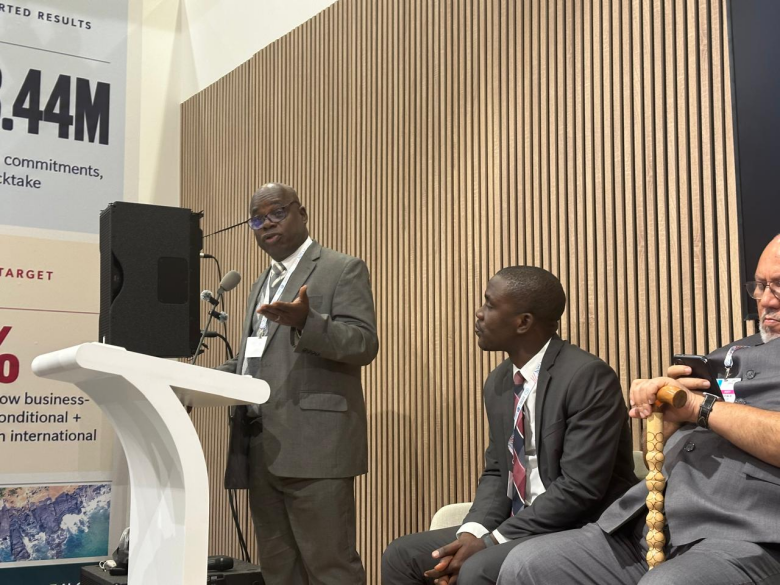
Arthur Becker, the agency’s Director for Multilateral Environmental Agreements, said Liberia was seeking predictable funding to support adaptation and accelerate preparation of its National Adaptation Plan, which sets out how the country will prepare for climate risks.
Becker said Liberia had been informed during a side event involving the United Nations Development Programme, the National Adaptation Plan Global Network and Brazil’s COP30 presidency that it was among countries included in a three-year funding window for adaptation planning, supported by Ireland, Germany and Canada. Details on the amount available to Liberia and when the funding would be disbursed were not provided.
But planning is only part of the challenge. Liberia has also faced delays in projects intended to strengthen its response to climate impacts, including the Climate Information System and the Monrovia Metropolitan Climate Resilience Project, which includes coastal protection work for vulnerable communities.The effects of inadequate adaptation support are already visible among communities exposed to flooding and unpredictable rainfall. Farmers who depend on rainfall need timely weather information to make decisions about when to plant and how to protect their crops. At COP31, an Environmental Protection Agency official announced plans for about 10 new automated weather stations in agriculture-producing counties over the next 12 months.
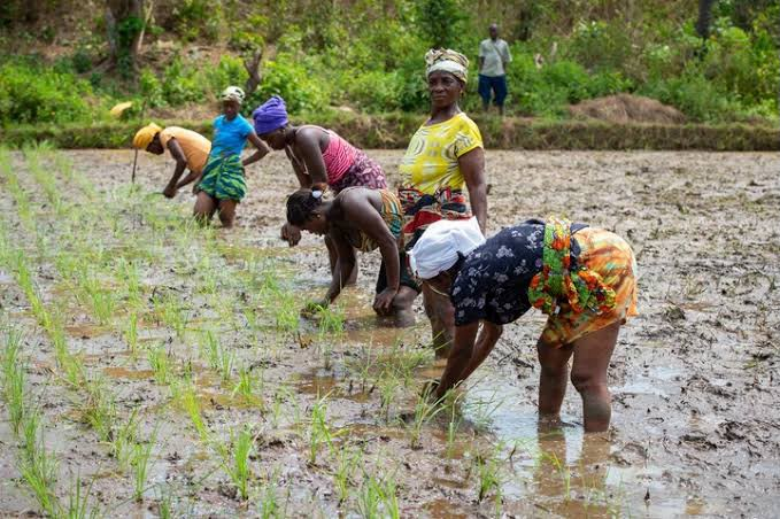
Adaptation finance was also a major concern at the civil society briefing.
“We will not let adaptation finance be traded off again,” said Daniel Rossell of the Talanoa Institute, referring to the commitment made at COP30 in Belém, Brazil, to triple adaptation finance.
Rossell questioned how countries could implement indicators under the Global Goal on Adaptation, an international framework for measuring progress in preparing for climate impacts, without the financial resources to act.
“How are developing countries supposed to implement indicators with a hundred metadata sheets of indicators and no means of implementation?” he asked.
The proposed Belém-Antalya Mechanism, intended to advance discussions on a just transition, is another area of disagreement. A just transition means moving towards a low-carbon economy while protecting workers and communities whose jobs and livelihoods may be affected.
“This is basically like being offered a seat at the table with no food, no plates, no cutlery, and very bad wine,” said Kuda Manjonjo of Power Shift Africa, criticizing the draft negotiating text for not providing enough practical support for meaningful participation. He warned that without resources and clear commitments, the proposed mechanism could become “an empty shell.”
Liberia is also following negotiations on carbon markets and climate finance. “Don’t tie adaptation around the sale of credit,” said Elijah Whapoe, who presented the country’s negotiating updates, warning against making adaptation support dependent on carbon-credit trading.
Whapoe outlined Liberia’s engagement with Article 6 of the Paris Agreement, which sets out ways countries can cooperate on climate action, including through the trading of emissions reductions and approaches that do not involve carbon credits. He said Liberia had not registered a non-market approach under Article 6.8, the provision that allows countries to cooperate on climate action without relying on carbon markets or trading carbon credits.
On the Climate Finance Work Programme, a two-year process for discussing how developed countries should provide climate finance to developing countries, he said Liberia was engaging through the Group of 77 and China, a coalition of developing countries, the African Group of Negotiators, which represents African countries, and the Least Developed Countries group, which represents the world’s poorest countries. Liberia wants the program to move forward without new language that could weaken its focus on developed countries’ financial obligations, he said.
As negotiations continue, Liberia and other climate-vulnerable countries are seeking an outcome that moves beyond political declarations and provides the resources needed to implement their climate plans.
“The conference is responsible to finance adaptation,” Whapoe said.
This story was produced as part of the COP31 Climate Change Media Partnership,a journalism fellowship organized by Internews’ Earth Journalism Network, Informed Earth and the Stanley Center for Peace and Security.
Support Independent Journalism
Your support helps FrontPage Africa continue delivering independent, credible, and impactful journalism. Every contribution strengthens our ability to investigate, inform, and hold power accountable while keeping quality journalism accessible to our readers.
Support our journalism or subscribe to receive the latest FrontPage Africa stories and updates.