The Gender Ministry Owes This Child More Than Explanations
A court has had to summon two ministers to ask a question the Ministry of Gender, Children and Social Protection should have answered on its own: why is this girl not in school?
IT SHOULD NOT take a judge to remind a government ministry of its own mandate. Yet that is where Liberia finds itself this week.
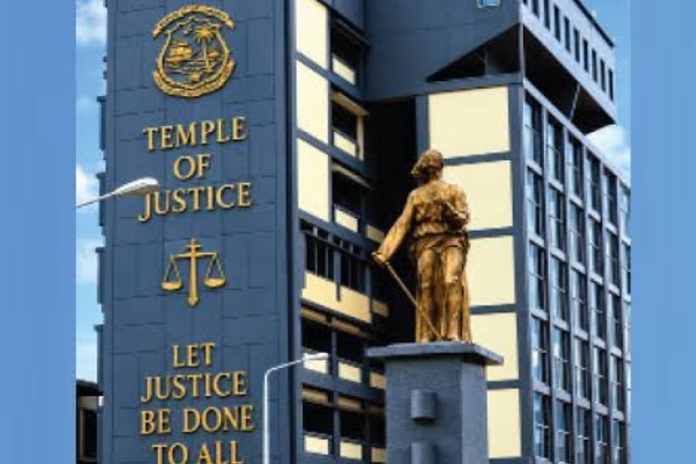
ON NOVEMBER 11, Criminal Court ‘E’ at the Temple of Justice summoned Gender Minister Gbeme Horace-Kollie and Acting Justice Minister Betty M. Lamin-Blamo to appear on Monday, November 16. They must explain what the state has done for a teenage rape survivor and the child born of her abuse.
THE FACTS ARE stark. In October 2024, a 14-year-old girl was sexually abused by an adult man who lived in the same yard. He pleaded guilty to statutory rape in June 2025 and was sentenced in October 2025 to five years in prison. During the case, the court heard that the girl had given birth to a child as a result of the abuse.
THE COURT DID its part. The prosecution did its part. The conviction stands. But more than a year later, the survivor is reportedly out of school, even though classrooms across the country have reopened.
THE SUPPORT RECORDED at sentencing tells its own story. The Justice Ministry’s Sexual and Gender-Based Violence Crimes Unit provided US$50. The Gender Ministry offered seed money for a small business and support under an initiative involving SOS.
SEED MONEY FOR a small business. For a child. Whatever the intentions behind it, that response suggests a ministry that treated a 14-year-old mother as a livelihood case rather than as a child whose first right is to be in a classroom.
THE GENDER MINISTRY’S mandate is not ambiguous. It exists to protect women, children and the most vulnerable. A teenage survivor raising a baby is precisely the person it was built to serve. If the ministry cannot follow through on one case that passed through the courts, under the eye of a judge, with a conviction on record, what becomes of the many girls whose cases never reach a courtroom?
IN 2020, LIBERIA declared rape a national emergency. It has since built a specialised court, SGBV units and a roadmap to end gender-based violence. Every year, during the 16 Days of Activism Against Gender-Based Violence, officials stand at podiums and promise survivors they will not be forgotten. This year’s 16 Days begins on November 25, nine days after the ministers appear in court.
THIS CASE TESTS whether those promises survive contact with a single child’s life. So far, the answer is troubling.
WE ARE NOT unmindful that the ministry works with thin budgets and heavy caseloads. But a shortage of money cannot explain a shortage of follow-up. Securing one child a school place, paying her fees, arranging care for her baby during class hours and checking on her each term is not beyond the reach of a government ministry. It requires attention, not millions.
ON MONDAY, THE Gender Ministry should come to court with more than explanations. It should come with a plan: a school place secured, fees paid, childcare arranged, a social worker assigned, counselling provided, and a timetable the court can hold it to. It should also tell the public how many other survivors in its care are out of school, and what it intends to do for them.
THE JUSTICE MINISTRY has questions to answer too. A US$50 payment is a gesture, not support. But it is the Gender Ministry that carries the primary duty of care for children like this one, and it is the Gender Ministry that must now show it understands that duty.
OUR PAGES REMAIN open to the ministry to set out what it has done.
JUSTICE FOR A raped child does not end when the prison door closes on her abuser. It ends when she is back in school, safe, supported and able to imagine a future again. Until then, Liberia has secured a conviction. It has not yet delivered justice.
Support Independent Journalism
Your support helps FrontPage Africa continue delivering independent, credible, and impactful journalism. Every contribution strengthens our ability to investigate, inform, and hold power accountable while keeping quality journalism accessible to our readers.
Support our journalism or subscribe to receive the latest FrontPage Africa stories and updates.