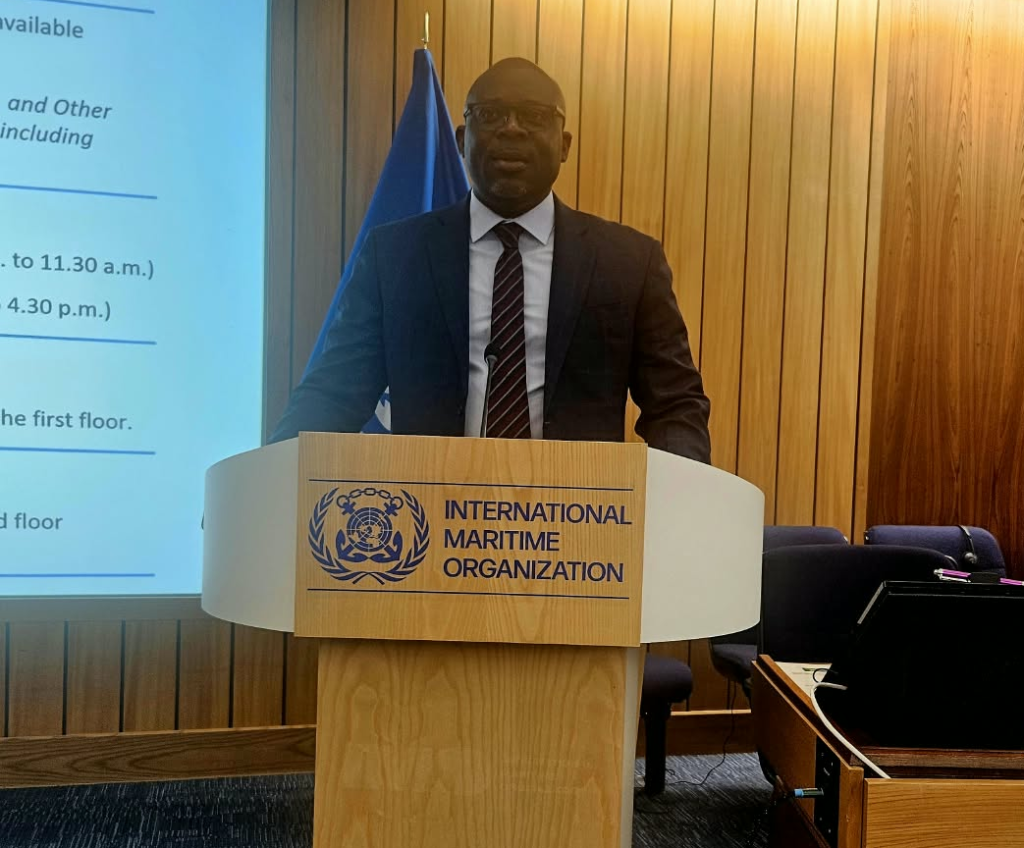
London, United Kingdom – Liberia has told the International Maritime Organization (IMO) that seafarers “must never become targets or casualties” of the wars now spreading along some of the world’s busiest shipping lanes.
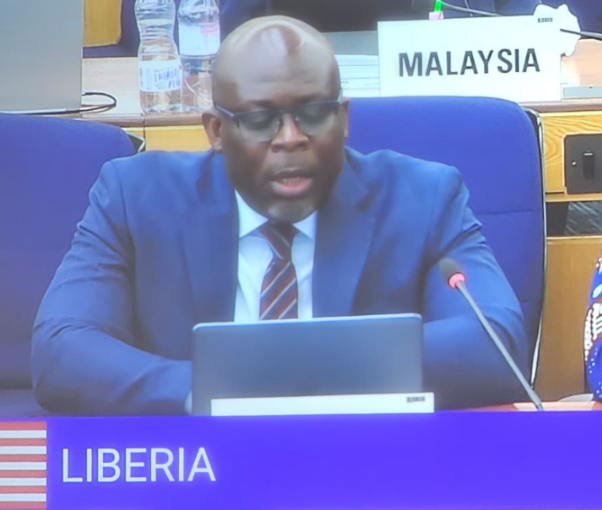
Delivering Liberia’s General Statement on Tuesday, November 3, at the 138th session of the IMO Council (Agenda Item C138/11), Liberia’s Maritime Commissioner and CEO, Cllr. Neto Zarzar Lighe, Sr., expressed grave concern over persistent attacks on commercial vessels in the Black Sea, the Sea of Azov, the Arabian Sea, the Gulf of Oman, the Red Sea, the Bab el-Mandeb Strait and the Strait of Hormuz. Thousands of seafarers and their vessels remain trapped in these waters by military operations.
“Seafarers are innocent civilian professionals performing legitimate duties essential to international trade and the global economy. They must never become targets or casualties of armed conflicts and geopolitical hostilities,” the statement said.
Commissioner Lighe warned that the “unwarranted attacks” continue to endanger innocent crews, damage commercial vessels and disrupt international trade, and “tragically, claim human lives.” He extended Liberia’s deepest condolences to the families of seafarers killed in the attacks.
Why Liberia Has a Stake
The plea carries particular weight coming from Monrovia. Liberia overtook Panama in 2023 to become the world’s largest ship registry by gross tonnage. It has since become the first flag state to pass 300 million gross tons, about 17 percent of the global fleet. That means a large share of the ships sailing through today’s war zones fly the Liberian flag, and registry earnings are a significant source of revenue for the Liberian government.
Liberian Ships in the Line of Fire
The war around Iran began on February 28, 2026, when the United States and Israel launched strikes on Iran. Since then, ships under Liberia’s flag have been caught in the crossfire again and again.
March 11: Iran’s Revolutionary Guards said they struck the Liberian-flagged Express Rome in the Strait of Hormuz after it ignored orders to stop.
August 3: The Liberian-flagged bulk carrier Minoan Pioneer was hit by a projectile about 20 nautical miles northeast of Khasab, Oman. The strike knocked out the ship’s power and set its accommodation block on fire. Its third engineer was reported missing.
August 31: A laden Liberian-flagged oil tanker was hit by multiple explosive devices while sailing out of the strait. The Liberia Maritime Authority reported that all crew were safe. Two days later, the Authority ordered Liberian-flagged ships in the area to the highest security level, Level 3.
Late September: Three Liberian-flagged oil tankers were struck by unknown projectiles on the same day in the Strait of Hormuz, the Oman Observer reported on October 1.
October 5: The Liberian-flagged tanker Lipsi, managed by Greece’s Dynacom Tankers, was hit by a projectile that damaged its engine room and started a fire. The crew was reported safe.
The threat to the Liberian flag predates the Iran war. In July 2025, Yemen’s Houthi rebels sank two Liberian-flagged bulk carriers, the Magic Seas and the Eternity C, in the Red Sea. At least four of the Eternity C’s crew were killed.
A Deadly October
Lighe’s statement came at the end of the worst month for shipping since the war began. The UK Maritime Trade Operations (UKMTO) center counted more than 30 incidents in and around the Strait of Hormuz, the Gulf of Oman and the Arabian Gulf in October. That is more than double September’s total and brings the number of incidents since February 28 to 145. Industry figures cited by Reuters show that more than 30 supertankers have been damaged since the conflict began, 11 of them in October alone.
Among the incidents:
October 6: A projectile struck the Panama-flagged tanker On Peace off the Omani port of Limah and set it on fire. At least 12 of its 19 crew were injured, 11 of them Indian nationals, and Oman’s air force airlifted 10 to hospital.
October 13–14: Two Singapore-registered ships, the GFS Pride and the GFS Giselle, were hit by projectiles. The GFS Pride, a container ship, sank while under tow; all 21 crew were rescued. The GFS Giselle suffered hull damage, and its 22 crew were evacuated. U.S. officials blamed Iran’s Revolutionary Guards. Iran said the GFS Pride hit a mine.
October 17: A supertanker carrying more than two million barrels of crude caught fire after what Iran’s Revolutionary Guards said was a mine strike on an “
Support Independent Journalism
Your support helps FrontPage Africa continue delivering independent, credible, and impactful journalism. Every contribution strengthens our ability to investigate, inform, and hold power accountable while keeping quality journalism accessible to our readers.
Support our journalism or subscribe to receive the latest FrontPage Africa stories and updates.