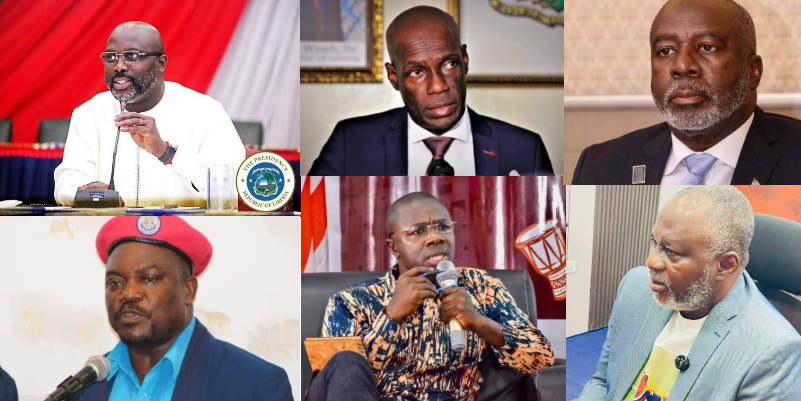
Monrovia – Former Minister of State for Presidential Affairs Nathaniel McGill has reignited political conversations about the future leadership of the opposition Congress for Democratic Change (CDC), declaring that the ruling Unity Party (UP) would not have won the 2023 presidential elections had he remained in government.
McGill, who currently represents Margibi County in the Liberian Senate, made the assertion while defending his political influence and electoral support, despite being placed under United States sanctions.
The former minister maintained that his political standing remained intact even after the sanctions, pointing to his election to the Senate as evidence that he continues to enjoy considerable grassroots support.
“If I had remained as Minister of State, the Unity Party would not have won. Despite being sanctioned, the Liberian people still voted for me and elected me as senator. I had the backing of the people,” McGill said.
His remarks come at a politically significant moment for the CDC, which is facing growing internal conversations over whether to retain its current chairman, Janga Kowo, or install a new leader as the party positions itself for a return to power.
McGill further suggested that the Boakai-led administration was already losing its political grip, declaring that the CDC has the political strength and personnel to reclaim the presidency.
“We have men, we have soldiers in the CDC. And we are coming back,” he said.
Political Scorecard and Claims of Unfinished Projects
Beyond his political declaration, McGill sought to challenge the Unity Party government’s development record, arguing that several projects being presented as achievements of the current administration were initiated or negotiated under the former CDC-led government.
He specifically referenced the Roberts International Airport (RIA) Road Project, the agreement for the construction of an overpass bridge, and a diagnostic laboratory at the 14 Military Hospital.
“The RIA Road Project belongs to us. We signed the agreement for the overpass bridge. The diagnostic laboratory at the 14 Military Hospital was also supposed to be dedicated. We completed more roads, yet this government has not commissioned a single one,” McGill claimed.
He argued that, had he remained Minister of State, he would have demanded explanations from the Ministers of Finance and Public Works over the failure to commission completed road projects.
While McGill’s comments reflect the CDC’s attempt to reclaim political credit for projects initiated during its administration, the claims also underscore the continuing political contest between the former ruling party and the government over development achievements.
Kowo’s Leadership Under Scrutiny
But beyond the exchange over political performance, McGill’s comments have drawn renewed attention to the unresolved question of who should lead the CDC as it attempts to reorganize following its defeat in the 2023 elections.
Janga Kowo currently serves as chairman of the party, having assumed the position following the resignation of Mulbah Morlu, who stepped down both as chairman and from the party.
A former Comptroller and Accountant General of Liberia, Kowo inherited the CDC during one of the most challenging periods in its political history.
His leadership has been credited by supporters with helping to keep the party together amid internal disagreements, political uncertainty and the transition from governing party to opposition.
Under his chairmanship, the CDC has remained vocal in its criticism of the Unity Party-led government. However, some partisans have questioned whether his leadership style is sufficiently assertive to reposition the party for a political comeback.
While critics favor a change at the top, others believe removing Kowo could deepen existing divisions and undermine the relative stability he has helped maintain.
The disagreement presents a difficult choice for the former ruling party: whether to prioritize continuity and internal cohesion or embrace a more confrontational leadership capable of energizing its base.
McGill, Koijee Emerge in Succession Speculation
Sources within the party indicate that former President George Weah and some members of the CDC hierarchy are considering possible alternatives to Kowo.
Among the names circulating is McGill, whose close political relationship with Weah and experience in the former administration have fueled speculation that he could be a preferred candidate for the chairmanship.
Although no formal decision has been announced, McGill’s recent remarks, particularly his declaration that the CDC has the political personnel to return to power, have added another dimension to speculation about his possible political ambitions within the party.
Another prominent name is former Monrovia City Mayor and CDC Secretary-General Jefferson T. Koijee, who has built a strong political following, particularly among the party’s youthful supporters.
Koijee rose through the ranks of the CDC Youth League and remains one of the party’s most recognizable and outspoken figures.
His popularity among younger partisans could make him an attractive option for those seeking a more energetic and combative leadership style. However, his inclusion in the succession conversation also raises questions about the political and reputational implications of his continued presence on the United States sanctions list.
McGill, too, remains under U.S. sanctions, creating a potentially complicated leadership choice for a party seeking to rebuild its national and international political standing.
The sanctions do not automatically disqualify either man from holding the party’s chairmanship.
Other Names in the Leadership Conversation
Other names being mentioned include Eugene Lenn Nagbe, a former commissioner of the Liberia Maritime Authority and special aide to Weah.
Nagbe’s experience in public service and association with the former president have placed him among the personalities being discussed as the party considers its leadership options.
Former House Speaker Jonathan Fonati Koffa has also been mentioned as a possible contender.
Koffa, who previously belonged to the Liberty Party before switching allegiance to the CDC, currently chairs the committee overseeing the construction of the party’s headquarters.
However, sources close to the former speaker say he has no intention of contesting for the chairmanship.
His name nevertheless reflects the broader search within the party for a leader who can command political respect, strengthen internal structures and help bridge differences among competing factions.
A Defining Moment for the CDC
The CDC’s leadership question goes beyond choosing a new chairman. It touches on the party’s identity, its relationship with former President Weah, the influence of its political heavyweights and the strategy it intends to pursue ahead of the next electoral cycle.
Kowo’s supporters see continuity as essential to preserving party unity, while those advocating a change believe the CDC needs a more assertive political figure to rebuild its mobilization capacity and challenge the ruling government.
McGill’s latest remarks have added to that debate, particularly because they come from a former senior official of the Weah administration who continues to command an electoral constituency despite the controversy surrounding his U.S. sanctions.
Whether his declaration signals a genuine interest in the chairmanship or is simply an assertion of his political relevance remains unclear.
What is increasingly evident, however, is that the CDC faces a delicate leadership decision. A poorly managed transition could expose existing divisions, while a carefully negotiated succession could provide an opportunity to rebuild the party’s structures and strengthen its opposition politics.
For now, Kowo remains chairman, and no formal succession process or final decision has been announced. But with McGill, Koijee and other prominent figures featuring in the conversation, the question of who will lead the CDC into its next political chapter is becoming increasingly difficult to ignore.
Support Independent Journalism
Your support helps FrontPage Africa continue delivering independent, credible, and impactful journalism. Every contribution strengthens our ability to investigate, inform, and hold power accountable while keeping quality journalism accessible to our readers.
Support our journalism or subscribe to receive the latest FrontPage Africa stories and updates.