Monrovia – The President of the Press Union of Liberia (PUL), Julius Kanubah, has accused the administration of President Joseph Boakai of carrying out “ongoing, systematic actions” to dismantle the Freedom of Information (FOI) Act and do away with open-data practices across government. He demanded that the government unconditionally rescind a new confidentiality agreement being imposed on civil servants.
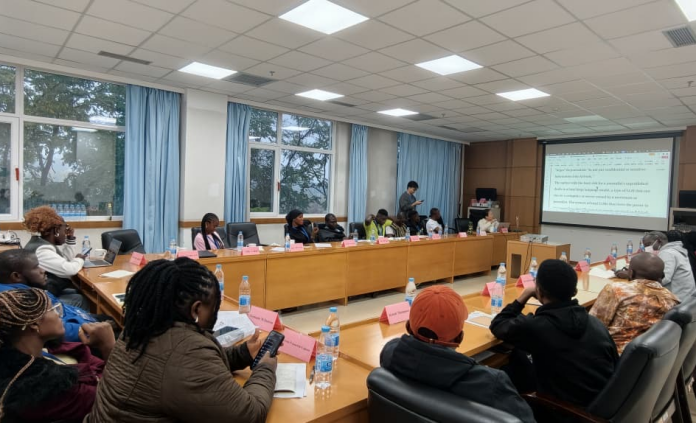
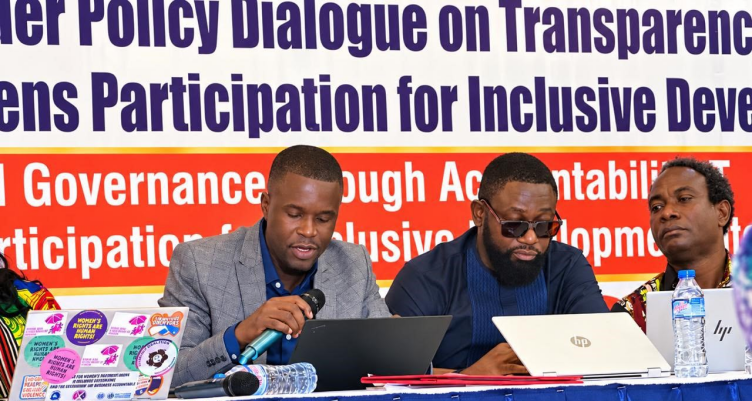
Kanubah made the charge Friday, October 23, at the EJS Ministerial Complex in Congo Town. He was speaking at a two-day policy dialogue organized by the Governance Commission (GC) to mark October as the Month of Good Governance. The theme of the dialogue was “Promoting Good Governance through Accountability, Transparency, and Citizens’ Participation for Inclusive Development.”
The PUL had been invited to speak on the “Implementation of the Freedom of Information Act and Open-Data Practices Across Government.” Kanubah told participants the topic was urgent “not from the PUL’s expertise to lecture on it, but from a deeply troubling reality.”
‘It upends the FOI Act entirely’
At the center of the PUL’s complaint is a new Confidentiality and Non-Disclosure Agreement. Kanubah said the Executive is “forcing” it on all civil servants through the Civil Service Agency (CSA), which is headed by Dr. Josiah Joekai.
“This non-disclosure policy does not merely chip away at our democratic gains; it upends the FOI Act entirely,” Kanubah said.
He argued that the policy undermines the lawmaking functions of the Legislature and strips the Independent Information Commission (IIC) of its statutory authority. He also said it “reintroduces state secrecy, and effectively recriminalizes the disclosure of public information by government workers.”
Kanubah noted that the IIC opposed the policy. The IIC is the state body legally mandated to enforce the FOI Act.
“As one of the foundational stakeholders that championed the enactment of the FOI Act and the creation of the IIC, the Press Union of Liberia is profoundly saddened by the Boakai administration’s decision to weaponize confidentiality agreements against the public interest,” he said.
“The PUL categorically calls on the Boakai administration to unconditionally rescind this policy. If this government is genuinely committed to its stated theme of promoting accountability, transparency, and inclusive development, it must align its actions with its rhetoric.”
GC’s ‘conspicuous’ silence
Kanubah also criticized the host institution, saying the Governance Commission should “break its silence.”
“The GC cannot afford to stand by passively while landmark transparency laws are hollowed out,” he said. “In the face of this policy, the Commission’s silence is conspicuous and self-defeating.”
He did, however, commend the Commission for bringing together a diverse group of stakeholders. He also praised President Boakai for issuing the proclamation that declared October the Month of Good Governance.
78 of 103 agencies without information officers
The PUL president said the confidentiality policy comes at a “precarious moment.” He noted that the FOI Act was passed more than 15 years ago but has long faced structural, financial and institutional obstacles.
He cited a recent IIC audit which found that 78 of 103 ministries and agencies assessed had not appointed designated Public Information Officers.
Under a USAID-supported program, he said, journalists filed 104 FOI requests, and fewer than five received responses within 90 days.
Kanubah described the IIC as chronically underfunded. He said the Commission had at one point been evicted from its office over unpaid rent and had operated from a basement without electricity.
He also pointed to other problems:
• poor record-keeping, with no central systems for tracking information requests
• a “default administrative culture of secrecy”
• inconsistent political will
• low public awareness of the law, especially among rural communities, women and marginalized groups
Open data stalled
On open data, Kanubah said Liberia still does not have an enforced data protection and privacy law. A draft was validated in late 2024, but the national Data Authority has yet to be formally established.
Most government agencies have working websites, he said, but almost none regularly publish key data such as budgets and expenditure reports. He named the Ministry of Finance and Development Planning as a rare exception.
He also cited high internet costs, poor rural connectivity and digital illiteracy. He warned that open-government reforms depend heavily on donor programs such as the Open Government Partnership (OGP) and USAID rather than national budget allocations, which leaves their future “fragile.”
“To actively introduce policies that roll back these hard-won freedoms is a step backward we cannot afford,” Kanubah said.
Support Independent Journalism
Your support helps FrontPage Africa continue delivering independent, credible, and impactful journalism. Every contribution strengthens our ability to investigate, inform, and hold power accountable while keeping quality journalism accessible to our readers.
Support our journalism or subscribe to receive the latest FrontPage Africa stories and updates.