DUAZON, Margibi County — For generations, primary school examinations in Liberia have followed a familiar routine: pupils seated behind wooden desks, pens in hand, answering questions on sheets of paper while teachers supervise and collect scripts for marking.
By Patience M. Jones
At Royal Light International School in Duazon Turning Point, that tradition is gradually giving way to computer screens.
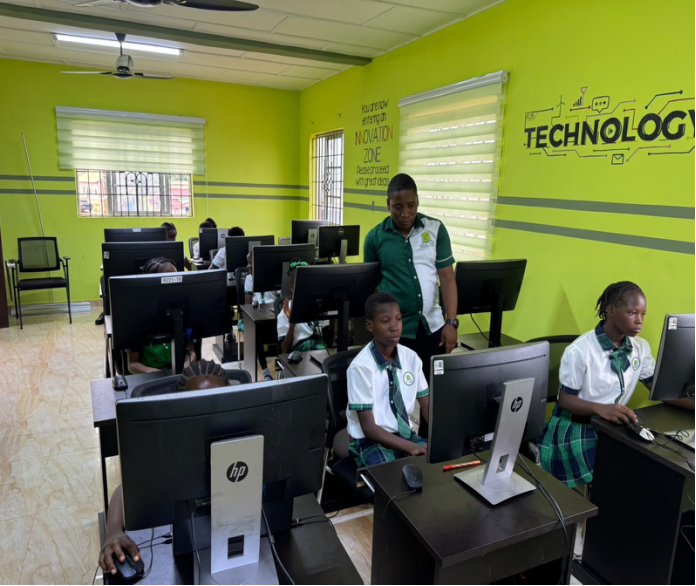
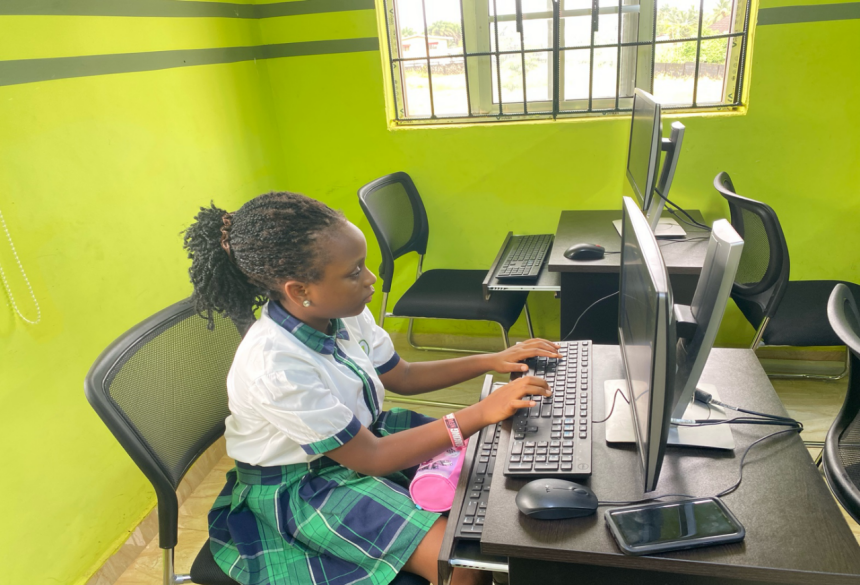
Inside the school’s computer laboratory, pupils read questions, select answers and submit their examinations digitally. For these young learners, what may appear to be a simple change in examination methods represents an early introduction to the digital skills increasingly required in education and the workplace.
“It’s easy because we don’t need to write too much on paper. You can just click your answer and you’re done,” said Faith J. Polo, a seventh-grade pupil.
Faith is among dozens of pupils being introduced to computer-based testing (CBT) as the school integrates technology into its approach to primary education.
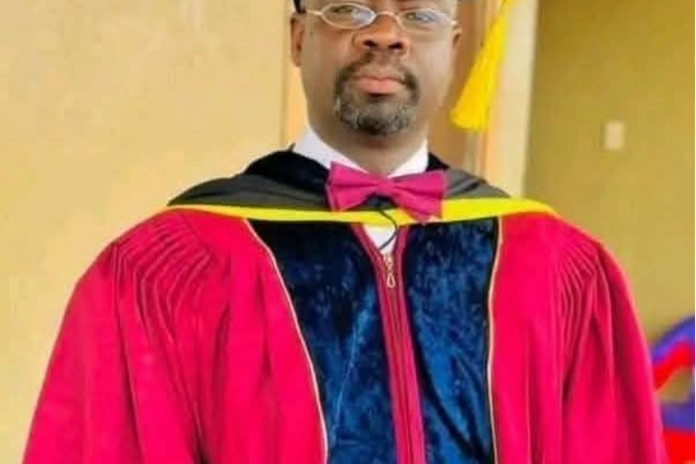
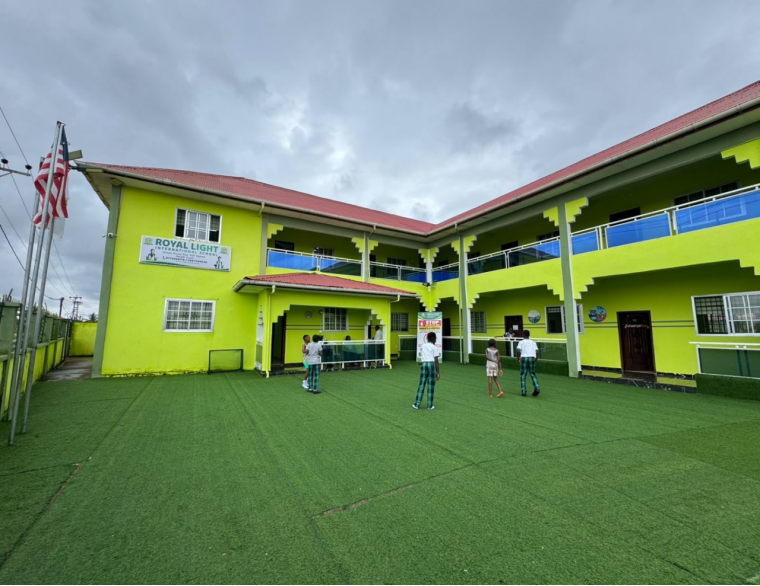
Established in 2025, Royal Light began its first academic year in September of that year. The school currently has approximately 83 students, according to Principal Joseph B. Moore, and combines classroom instruction with technology, practical learning, creativity and character development.
For Moore, introducing computer-based examinations is about more than replacing answer sheets with keyboards and screens. He sees it as an opportunity to prepare children for a world in which digital literacy is becoming increasingly important.
“The passion that drives this school is to have students, especially kids, learn in a different way than the ordinary or traditional way that everybody knows,” Moore said in an interview at the school.
“And the way to achieve that is we have to go to technology.”
A Different Examination Experience
Royal Light began experimenting with computer-based examinations during its first academic year, initially relying on traditional pen-and-paper tests before introducing CBT for final examinations.
Moore said the first attempt was not without shortcomings, but it helped the school identify areas for improvement.
“But it gave us an idea on how we can build it up,” he said.
The school subsequently developed and refined its own examination system, allowing pupils to take tests through an online school portal.
Currently, pupils in grades four through seven use the system, although Moore said it could be adapted for younger learners.
The platform allows pupils to review their answers before submitting an examination. According to Moore, the system can also accommodate another attempt where necessary, recording the final selected response.
Objective questions can be scored quickly, while essay questions still require teachers to assess students’ responses before final results are entered.
The school has also integrated the system with its reporting process, allowing parents to access their children’s academic results through the portal.
“It’s prompt response,” Moore said, explaining that report cards are updated once teachers complete the assessment process.
‘I Don’t Need Help’
For some pupils, the transition from paper to computer is already becoming routine.
Rejoice B. Wesseh, a fifth-grade pupil, said computer-based examinations have made testing easier because they require less writing.
“Because there’s not too much writing,” she said. “You just go, read the question and then take your test.”
Asked whether she needs a teacher to read the questions to her, Rejoice replied: “As long as the computer is functioning well, I don’t need any help.”
That independence is central to the school’s approach.
Moore said Royal Light wants pupils to become comfortable navigating digital platforms early in their education rather than encountering them for the first time when they enter university.
He argued that some students reach tertiary institutions without sufficient experience using basic digital systems, including online academic portals.
Royal Light hopes to address that gap by making technology part of everyday learning.
“Our intent is to train the kids to prepare them for tomorrow, where they can sit in any part of the world and write any test without the assistance of people,” Moore said.
Technology Beyond Examinations
At Royal Light, computers are not reserved for examinations. Pupils also use technology for assignments, classwork and online learning activities.
The school provides access to digital learning platforms where students can practice answering questions and strengthen their computer skills. Moore said some pupils even spend their recess periods in the computer laboratory practicing typing or completing online exercises.
The school has also introduced coding, allowing pupils to explore how digital applications are created.
According to Moore, students developed a simple bubble game in the computer laboratory during the previous academic year.
The exercise introduced pupils to the idea that technology is not merely something to use or consume, but also something they can create.
That distinction reflects the school’s broader educational philosophy, which incorporates computer education, robotics, science, technology, engineering and mathematics (STEM), public speaking, critical writing, reading, arts, music, dance and language development.
French is also included in the school’s learning activities.
Through these programs, Royal Light seeks to combine academic instruction with practical skills that can help pupils adapt to changing educational and professional environments.
Balancing International and Liberian Education
The school’s curriculum combines the Abeka curriculum with elements of Liberia’s national curriculum, particularly in social studies.
Moore said the approach is intended to expose pupils to an international curriculum while ensuring they understand Liberia’s history, society and national identity.
“We want them to know more about Liberia,” he said.
For the school, technology is a learning tool rather than a substitute for teachers or conventional classroom instruction.
Its approach places digital skills alongside discipline, academic achievement and character development.
The school’s motto, “Raising Change Makers,” reflects its ambition to produce students who can think critically, communicate confidently, solve problems and respond to new challenges.
Internet Connectivity, Digital Readiness Pose Challenges
Despite its progress, Royal Light’s transition to computer-based examinations has encountered challenges, particularly unreliable internet connectivity.
Moore said the school works with two network providers and switches between them when one connection becomes unstable.
He added that the examination platform is designed to preserve pupils’ progress when connectivity is interrupted, reducing the risk of losing completed work.
Another challenge involves students transferring from schools where they had little or no exposure to computers.
Such pupils often require additional training before they can navigate the examination system comfortably.
For students who have been at Royal Light since its early stages, however, the process is becoming increasingly familiar.
The experience highlights a broader challenge facing efforts to expand digital learning in Liberia: technology alone is insufficient without reliable connectivity, access to equipment and adequate preparation for both pupils and teachers.
Expansion Plans Beyond Elementary Education
Royal Light currently operates primarily as an elementary school, but its ambitions extend beyond its existing facility.
Moore said the school intends to establish a separate junior high school facility for students in grades seven through nine, creating a learning environment tailored to older pupils.
He explained that the decision reflects differences in the developmental needs and educational environments of younger children and adolescents.
The school temporarily retained its seventh graders after parents requested that their children remain enrolled while families adjusted to the next stage of their education.
The planned expansion would allow students to continue their academic development while gaining further exposure to practical and technology-based learning.
A Model Other Schools Could Adapt
Although Royal Light remains relatively small, Moore said the school is willing to share its experience with other institutions interested in introducing technology into their classrooms.
He said the school’s founder and staff are open to providing training and consultancy to schools seeking to adopt similar approaches.
“It’s not really about us showing off,” Moore said. “It’s also about having a better system in Liberia and bringing our kids up to date.”
That willingness to share its experience could extend the school’s experiment beyond its own campus.
Liberia’s education sector continues to face questions about learning outcomes, access to resources and the quality of instruction. Introducing technology at the primary level offers one possible way to prepare pupils for increasingly digital academic environments, although the approach requires investment and careful implementation.
Royal Light’s experience also demonstrates that introducing computer-based examinations involves more than acquiring computers. Schools must develop reliable systems, train pupils, address connectivity challenges and ensure that digital assessment supports rather than undermines learning.
The school’s programme remains relatively young, and its long-term impact has yet to be established. Its current experience, however, offers an example of how an individual school is attempting to integrate digital learning into primary education.
For pupils like Faith Polo and Rejoice Wesseh, the computer screen is already becoming a familiar part of the examination process.
In a country where pen and paper have long defined the primary school testing experience, that change represents a different approach to preparing children for the future.
At Royal Light International School, the transition is beginning in the computer laboratory, one examination at a time.
Support Independent Journalism
Your support helps FrontPage Africa continue delivering independent, credible, and impactful journalism. Every contribution strengthens our ability to investigate, inform, and hold power accountable while keeping quality journalism accessible to our readers.
Support our journalism or subscribe to receive the latest FrontPage Africa stories and updates.