For years we have helplessly witnessed the agony and grief of victims who cry from the injustice, heartache and humiliation they suffer in their land disputes. Fertilizing this grinding humiliation are the political interferences, ethnic loyalties, and preferential treatment often used to thwart justice and rob the victims of their legitimate rights in what looks like broad day robbery. The worst nightmare of victims of injustice in property cases is that this crime has as accomplices the very ones entrusted with authority and endowed with influence. So the cries of the victims are in the wilderness. The protectors of decency, law and order become strange bed-fellows of the abusers of the law, quite often using tribal undertone to justify this.
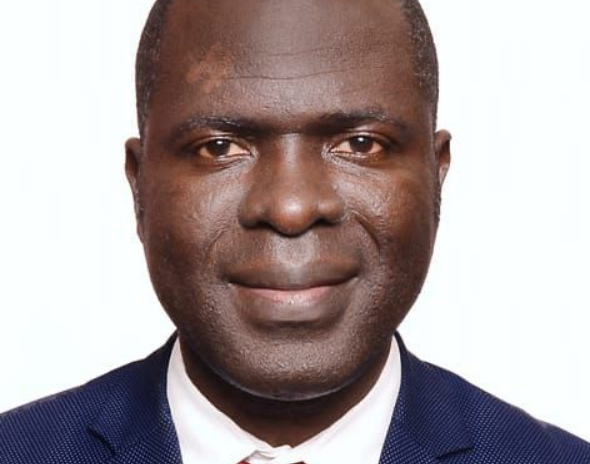
By: Mohamed M. Komara
It was to this inhumanity that God sent a “Savior-Chief Justice,” appointed by a president intent on righting the historical wrongs and faulty lines of our society. This appointee of President Boakai’s has heralded a new dawn in Liberia; calming the nerves of the subjugated and restoring confidence in the judiciary. Today, thanks to him, the victims of armed twisting and dispossession of legitimate properties have a hero to look up to. They used to ask: “Will Liberia ever become a country of law and not of men, connections, power, ethnicity, or social status?”
That question has come into focus again by a recent decision involving a land dispute in Nimba County, where the Chief Justice of Liberia, himself a son of Nimba, has shown that, indeed, Liberia is a country of law and that he wants a better Liberia. He is a member of the same tribal community as some of those affected by the ruling. Being a man of law and decency he supported the judgment of a lower court resulting in the eviction of occupants from land determined to belong to another party.
Whatever one’s opinion is about the land dispute; there is something huge that deserves national attention. That is, the fact that the Chief Justice chose to uphold the rule of law, regardless of the criticism his decision may invite from people in his county and tribal community. That is moral courage, a rare quality in Liberia. It merits recognition, commendation and emulation. Why? This is because when faced with similar situation, most Liberians will blindly or fanatically choose tribal or religious loyalty above the law, especially when it involves the “Stone that the builder rejects!”
A new chapter has now opened with hope for victims, not culprits, of injustice in the longstanding saga between the parties to all land disputes. What is clear in this chapter is the moral lesson taught by “The Icon” of justice — the Chief Justice — which Liberia desperately needs beyond measure. The lesson is that public office is a trust that is greater than personal, tribal, familial, political, or communal loyalties. It is a responsibility that only honorable characters and noble souls can discharge. Were Liberians to cherish this unselfish mindset about public office, it would spare our Nation the pain; shame, embarrassment, disunity, “divide-&-rule” and the social stagnation caused by its abuse. How long can we allow the masterminds of “divide-and-rule” to sustain their political and economic powers by pitting tribes against a tribe and promoting ethnic bigotry! When will we challenge wrong doers to show some humanity and care about the wellbeing of Liberian kids who now watch their officials and copy their character exhibits as legacy worth emulating? As lion cubs emulate the hunting their parents, it is no mistake. So they were taught.
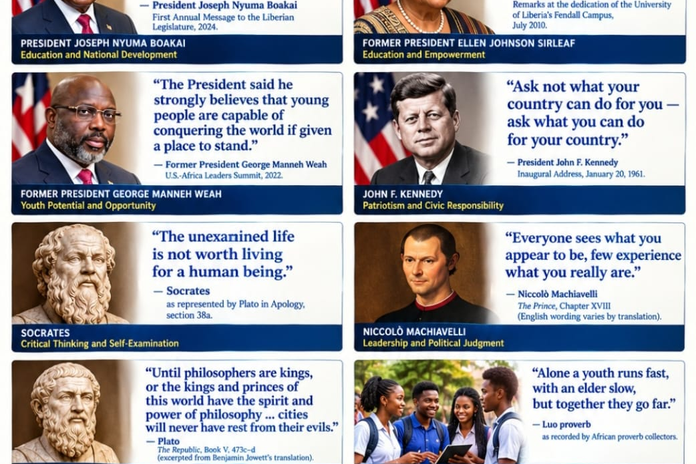
A person’s integrity does not come under the spotlight when his “good deed” makes everyone happy. The test comes when his good action annoys his friends or relatives. That is the test a public servant in a judicial or an integrity institution must taste. It is easy to make a decision that makes one’s supporters happy, but much harder to make one based on law and principle when your community and support base believe that the decision should go the other way. For this reason any criticism does not mean that the man of integrity has failed his people. Rather, it points us to really “examine” our yearnings for justice, for “An unexamined life,” said Plato, “is not worth living.”
Do we want justice that only favors our whims and caprices; our ethnic and religious groups, or do we want justice even if the decision goes against us? For true believers in the rule of law, the answer must be the latter.
No judge or lawyer in Liberia enters a courtroom wearing tribal gown. Nor should they abuse the courts to apply double standard merely because of ethnic or religious identity. Conscientious citizens should not demand impartiality and celebrate favoritism in sharp contradiction to law, ethics and probity.
That is why the Chief Justice has set an example that is bigger than just this one land case. The significance of the Chief Justice’s action goes beyond this particular land dispute in Nimba. Liberia’s history has taught us painful lessons about what happens when institutions become weaker as a toy that serves personal and tribal interests.
We have had civil wars, political crises, land disputes, tensions, and grievances from the crises of participation and identity. I thought that experience was enough lesson to propel us towards justice and equality for community harmony and social cohesion.
The judiciary must remain the hope of all citizens for impartial justice. It would be troubling were people to believe that access to justice in our courts is a function of ethnic or religious identity. But under the watchful eyes of the incumbent Chief Justice, we should rest assured that justice will no longer belong to the highest bidder or a particular group on account of their wealth, social status, cultural or ethnic origin. The confidence of Liberians and investors in the judiciary will grow or be enhanced.
That is why when a judge applies the law even when the decision is unpopular with his own community, the message is different. It says in bold letters that the law is bigger than all of us. This is the message Liberia needs, not business as usual.
Yes, something good can come from Nimba and now is the time for a son of Nimba to also be a true servant of Liberia. The Chief Justice’s Nimba origin or identity should not be a constraint for dispensing justice, regardless of the ethnic persuasion of those occupants affected by the verdict.
Being a son of Nimba does not mean being required to protect every Nimbaiian’s interest, right or wrong. Likewise, being a citizen of any other county does not mean that one’s tribe or county should get preferential justice. We should be proud of our tribes, counties, cultures and communities, but these identities are convenient labels for identification, not basis for claims to superiority or inferiority. In other words, this must not destroy our national identity, otherwise the nation will be fractured.
The Chief Justice has shown that public responsibility at times requires the courage to stand alone. When a public officer demonstrates such courage, we should not tear him down. We should stand with the Chief Justice and encourage the example he has set.
We have been yearning for judicial independence and now is the time to commend and celebrate it. We have criticized political interference in the courts. We have complained about manipulation of legal outcomes. Let us not make our calls to be mere slogans that we invoke when we are unhappy with a case. We will be hypocrites if we cannot stand by the Chief Justice for supporting the truth. If the Chief Justice had supported a decision favorable to his fellow tribesmen, some among us might have accused him of tribal favoritism. Now that he supported the right court ruling against them, any attempts at vilifications of his stance should be discouraged.
Judicial independence means judges, the Chief Justice including, are free to make decisions according to law and evidence — even when those decisions disappoint influential people. It means that citizens must respect lawful judicial decisions while using lawful means of appeal when they disagree. A judge cannot satisfy every party. He must have the independence and freedom to satisfy the law, and the law alone!
The late George P. Shultz, a former American Secretary of State said: “The right of the citizens to freedom of self-expression is the true measure of their independence.” This affirms the significance of free expression for citizens,’ including our leaders in government. The Chief Justice, knowing his fundamental right to this freedom, must exercise it without fail. Besides, leadership, in the understanding of former American First Lady, Mitchell Obama, reveals a person’s true character. This is similar to the Liberians adage which says “Monkey can’t hide its black hand.” The Chief Justice’s demeanor demonstrates his innate love for truth and justice. His rise to the leadership of the Supreme Court is a coincidence to reveal this true character of his. His call to duty in this land case epitomized a call to national service and he, certainly, was not found wanting! He delivered where many, if not most, would fail.
We hope the Chief Justice will sustain this brand of untainted justice throughout the courts of Liberia. How good and pleasant would it be before God and man to see this “unassailably superior” brand of justice penetrates and dominates the judiciary! How brilliantly impactful would it be if he could assign judges, magistrates, and clerical staffs for all of the counties who are his likeminded people. His prototypes in promoting justice and equality will be the best disciples and agents of positive change in our judiciary. This is because injustice thrives where moral courage to persistently challenge and defeat it is lacking. Justice can pervade in our courts and prevail as a legacy of the Chief Justice, but he needs to identify Liberians in the judiciary with unimpeachable record. These leadership assignments have the leverage to either uphold or dethrone the rule of law. If the Chief Justice wants the Liberian children to grow up under the rainproof shades of a judiciary that is jealously guided and guarded by unimpeachable characters, that dream should be reflected in his assignments.
This case is food for thought for lawyers whose role is very important. They must defend their clients, but above all they must protect the integrity of the justice system. Lawyers are challenging decisions through legal arguments, evidence and procedures — not allowing tribal mobilization and other tactics to intimidate judges is great.
A lawyer’s duty is not only to win a case, but he is also an officer of the court and this is important in land disputes. When emotions flare and communities are about to be divided, lawyers must help their clients understand that justice is different from victory at any cost. Lawyers can facilitate post-litigation reconciliation.
Nimbaians, like other Liberians, are important for their contributions to Liberia. They must not take this case as a contest between Nimba and another group. This is an opportunity for them to show the rest of Liberia that one can disagree “only” with a wrong judicial outcome, but without rejecting the rule of law. Don’t condemn the Chief Justice because he refused to put tribal solidarity above his judicial responsibility.
For us, Nimba should be proud when its son demonstrates allegiance to serve the entire Nation. The reward Nimba should give such a son is not to ask him to rob other Liberians and feed his community with the fruits of the crime. The Chief Justice deserves praise by every well-meaning Liberian for serving with integrity. As Liberia seeks to identify and celebrate integrity icons, the judiciary has certainly found one.
Henceforth, no judge in Liberia should fear dispensing justice, let alone a Chief Justice. At times, judges must disappoint people from their own county or ethnic group. Once the decision is grounded in the law, evidence or legal principles, a judge must be brave to stand by his judicial responsibility. Liberia needs judges — like this Chief Justice — who cannot be threatened and manipulated by pressure. Liberia needs judges, magistrates and clerical staffs like the Chief Justice who cannot look at legal disputes through the lenses of ethnicity, politics, religion or social status.
For the Chief Justice, and all men of principle, ill-fated criticisms can only invigorate their spirits to do more for Liberia. A sick society or person needs healer. The “Surgeon General,” should not watch a patient die under the pretext that, out of pity for the latter’s dislike for life-saving surgery, he let him die without performing one. A healer for our judiciary has come and healed shall be this branch of government, your chagrins notwithstanding! Criticisms never sway a principled person. His position in this case was based on the law and the record before the court. Liberia should recognize, celebrate and award him for his rare merits. He maintained his stance despite huge community pressure. This sets a man of principle apart from the rest.
Criticisms against this Chief Justice, Liberia’s Icon of justice, are the result of a people being prone to impunity. The critics will not affect the man of justice. The time has come for the rules of law to prevail over the jungle justice of might makes right.
Liberians must be equal — and remain equal always — before the law, whether as perpetrators or victims. The pendulum of this equal opportunity must be available to all and that is why Liberia needs this Chief Justice. He is an enviable example par excellence, a once in a generation kind of man! “Hats off to you,” the light of justice in a land justice is treated as trash, and national pretense celebrated as heroism. Our equality before the law must remain inalienable, unaffected by political, ethnic, or religious differences. We need public officials who can cannot support his supporters merely because “you are my people.” We need politicians who can allow the law to be applied equally to all, including his supporters. We need lawyers who can render their clients honest, and not deceitful, representation.
Land disputes can be resolved. Though they are connected to family, inheritance, identity, community, economic survival and historical grievances, they are not intractable.
Let’s not celebrate fraudulent land ownership, or the use of political connections and ethnic mobilization to frustrate legitimate claims as cleverness. Let’s not assume that justice should only favors us. The law is blind and justice has no tribe or religion.
While conscientious Liberians are striving at home and abroad to make Liberia shine and glow with pride, some at home abuse justice and equality. We need to ensure that while the advocates of justice and promoters of reconciliation are encouraged, the architects and agents of divide-and-rule must be discouraged.
One may wonder if such people are proud of the principle of decency upon which our Nation was founded. Do such people want our social and cultural institutions, as well as our organized religion and education to fail in their mission to quicken our conscience and unite us in fellowship for unconditional justice, equality and reconciliation?
One would also wonder in which environment they care to rear their children. Do they want the children to grow up in a healthy society that is built on civility and freedom from recrimination, stereotypes, dehumanization, demonization, and evil indoctrinations, or in one that is saturated with hate, malice, acrimony, deceit and evil machinations! Should the weight of a society of upright men and women be a leverage for truth or falsehood; justice or injustice, freedom or oppression?
If truth be told; justice, empathy and the moral courage to support them are virtues that are good. We must strive to be with the people support them, no matter how perilous.
Our Chief Justice, and the men of virtue in human history, appreciate justice as being inherently good and worthy of support. We must equally know that supporting justice and liberty is often perilous, for they are not given on silver platter. It is our courage and perseverance to overcome the perils entailed in achieving them that bring us perilously close to the firing lines of their rancorous enemies.
Once justice is good this good, we must love and cherish it. Our Chief Justice should not be alone in this. We, too, must be enamored with the good and find solace in the victory of good over evil, no matter the peril.
Immanuel Kant, the German Enlightenment philosopher summed it thus: “I am doomed to love the good.” While he made everything to pale in comparison to what is good, Socrates, the epitome of ancient Greek wisdom, tells his children to “put kindness” above everything. What are we, Nimbaians, telling our youth? And what is Liberia doing about this?
Support Independent Journalism
Your support helps FrontPage Africa continue delivering independent, credible, and impactful journalism. Every contribution strengthens our ability to investigate, inform, and hold power accountable while keeping quality journalism accessible to our readers.
Support our journalism or subscribe to receive the latest FrontPage Africa stories and updates.