GBARNGA, Bong County — Bong County Land Administrator Amelia Cassell has called for intervention by the Executive Branch of Government over an ongoing zoning exercise in Gbarnga City, warning that the involvement of institutions outside the Liberia Land Authority could deepen land disputes and create confusion over the government agency legally responsible for administering land matters in Liberia.
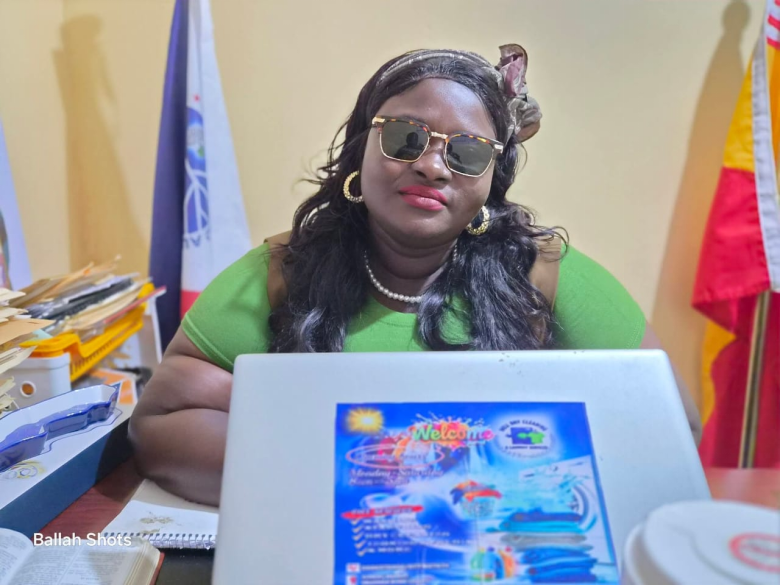
Cassell, speaking to Radio Gbarnga at her office on Wednesday, said the Liberia Land Authority (LLA) was not adequately involved in the zoning exercise despite her earlier efforts to ensure that the process was conducted in accordance with the legal mandate of the Authority.
Her comments come amid concerns from residents of Gbarnga over the ongoing marking of properties and the identification or creation of alleys in parts of the city.
Cassell explained that the issue dates back to June, when she was invited by Bong County Superintendent Hawa Norris following the arrival of a team from the Ministry of Public Works to undertake what she described as a zoning exercise in Gbarnga.
According to the Land Administrator, she immediately raised concerns about the process and maintained that the exercise should involve the Liberia Land Authority because of the agency’s statutory responsibility for land administration in the country.
Cassell said she advised the County Administration to contact her superiors at the Liberia Land Authority so that the Authority could formally authorize and participate in the exercise.
She said her position was based not on a desire to obstruct the process but on the need to ensure that land-related activities are undertaken by the institution legally mandated to administer land matters.
However, Cassell said she was surprised when the Public Works team was subsequently sent into the field by the County Administration to begin conducting the exercise.
She said the development has since resulted in a number of complaints being brought to her office by residents of Gbarnga who are concerned about how properties and alleys are being identified and marked.
According to Cassell, some residents have complained that their homes are being marked even though the properties are not located along alleys.
She also said her office has received complaints concerning the creation of new alleys that residents claim were not established through the work of licensed surveyors operating in the county.
The concerns, she suggested, raise questions about the procedures being used in determining land boundaries, property locations and road or alley alignments during the exercise.
Cassell said the issue has become particularly concerning because land administration is an area in which overlapping government responsibilities can easily generate disputes among property owners and communities.
She therefore warned against what she described as the “usurpation” of functions legally assigned to the Liberia Land Authority by other government institutions.
The Bong County Land Administrator appealed directly to the Executive Branch to intervene and clarify the responsibilities of the various government institutions involved in land-related activities.
Cassell argued that government agencies must operate within the boundaries of their respective legal mandates to avoid confusion and prevent citizens from being subjected to competing decisions from different institutions.
She warned that when responsibilities assigned to the Liberia Land Authority by law are performed by other institutions without proper coordination, the result could be an increase in land-related conflicts.
According to Cassell, the consequences of such institutional overlaps are often eventually placed at the doorstep of the Liberia Land Authority, even in situations where the Authority was not responsible for the initial decisions or actions that triggered the dispute.
She said the situation creates a difficult environment for the Land Authority because residents frequently turn to the institution to resolve disputes after land-related actions have already been taken by other actors.
Cassell maintained that a clear division of responsibilities among government institutions is necessary to protect property owners, prevent unnecessary conflicts and strengthen public confidence in Liberia’s land administration system.
Her comments also underscore the broader challenges facing land governance in Liberia, where disputes over property boundaries, ownership, surveys, road corridors and community development have remained recurring issues.
The ongoing situation in Gbarnga, according to Cassell, demonstrates the need for stronger coordination among government institutions before land-related exercises are undertaken.
She said the Land Authority should be properly consulted and involved in exercises that have direct implications for land administration, particularly where the marking of properties, establishment of alleys or determination of land boundaries is involved.
Cassell’s concerns come as Gbarnga continues to expand, increasing pressure on land and infrastructure within the city.
As urban development accelerates, zoning and land-use planning have become increasingly important for determining where homes, businesses, roads, alleys and other infrastructure should be located.
But Cassell suggested that such development must be guided by clear legal authority and technical procedures to prevent short-term planning decisions from becoming long-term sources of conflict.
She stressed that residents deserve clarity about the authority under which their properties are being marked or affected.
The Land Administrator also appeared concerned that actions taken without proper coordination could undermine the credibility of government institutions responsible for resolving land disputes.
If residents are given conflicting information by different government agencies, she warned, it could become more difficult for the government to enforce land regulations and resolve disagreements when they arise.
Cassell therefore wants the Executive Branch to provide clarity on the respective responsibilities of the Liberia Land Authority and other government agencies involved in zoning, planning and public works activities.
She said such clarification would help prevent institutional conflicts while ensuring that land-related exercises are carried out in accordance with the law.
The Land Administrator’s position is that the issue goes beyond the current zoning exercise in Gbarnga and speaks to a broader problem of institutional overlap in Liberia’s land governance system.
She argued that the Liberia Land Authority should not be held responsible for land conflicts resulting from decisions made outside its statutory authority.
Cassell said the Authority needs the support of the central government to ensure that its mandate is respected and that other institutions coordinate with it when undertaking activities involving land administration.
For residents of Gbarnga, the controversy has raised questions about the purpose of the ongoing zoning exercise and the implications of property markings and newly identified alleys.
Cassell’s statement suggests that resolving those concerns will require greater coordination between the County Administration, the Ministry of Public Works and the Liberia Land Authority.
Until such coordination is achieved, she fears that continued overlapping of functions could create more confusion among landowners and potentially contribute to additional disputes.
She is therefore urging the Executive Branch to act before the situation escalates, arguing that clearly defining and respecting the statutory responsibilities of government institutions is essential to protecting citizens and maintaining an effective land administration system in Liberia.
Cassell’s call comes with a broader warning: while zoning and urban planning are necessary for the orderly growth of Gbarnga, the process must be undertaken through the appropriate legal and technical channels to ensure that efforts intended to organize the city do not inadvertently create new land conflicts.
Support Independent Journalism
Your support helps FrontPage Africa continue delivering independent, credible, and impactful journalism. Every contribution strengthens our ability to investigate, inform, and hold power accountable while keeping quality journalism accessible to our readers.
Support our journalism or subscribe to receive the latest FrontPage Africa stories and updates.